

As an integral component of the official attire, the Phantom is adorned with a black mask and a form-fitting bodysuit, while also wielding two .45 caliber pistols secured in a specialized belt featuring a triangular skull buckle. The Phantom stands as the inaugural fictional character to don the skintight costume that has subsequently become emblematic of superheroes.
While the Phantom’s costume is canonically purple in the original American strips syndicated by King Features Syndicate, various adaptations have altered this iconic color. The reasons for these changes range from cultural preferences and printing limitations to marketing strategies aimed at resonating with local audiences.
Lee Falk originally envisioned the Phantom’s costume as grey, inspired by myths of mysterious, shadowy heroes who blended with the night. However, Ray Moore, the first Phantom artist, depicted the costume in a shade of dark purple. This choice was influenced by the need for a visually striking yet practical color for daily black-and-white newspaper strips.
In the absence of consistent color printing for newspaper comics during the 1930s and 1940s, the Phantom’s costume color was largely left to the imagination of readers. When color versions of the comics began to appear, purple became the standard in American and most international publications.
Lee Falk is reported to have articulated that he initially envisioned a grey costume for his character and contemplated naming his creation ‘The Gray Ghost’. In the early Phantom comic strip stories, such as ‘The Singh Brotherhood’ and ‘Fishers of Pearls’, the Phantom’s costume was described as grey; however, upon the debut of the Phantom Sunday strip in 1939, the costume was rendered in purple.
Lee Falk, nonetheless, consistently designated the costume as grey within the text of the strip on numerous occasions thereafter (notably in ‘The Seahorse’, ‘The Mermaids of Melo Straits’, ‘The Devil Road’ and ‘The Matchmaker’); however, it was ultimately in the 1956 daily story ‘The Heavyweight Champion’ that the costume was referred to as purple.
In the Sunday comic strip entitled ‘The First Phantom’ (authored by Lee Falk and illustrated by Sy Barry, published in 1975), it is depicted that the inaugural Phantom selected his costume inspired by the visage of the Demon Idol, which was greatly feared by the Wasaka Giants. The Phantom utilized a piece of fabric discovered by his pygmy companions, dyeing it with non-toxic purple berries sourced from the jungle. Subsequently, he persuaded the pygmies to accompany him wielding their weapons fashioned from poisonous berries in order to vanquish the Wasakas. A segment of this comic strip is featured below.

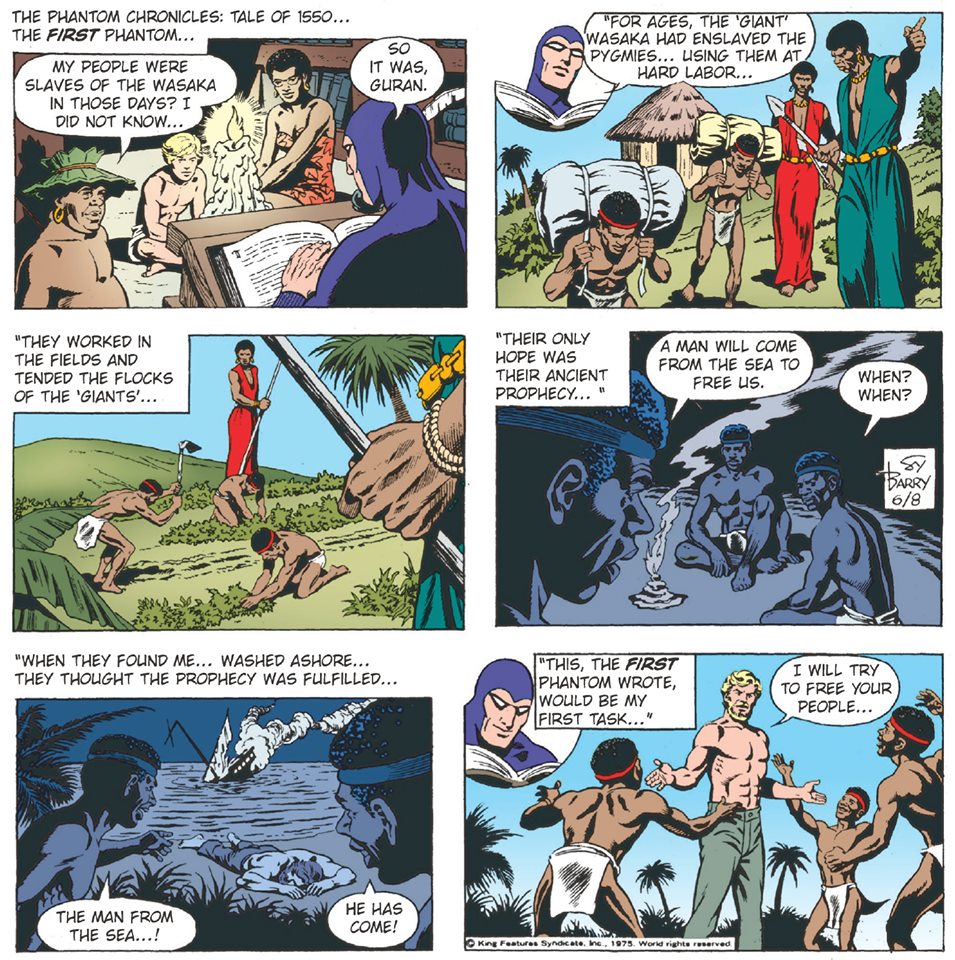

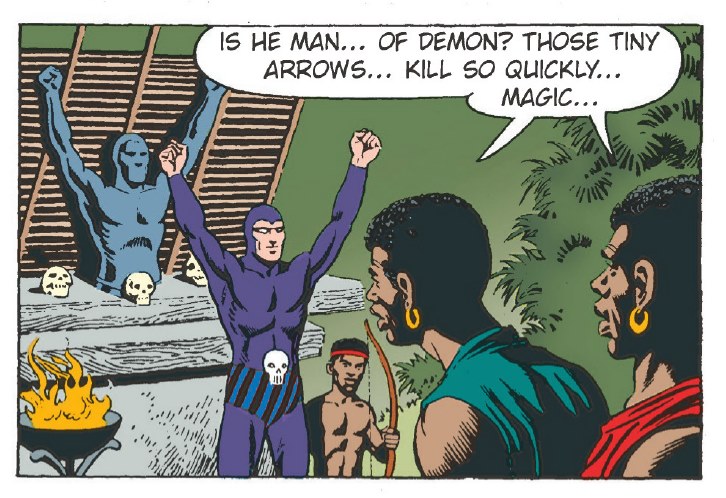
A number of factors have influenced the color variations the Phantom is published in, which include:
1. Cultural Symbolism of Colors
- In many cultures, certain colors carry specific meanings, connotations, or associations that might influence how audiences perceive a hero.
- Purple, while regal and mysterious in Western cultures, is less common in some regions, where other colors are deemed more relatable or heroic.
- Publishers often adapt the Phantom’s costume color to align with local cultural sensibilities, ensuring the character resonates with their target audience.
2. Printing Technology and Limitations
- Early comic printing technology varied significantly between countries. The cost and availability of certain ink colors played a major role in determining the costume’s hue.
- For instance, some regions found it more economical to print using blue, red, or green instead of purple.
3. Distinguishing the Phantom from Other Characters
- To differentiate The Phantom from other costumed heroes who were popular in the region, publishers sometimes altered his costume color. This ensured the Phantom remained distinct and appealing to readers unfamiliar with his legacy.
4. National Branding and Marketing Strategies
- Publishers localized the Phantom by assigning him colors that reflected national or regional identity. This strategic localization helped to build a stronger connection between the character and his audience.
King Features Syndicate, the original distributor and licensed intellectual property owner of the Phantom, has historically allowed a degree of creative freedom to regional publishers. This approach enabled the Phantom to become a global icon while simultaneously being tailored to local tastes.
Publishers like Egmont, Frew Publications, Indrajal Comics, and Fratelli Spada have played instrumental roles in shaping the character’s identity within their respective markets. By adapting costume colors, storytelling styles, and marketing strategies, these publishers ensured The Phantom’s enduring appeal across generations.
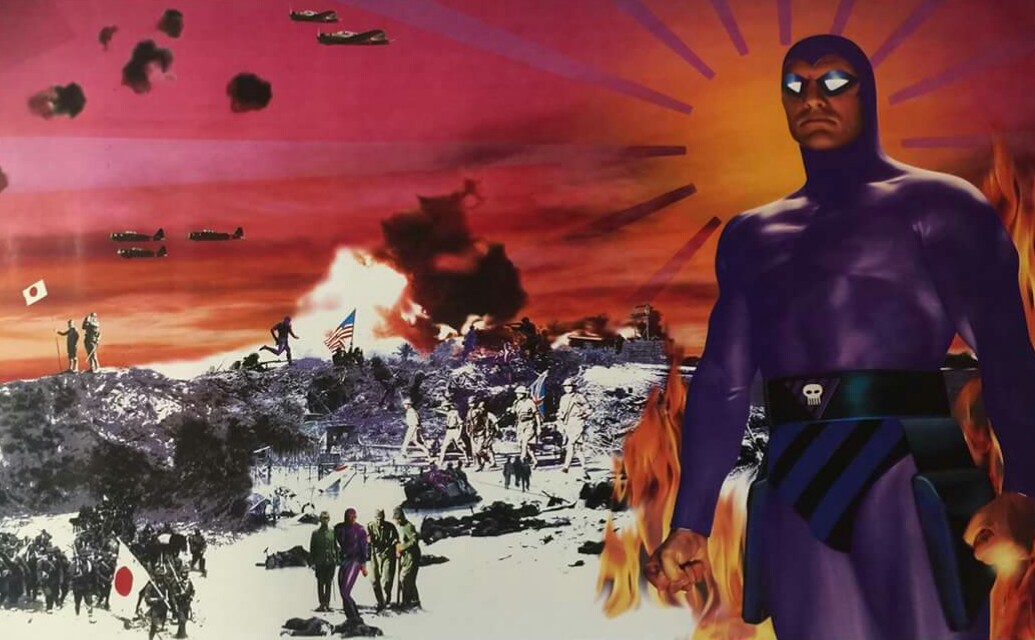
USA, Australia and India – Purple Costume
Sweden, Norway, Denmark and Finland – Blue Costume

France, Italy, Turkey, Argentina, Spain, Germany and Brazil – Red Costume

New Zealand – Brown Costume

The varying colors of the Phantom’s costume highlight the character’s universal appeal and the adaptability of comics as a medium. By localizing costume colors, publishers have successfully tailored The Phantom to resonate with audiences across different cultures and markets. These variations also underscore the collaborative nature of comic publishing, where creative decisions are influenced by cultural, economic, and technological factors.
 thephantom.fan