
In 1981, Swedish television introduced a poignant exploration of childhood and domestic reality through a five-part drama series titled, ‘Du Måste Förstå Att Jag Älskar Fantomen’ Fantomen (which translates to You Must Understand That I Love the Phantom). Rather than a standard superhero adaptation, the series uses the iconic figure of the Phantom as a lens through which a young child, Toffe, navigates the complexities of a crumbling family life.
The Plot and Television Context
Originally broadcast on SVT2 from the 28th of December 1981, to the 1st of January 1982, the series was written and directed by Christina Nilsson, based on her 1979 stage play.
The series centers around Toffe (played by Petrus Bergstrand), a seven-year-old boy currently attending kindergarten, whose obsession with the “Ghost Who Walks” serves as an emotional shield against the impending divorce of his parents. Toffe experiences a profound sense of longing for his father, whom he seldom encounters following his parents’ divorce. His behavior at home and in the kindergarten setting is characterized by rowdiness and aggression.
The story predominantly unfolds in the bathroom, where Toffe engages in play and imagines himself as powerful as the Phantom. The kindergarten scenes illustrate both conflicts and camaraderie with peers, alongside disputes over toys. The interactions with his mother primarily involve arguments and subsequent reconciliations occurring in the bathroom. Toffe’s fantasies are depicted through a distinctive style featuring aesthetic effects and special effects, facilitating viewer comprehension that these Phantom-inspired reveries are indeed imaginary.
The production featured a distinguished cast of Swedish actors:
- Mats Bergman as the character “Dulen” (and Father).
- Christina Nilsson portraying the Mother.
- Bo Bergstrand as the Father.
- Kristina Adolphson and Lena T. Hansson in supporting roles.
The program was designed to be viewed collectively by parents and children, and prior to each episode, a cautionary notice indicated that the program was not advisable for children under the age of five. The series elicited various responses from the audience, with numerous adults asserting that certain scenes had caused distress among young viewers.
Musical Composition and Themes
The emotional core of the series was reinforced by its soundtrack, composed by the acclaimed Björn Isfält. Released in 1982 on Planet Records, the album Musik och berättelser från TV-serien (Music and Stories from the TV Series) is a unique blend of musical numbers and spoken-word segments that mirror the show’s narrative structure.
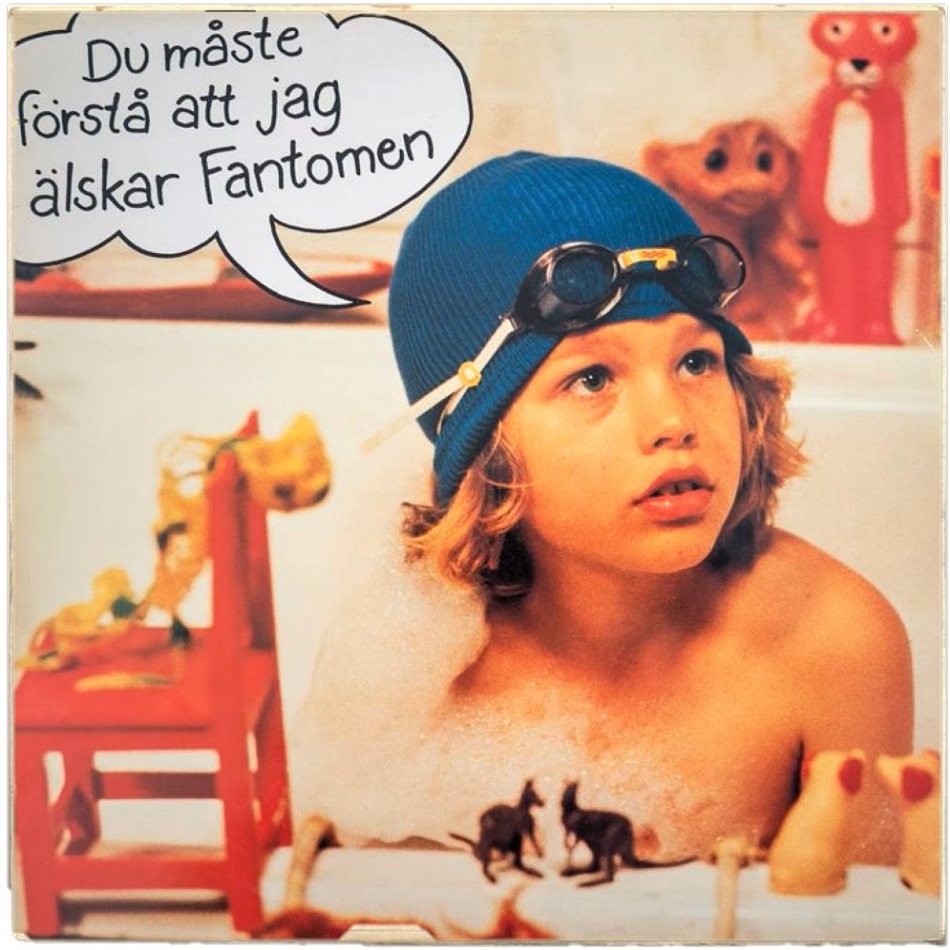
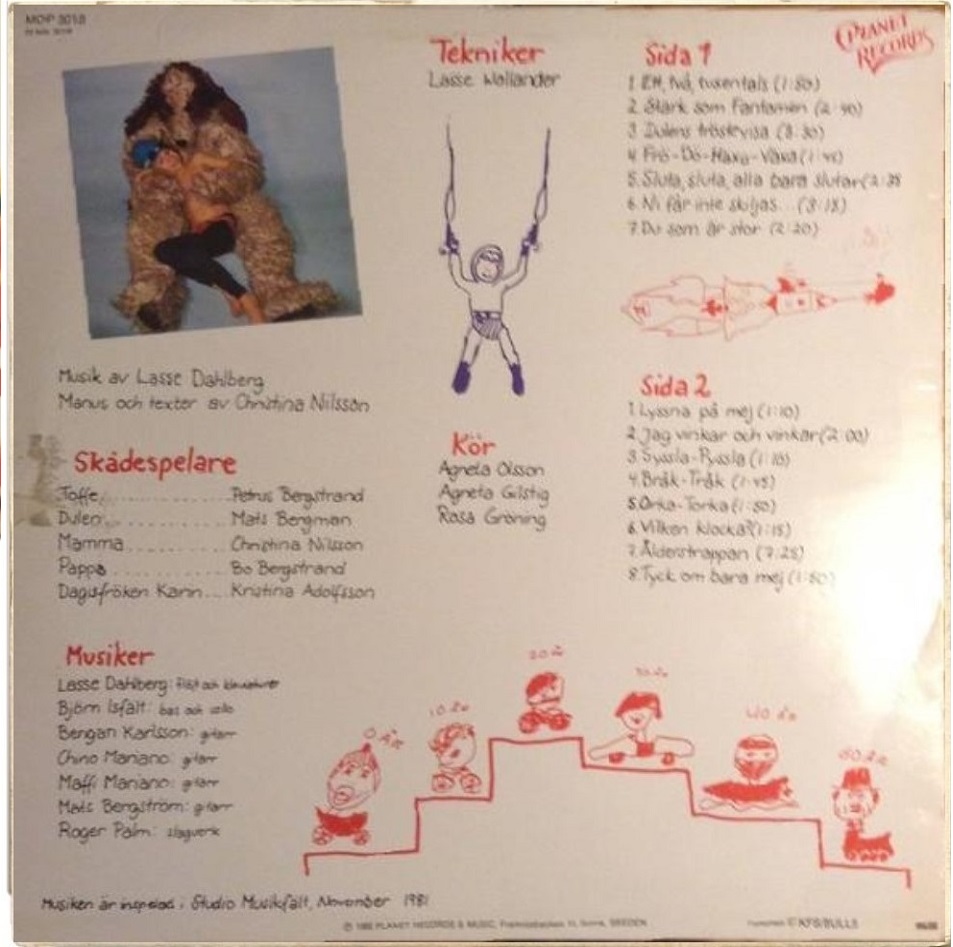
The soundtrack’s 15 tracks are deeply evocative of the show’s themes:
- “Stark som Fantomen” (Strong as the Phantom): Performed by Petrus Bergstrand and Christina Nilsson, this track highlights the child’s yearning for the strength and invulnerability of his hero.
- “Ni får inte skiljas” (You Must Not Divorce): A direct, heartbreaking plea from the perspective of a child facing family separation.
- “Dulens tröstevisa” (Dulen’s Lullaby): A softer, comforting piece featuring Mats Bergman.
- “Sluta, sluta, alla bara slutar” (Stop, Stop, Everyone Just Quits): A track reflecting the frustration and helplessness of the protagonist.
The titles of the 15 tracks are:
- A1. Ett, Två, Tusentals
- A2. Stark Som Fantomen
- A3. Dulens Tröstevisa
- A4. Frö-Dö-Häxa-Växa
- A5. Sluta, Sluta, Alla Bara Slutar
- A6. Ni Får Inte Skiljas
- A7. Du Som Är Stor
- B1. Lyssna På Mej
- B2. Jag Vinkar Och Vinkar
- B3. Syssla-Pyssla
- B4. Bråk-Tråk
- B5. Orka-Torka
- B6. Vilken Klocka
- B7. Ålderstrappan
- B8. Tyck Om Bara Mig
Legacy and Modern Availability
Technically, the soundtrack was a high-quality production for its time, recorded at Studio Musikfält in November 1981 with prominent musicians such as percussionist Roger Palm. While it was initially available only on vinyl and cassette, the album was digitally re-released in 2020. Today, listeners can experience this piece of Swedish television history through platforms such as Apple Music or Spotify.
By grounding the unconquerable Phantom in the vulnerable reality of a 1980s Swedish household, the series remains a culturally significant example of how popular mythology can be used to address profound human struggles.
 thephantom.fan