
In the vibrant landscape of 1960s Philippine cinema, the superhero and comic-book genre flourished through localized adaptations of international icons. One such notable entry is the fantasy/action movie Alyas Phantom, released on the 11th of January 1966. Produced by D’Lanor Productions, the film represents a fascinating intersection of Western pop culture and Filipino action sensibilities.
Production Context: D’Lanor and FPJ
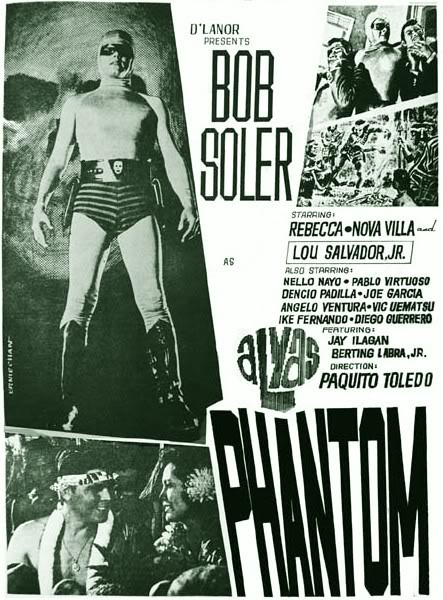
The production house, D’Lanor Productions, holds a significant place in Filipino film history. “D’Lanor” is “Ronald” spelled backward—the namesake of its founder, Ronald Allan Poe, better known as the legendary Fernando Poe Jr. (FPJ), the “King of Philippine Movies”.
While FPJ often starred in his own productions, he also used the pseudonym D’Lanor (and later Ronwaldo Reyes) when directing. D’Lanor Productions was known for high-octane action films and unauthorized but culturally beloved remakes of Western properties, such as Alyas Batman at Robin (1965). Alyas Phantom followed in this tradition, capitalizing on the popularity of Lee Falk’s “The Ghost Who Walks.”
Cast and Creative Team
The film was directed by Paquito Toledo, a veteran director known for his work in the action and comedy genres during the 60s and 70s. Toledo is remembered primarily for his ability to handle “komiks” (comic book) transitions to film. By directing titles like Captain Philippines and Alyas Phantom, he played a significant role in establishing the superhero genre as a staple of Philippine commercial cinema. His work provided the foundation for the “Pinoy superhero” aesthetic that would continue to evolve for decades.
The cast featured several prominent stars of the era:
- Bob Soler: Starring as the titular “Alyas Phantom”. Bob Soler was a prominent Filipino action star of the 1960s who holds the historical distinction of being the first actor to portray the iconic superhero Captain Barbell on the big screen in 1964. Produced by D’Lanor Productions, this landmark role paired him with the comedy legend Dolphy and established Soler as a leading figure in the “Pinoy” superhero genre. He became a frequent collaborator with Fernando Poe Jr.’s D’Lanor banner, starring in localized adaptations of famous masked heroes, including the flag-themed Captain Philippines in 1965 and the jungle-dwelling Alyas Phantom in 1966. Known for his athletic presence and versatility, Soler’s career spanned decades, transitioning from these larger-than-life hero roles to gritty action films and eventually appearing in 1990s television and cinema, such as the original film version of Ang Probinsyano.
- Rebecca: The leading lady, Rebecca, was a popular actress of the 1960s who frequently starred in action-adventure films. In Alyas Phantom, she played the equivalent of Diana Palmer, the Phantom’s love interest. Her role was essential for grounding the jungle-hero story with the romantic and dramatic tension typical of Filipino “komiks” adaptations of that era.
- Nova Villa: Born Novelita Acosta Villanueva on 16th of April 1946, is a legendary Filipino actress and comedian widely revered as the “Goddess of Comedy.” Discovered by Fernando Poe Jr. at the age of 17, she began her career in the early 1960s with films like Daniel Barrion and eventually became a staple of D’Lanor Productions, appearing in superhero hits like Alyas Batman at Robin and Alyas Phantom. She is most celebrated for her prolific television career, particularly her iconic role as “Azon” in the long-running sitcom Home Along Da Riles alongside Dolphy, and her 14-year run in Chicks to Chicks with Freddie Webb. Over six decades, she has appeared in more than 150 films, earned numerous Best Comedy Actress awards, and received the prestigious Pro Ecclesia et Pontifice medal from the Vatican in 2021 for her service to the Church.
- Lou Salvador Jr.: Lou Salvador Jr. (1940–2008) was a prominent Filipino film actor famously dubbed the “James Dean of the Philippines” due to his brooding charisma and physical resemblance to the American icon. As the son of “Master Showman” and basketball legend Lou Salvador Sr., he was a member of a vast entertainment dynasty and a contract star for LVN Pictures. He rose to fame in the late 1950s with “rebel” roles in films like Bad Boy (1957) and Barkada (1958), both directed by his father. Throughout the 1960s, he became a staple of the superhero genre, frequently playing the sidekick or second lead to Bob Soler in films such as Alyas Batman at Robin (1965) and Captain Philippines at Boy Pinoy (1965), as well as appearing in Alyas Phantom (1966). His acting career spanned two decades and concluded with a role in the critically acclaimed film Manila in the Claws of Light (1975) before he eventually relocated to the United States.
Other cast members include Nello Nayo, Pablo Virtuoso, Dencio Padilla, Dencio Padilla, Jose Garcia, Angelo Ventura, Vic Uematsu, Ike Fernando, Diego Guerrero, Jay Ilagan and Berting Labra Jr.
Plot and Characterization
In D’Lanor Productions’ fantasy fare, Alyas Phantom, Bob Soler plays the role of the Phantom. He invades the city looking for a band of racketeers who stole a precious relic from a village where he is revered with awe by the natives. He also encounters other gangs and rackets which he fights and exposes to the police.

Alyas Phantom stayed relatively true to the core Phantom mythos while adding “Pinoy” (Filipino) flair.
- The Costume: Unlike the purple suit from the American comics, the Filipino adaptation of the Phantom took creative liberties with the suit’s color and texture to better suit the black-and-white cinematography and local aesthetic preferences.
- The Legend: The story followed a masked vigilante who fought crime in jungle settings, often utilizing his supernatural reputation to strike fear into the hearts of bandits and pirates.
- Local Adaptation: The film moved away from the fictional African country of Bangalla, instead setting the action in the rugged, rural terrains of the Philippines, making the Phantom a localized protector of the common folk.
Historical Significance
Alyas Phantom is a prime example of the “Golden Age of Pinoy Action Movies”. During the mid-60s, the Philippine film industry was one of the most prolific in the world.
- Genre-Bending: The film blended the jungle adventure genre with urban vigilante tropes.
- Star Power: It solidified Bob Soler’s status as the go-to actor for imported superhero roles, having already played Batman and Captain Barbell.
- Cultural Appropriation: These films weren’t merely copies; they were re-imagined for a Filipino audience that valued themes of social justice, family honor, and the triumph of the underdog.
Legacy
Today, Alyas Phantom is a sought-after title for Filipino film historians and “komiks” aficionados. It serves as a testament to the creativity of D’Lanor Productions and the enduring appeal of masked heroes in Philippine culture. It also highlights the early directorial and production influences of Fernando Poe Jr., whose work would go on to define the Filipino action genre for the next four decades.
 thephantom.fan