
Supersankarit Antiikista Nykypäivään (which translates to Superheroes – From Antiquity To The Present Day) is an exhibition which was held at the Museokeskus Vapriikki in Tampere, Finland, from the 29th of May 2025, thru until the 18th of January 2026. It offered visitors to the museum a colorful and fast-paced journey through the history of heroic archetypes.


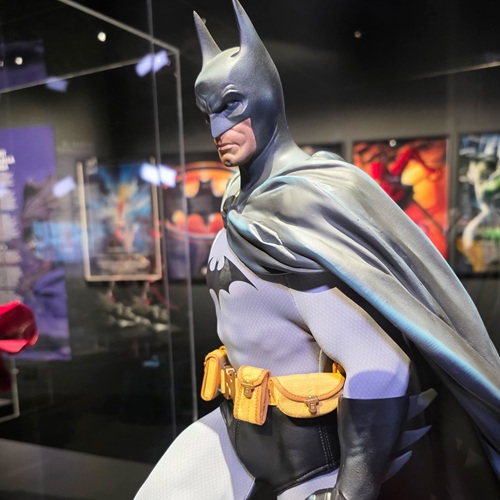
The exhibition explored a compelling question: what are the mythological roots and precursors of the caped crusaders and masked vigilantes who dominate today’s comic books and cinema? This comprehensive display argues that the modern superhero is not a new creation, but rather the cultural successor to the gods, demi-gods, and legendary figures that populated the myths of Greece and Rome, providing a powerful chronological and thematic look at the evolution of heroism itself.

At the heart of the exhibit was the idea that while their costumes and methods may change, the fundamental purpose of the hero remains constant: to defend the world and champion universal human values against the forces of darkness. Curators draw direct parallels between figures, illustrating how the might of Heracles (Hercules) was inherited by Superman, the martial prowess of the Amazons was passed on to Wonder Woman, and the speed of the messenger god Hermes found new life in The Flash. To emphasize this historical connection, the Vapriikki Museum showcases six authentic ancient sculptures on loan from the Italian museum, Museo Nazionale Romano allowing visitors to stand face-to-face with the original inspirations for the modern era’s demigods.

The birth of the modern superhero is pinpointed to 1938 with the publication of the first Superman comic, which kicked off a new, imaginative universe where virtually anything was possible. The exhibition dedicates significant space to chronicling this phenomenon, featuring hundreds of action figures and dolls from the renowned Italian Fabrizio Modina Collection, alongside an extensive display of superhero comic books. This rich tapestry of memorabilia highlights how these stories quickly transcended print, expanding into film, television, games, and every other facet of contemporary popular culture, proving that the struggle between good and evil is an eternally marketable story.
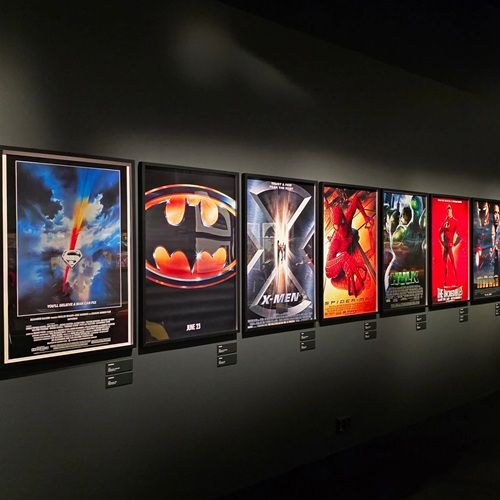
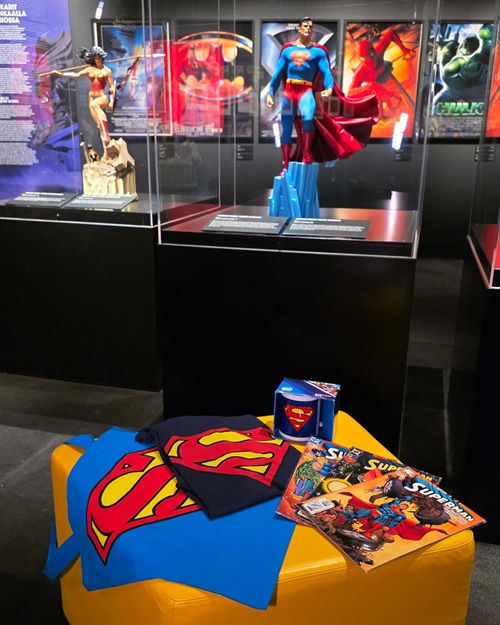
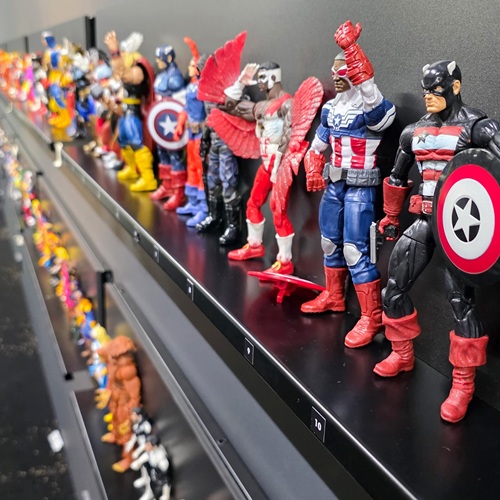
Uniquely, the Finnish implementation of the exhibition, produced in collaboration with the Italian Contemporanea Progetti, includes a look at homegrown heroic figures, often showcasing a humorous and self-deprecating Nordic twist. A special section focuses on Finnish anti-heroes, who frequently subvert the traditional image of the noble, powerful super-being. Characters like Peräsmies (Fartman) and Kapteeni Kuolio (Captain Necrosis) represent a more ironical take on super-strength, anchoring the international story of heroism in a distinct local sensibility while demonstrating that a hero’s journey can be just as compelling when dressed in a satirical, uniquely Northern fashion.

The Phantom was featured in the Supersankarit Antiikista Nykypäivään exhibition, located within the context of his local legacy as Mustanaamio. The exhibition includes a selection of Finnish and Italian Phantom comic books, as well as original comic strip artworks by Kari Leppänen.
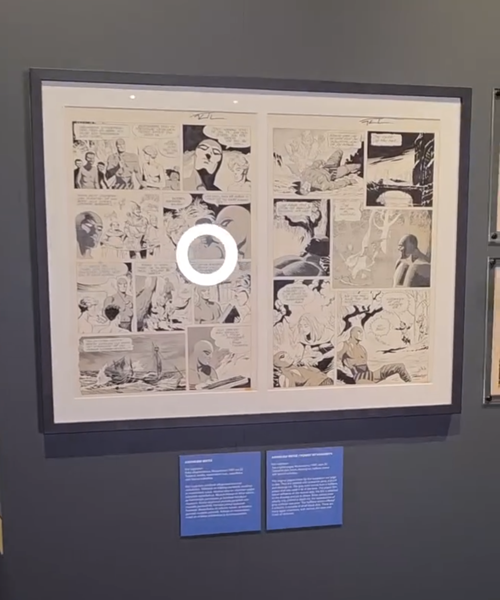
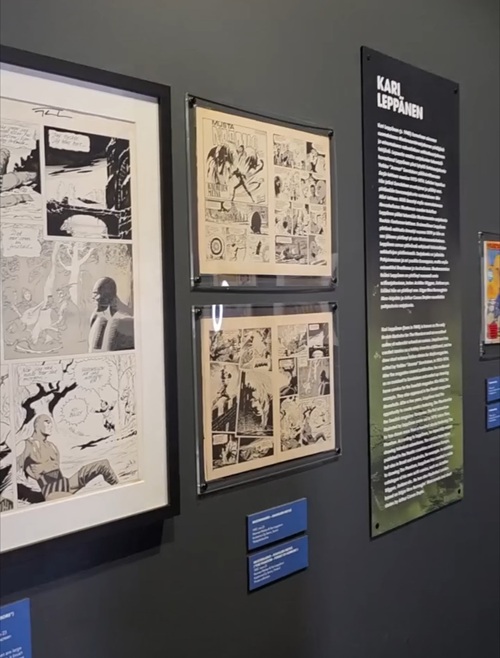
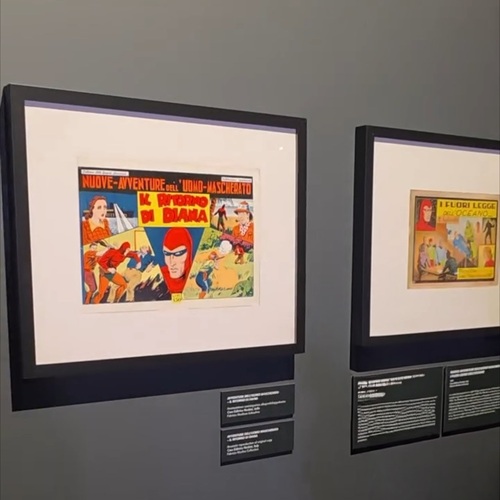
A video produced by Museokeskus Vapriikki features the exhibition’s project manager, Outi Penninkangas, as she navigates through the Supersankarit Antiikista Nykypäivään exhibition.
Ultimately, Supersankarit Antiikista Nykypäivään provided a vibrant and thought-provoking experience that successfully bridged millennia of storytelling. Whether tracing the development of the heroic storylines from classical antiquity to the pages of Marvel and DC, or exploring the localized humor of Finnish comic creations, the exhibition offered something for every generation.
 thephantom.fan