

Mawitaan is a significant and intriguing setting in Phantom comic strip stories, serving as a vital connection between the mythical Deep Woods and the Western world. First introduced in the comic strip in the 1940s, Mawitaan functions as the capital city of the fictional nation of Bangalla, the primary geographical backdrop for the Phantom’s adventures. The city provides a stark contrast to the isolated and mystical environment of the Phantom’s jungle home, highlighting themes of modernity versus tradition and civilization versus wilderness.
The name of the city went through several name changes, originally named ‘Moribar’, then renamed to ‘Morristown’ and finally ‘Mawitaan’.
The city’s origins in the comic strip can be traced back to its early references as a hub of politics, commerce, and intrigue. Its introduction marked Lee Falk’s attempt to create a more comprehensive and believable world for the Phantom, showing that his adventures were not confined to the jungle but extended into urban and political landscapes. The city served as a key location for political machinations and international plots, demonstrating its importance not just to Bangalla but to global affairs.
Mawitaan is often depicted as a melting pot of cultures, reflecting Bangalla’s diverse population. The city is bustling with activity, housing government offices, embassies, and a wide range of businesses. This diversity mirrors the real-world complexities of post-colonial Bangalla, where traditional values often intersect with modern governance and international influence. Mawitaan’s depiction evolves over the decades, aligning with contemporary concerns such as corruption, organized crime, and the challenges of nation-building.
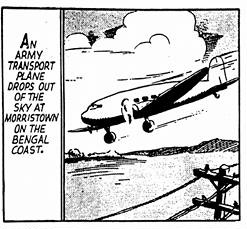
The Phantom’s connection to Mawitaan is both personal and professional. The city often becomes a battleground for his crusade against injustice. For example, in the story ‘The Slave Traders’ (published from the 30th of January thru till the 6th of May 1939, written by Lee Falk and illustrated by Ray Moore), Morristown is portrayed as a staging ground for the Phantom’s efforts to dismantle human trafficking networks.
Mawitaan also provides a setting for the Phantom’s alter ego, Mr. Walker, to operate in a civilian guise. As Mr. Walker, the Phantom moves through the city unnoticed, gathering intelligence and interacting with ordinary citizens. This element of the story adds depth to the character, showing his ability to navigate both the jungle and the urban world with equal skill. It also reinforces his commitment to justice, as he works to protect not only the jungle’s inhabitants but also the people of Bangalla’s urban centers.
The city’s portrayal in Phantom stories is dynamic, often reflecting the political and social issues of its time. In the 1980s, for instance, stories began to explore themes of economic disparity and the struggles of the underprivileged in Mawitaan. This shift in focus added a layer of realism to the comic strip, making Mawitaan not just a backdrop but a living, evolving entity within the Phantom’s world.
Mawitaan remains an essential element in Phantom stories, often providing a setting that bridges the mythical and the mundane. Its vibrant and multifaceted depiction allows for a wide range of storytelling possibilities, from political intrigue to social commentary. Through Mawitaan, Lee Falk created a city that not only grounds the adventures of the Ghost Who Walks in a tangible reality but also serves as a microcosm of the challenges and triumphs of modern society.
 thephantom.fan