

Mandrake the Magician is a classic figure in the annals of comic book history, often regarded as one of the first superheroes. Created by Lee Falk, Mandrake’s exploits have fascinated readers and audiences for decades.
Mandrake the Magician was the brainchild of Lee Falk, a creative powerhouse who also created the Phantom. Born Leon Harrison Gross on April 28, 1911, Falk was a playwright, theater director, and comic strip creator. Falk introduced Mandrake to the world on June 11, 1934, through a syndicated newspaper comic strip distributed by King Features Syndicate.
Falk conceived Mandrake as a suave and intelligent magician who could use his hypnotic abilities and illusions to combat crime. Inspired by stage magicians like Houdini and Howard Thurston, Mandrake embodied the sophistication and charisma associated with performers of that era. Phil Davis, an accomplished artist, collaborated with Falk to bring the character to life visually. Davis’s illustrations captured Mandrake’s elegant persona, complete with his iconic top hat, cape, and magic wand.
Mandrake’s stories were grounded in the contemporary world, blending crime-solving and supernatural elements. His early adventures pitted him against gangsters, corrupt officials, and mystical threats, setting a template for future superhero narratives. The character’s use of hypnotism, depicted as instantaneous and near-supernatural, distinguished him from other protagonists of the time.
Mandrake the Magician’s intellectual property has been managed primarily by King Features Syndicate since his inception. As the distributor of the newspaper strip, King Features has overseen Mandrake’s appearances in various media and collaborations with other characters.
Over the years, King Features has licensed Mandrake for adaptations and merchandise, ensuring that the character remains a recognizable cultural icon. Despite his somewhat niche status compared to other superheroes, Mandrake’s influence on the genre is undeniable. His intellectual property has inspired creators and audiences alike, cementing his legacy as a pioneer of modern heroism.
Popular Comic Book Appearances

Mandrake’s transition from newspaper strips to comic books allowed him to reach a broader audience. Although primarily a newspaper strip character, Mandrake’s stories were reprinted and compiled in various comic book formats. During the Golden Age of Comics, publishers like Dell Comics and King Comics released Mandrake-centric issues.
In these comic books, Mandrake’s adventures maintained their blend of mystery, magic, and action. Accompanied by his loyal friend and assistant, Lothar, and later joined by his romantic interest, Princess Narda, Mandrake confronted an array of villains. These included recurring adversaries such as The Cobra, a master of disguise and deception. The comic books often highlighted Mandrake’s intellect and moral integrity, portraying him as a paragon of justice.
One notable series was the collaboration between Mandrake and other King Features Syndicate characters. In crossovers, Mandrake teamed up with characters like Flash Gordon and the Phantom, creating shared universes that predated modern cinematic universes. These stories showcased the versatility of Mandrake’s character and his ability to interact with diverse narrative worlds.
Newspaper Comic Strip Appearances
Mandrake’s primary platform remained the daily and Sunday newspaper strips. Lee Falk continued to write Mandrake’s adventures until his death in 1999, a testament to his dedication to the character. After Falk’s passing, the strip was continued by writers like Fred Fredericks, who also illustrated the strip for many years.
The newspaper strips explored various themes, from science fiction to political intrigue, reflecting societal changes over decades. Mandrake’s enduring appeal lay in his adaptability; he could navigate futuristic settings and ancient mysteries with equal aplomb. His interactions with a rich supporting cast, including Lothar, Narda, and the enigmatic Hojo, added depth to the narratives.
The daily strips were often serialized, with arcs spanning weeks or months, while the Sunday strips sometimes featured standalone stories. This format allowed Falk and his collaborators to delve into complex plots and character development, ensuring that Mandrake remained engaging to readers.
Television and Cartoon Productions
Mandrake the Magician’s popularity extended beyond the printed page to television and animation. In 1939, Columbia Pictures produced a Mandrake the Magician film serial starring Warren Hull as Mandrake. The 12-chapter serial followed Mandrake and Lothar as they thwarted a villain named The Wasp. While the serial retained the essence of Mandrake’s character, it leaned heavily on action and adventure, typical of the medium at the time.

In the realm of animation, Mandrake was featured prominently in the 1986 animated series “Defenders of the Earth.” This series brought together Mandrake, the Phantom, Flash Gordon, and their offspring to combat the evil Ming the Merciless. Voiced by Peter Renaday, Mandrake served as the team’s resident magician and strategist. The show introduced Mandrake to a new generation, blending his classic traits with modern storytelling elements.
Plans for a standalone Mandrake television series have surfaced sporadically over the years. Although none have materialized fully, these efforts underscore the character’s enduring appeal. The most recent attempt was announced in 2016, with Sacha Baron Cohen attached to play Mandrake in a live-action adaptation. However, this project did not progress beyond the development stage.
Mandrake and The Phantom Crossovers
Mandrake and the Phantom, both created by Lee Falk, have a long history of crossover stories, emphasizing their shared universe and the synergy between their characters. In comic books, these crossovers often highlighted the stark contrast between Mandrake’s mystical abilities and the Phantom’s physical prowess and strategic acumen. Together, they tackled complex threats that required both their unique skills.
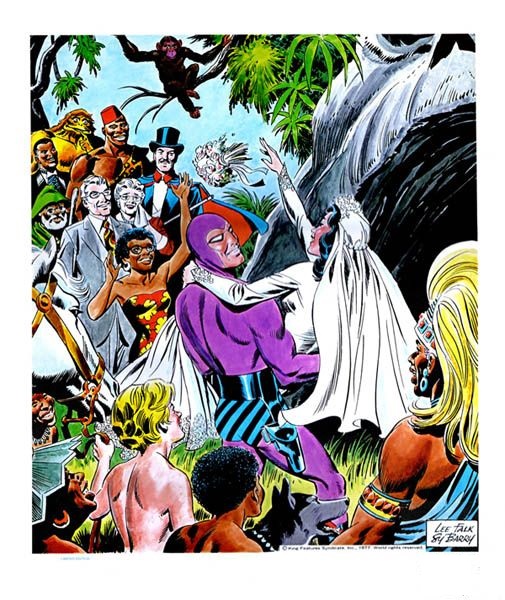
Mandrake the Magician’s attendance at the Phantom’s wedding is one of the most iconic moments in their shared history, showcasing the deep bond between Lee Falk’s legendary characters. The event was chronicled in the Phantom newspaper strip titled “Phantom Wedding” in 1977, written by Lee Falk and illustrated by Sy Barry. As The Phantom, known as the Ghost Who Walks, prepared to wed Diana Palmer in an intimate yet grand ceremony in the Deep Woods, Mandrake and his close ally, Lothar, were among the distinguished guests. The wedding also provided an opportunity for Mandrake and the Phantom’s allies, including Guran and the Jungle Patrol, to interact in a rare moment of peace and camaraderie. This crossover highlighted the interconnectedness of Falk’s creations, leaving a lasting impression on fans of both characters.
In the 2000s, Moonstone Books partnered Mandrake and the Phantom in a series of graphic novels and miniseries. Notable titles included “The Phantom: Ghost Who Walks” (2009) and “Mandrake the Magician: Legacy” (2010). These stories expanded on their shared universe, delving into new adventures that combined supernatural threats with classic crime-solving narratives. Moonstone’s publications were well-received for their modern take on these timeless characters while respecting their rich histories.
Dynamite Entertainment further explored the Mandrake-Phantom connection in its “Kings Watch” series (2013-2014). Written by Jeff Parker, this series brought Mandrake, the Phantom, and Flash Gordon together to battle a global threat orchestrated by Ming the Merciless. The dynamic between Mandrake’s magical prowess and the Phantom’s grounded heroics played a central role in the storyline, showcasing their complementary skills. The success of “Kings Watch” led to spin-offs and reinforced the enduring appeal of these iconic characters.
The crossover extended into the animated series “Defenders of the Earth,” which aired in 1986. This series united Mandrake, the Phantom, Flash Gordon, and their children to form a team against the evil Ming the Merciless. The show portrayed Mandrake as the team’s magician and intellectual strategist, while the Phantom served as the group’s stoic warrior. Their contrasting personalities provided balance to the team, with Mandrake’s sophistication and The Phantom’s rugged determination often leading to entertaining interactions.
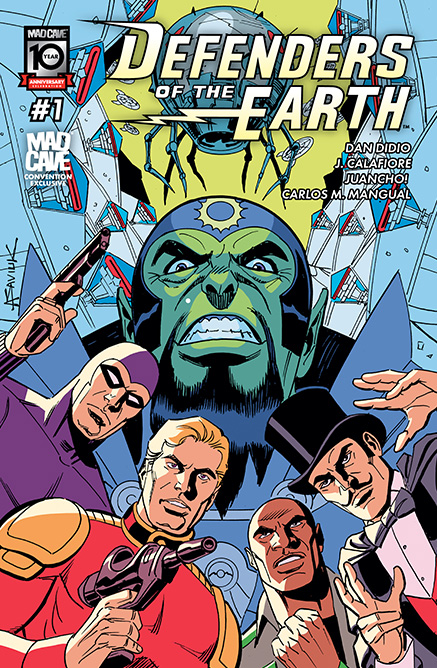
In “Defenders of the Earth,” several episodes explored their camaraderie and shared history. For instance, in episodes where ancient mysteries or supernatural threats emerged, Mandrake’s mystical expertise proved invaluable, while the Phantom’s deep connection to the jungle and its lore offered critical insights. Their ability to complement each other’s strengths ensured the success of their missions.
In 2023, Mad Cave Studios launched a reimagined “Defenders of the Earth” comic series. This series revived the team of Mandrake, the Phantom, Flash Gordon, and other characters, adapting their adventures for contemporary audiences. The series maintained the core dynamics of Mandrake and The Phantom’s partnership, blending classic storytelling elements with modern sensibilities. Mad Cave’s effort brought renewed attention to these iconic characters and highlighted the timelessness of their collaborative exploits.
These crossovers not only delighted fans but also underscored the interconnectedness of Lee Falk’s creations. They paved the way for modern comic universes and demonstrated the potential of collaborative storytelling across different character arcs.
Legacy and Cultural Impact
Mandrake the Magician holds a unique place in popular culture. As one of the earliest comic strip heroes, he paved the way for the development of the superhero archetype. His reliance on intellect, wit, and hypnotic abilities rather than physical prowess set him apart from his contemporaries and successors.
The character’s international appeal cannot be overstated. Mandrake’s stories were translated into numerous languages and published in countries around the world, from India to Italy. In some regions, Mandrake achieved cult status, influencing local comics and media.
Mandrake’s innovative use of hypnotism and illusions has also left a mark on subsequent fictional characters. His influence can be seen in heroes like Doctor Strange and Zatara, who similarly blend mysticism and heroism. The archetype of the gentleman-magician, epitomized by Mandrake, continues to resonate in literature and entertainment.
Conclusion
Mandrake the Magician, created by Lee Falk in 1934, is a seminal figure in the history of comics and popular media. From his origins in newspaper strips to his appearances in comic books, television, and animation, Mandrake has captivated audiences with his charm, intellect, and magical prowess. Managed by King Features Syndicate, his comic strips have stood the test of time, inspiring generations of creators and fans.
 thephantom.fan