

Puck – The Comic Weekly was a prominent American Sunday newspaper comic supplement that entertained readers for several decades during the mid-20th century. Its roots can be traced back to the original Puck magazine, a pioneering humor publication founded in 1876 by Austrian immigrant cartoonist Joseph Keppler. Initially launched as a German-language periodical, Puck transitioned to English in March 1877 and became renowned for its colorful cartoons, caricatures, and political satire, making it the first successful humor magazine in the United States.
The original Puck magazine ceased publication in 1918. However, the Puck name was revived in 1931 as part of the Comic Weekly Sunday comic section distributed through William Randolph Hearst’s newspaper chain. This revival aimed to capitalize on the growing popularity of comic strips and brought together a diverse array of humorous and adventure narratives under the Puck – The Comic Weekly banner.
Puck – The Comic Weekly featured a rich assortment of comic strips that became household favorites. Notable inclusions were:

- Prince Valiant: An epic adventure strip set in the days of King Arthur, created by Hal Foster.
- Popeye: Chronicling the adventures of the spinach-loving sailor, created by E.C. Segar.
- Blondie: Following the domestic life of Blondie Bumstead and her husband Dagwood, created by Chic Young.
- Flash Gordon: A science fiction strip featuring the eponymous hero’s intergalactic adventures, created by Alex Raymond.
- Beetle Bailey: Centering on the antics of a lazy U.S. Army private, created by Mort Walker.
- Henry: A pantomime strip about a bald-headed, silent boy, created by Carl Anderson.
- Little Iodine: Depicting the misadventures of a mischievous girl, created by Jimmy Hatlo.
- Snuffy Smith: A hillbilly-themed strip, originally a spinoff from Barney Google, created by Billy DeBeck.
- The Phantom: It chronicled the adventures of the Ghost Who Walks, a masked crimefighter who operates from the fictional country of Bangalla, created by Lee Falk.
These strips, among others, showcased a blend of humor, adventure, and social commentary that appealed to a wide readership.
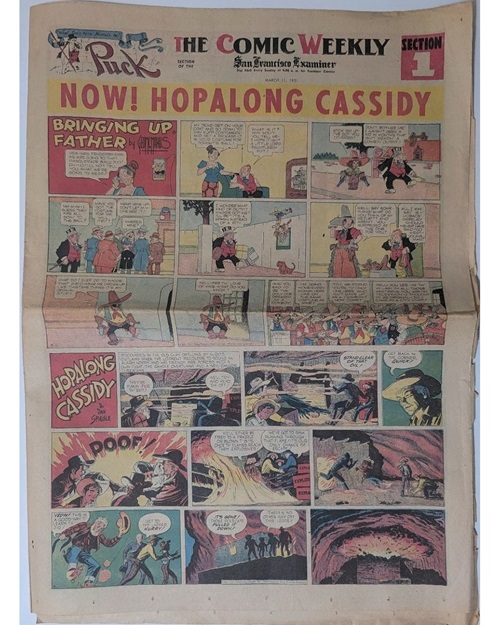
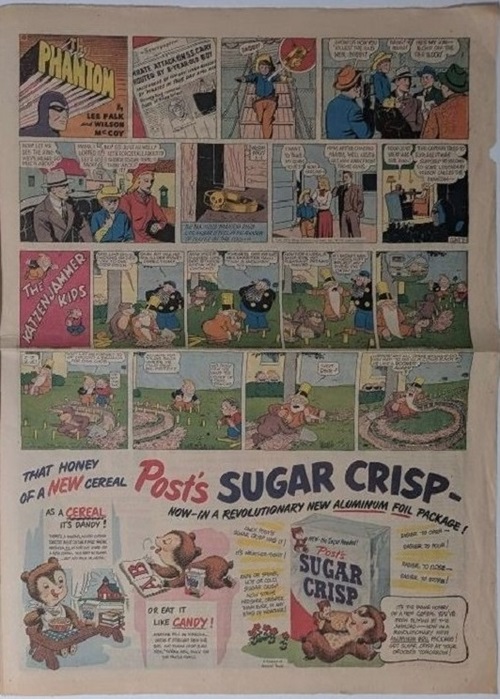
Distributed by King Features Syndicate, Puck – The Comic Weekly reached audiences through numerous newspapers across the United States. While the exact number of participating newspapers varied over time, the supplement was a staple in many major Sunday editions, significantly contributing to the popularity of serialized comic strips during that era.
Beyond the printed pages, Puck – The Comic Weekly extended its influence through related media. From 1947 to 1954, a radio program titled The Comic Weekly Man aired on the Mutual Broadcasting System. This show featured a narrator reading the Sunday comics aloud, allowing families to enjoy their favorite strips in an auditory format, thereby broadening the reach and impact of the comic supplement.
The advertisements featured in Puck – The Comic Weekly were as much a part of the publication’s identity as the comic strips themselves. These advertisements often included promotions for household products, food items, and popular brands of the era, such as soaps, breakfast cereals, and candy bars. Many of these ads were designed to appeal to families, aligning with the publication’s broad readership.
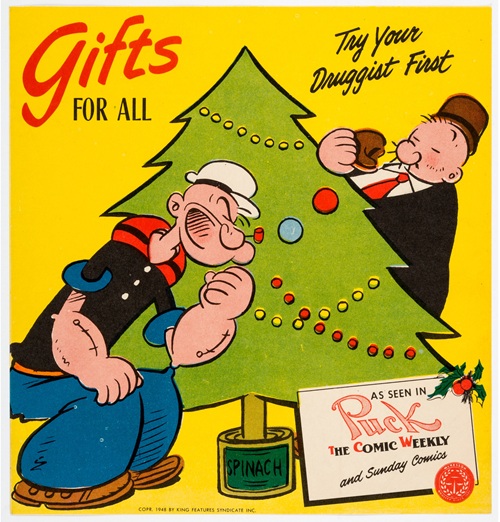
Some ads cleverly incorporated characters from the comic strips, using their popularity to endorse products. For example, Popeye might be seen promoting canned spinach, leveraging his association with the vegetable to boost sales. These colorful and engaging ads added an extra layer of entertainment while serving as a significant source of revenue for the publication.
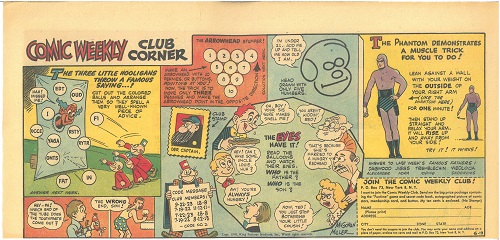
To further engage its audience, Puck – The Comic Weekly often included games, puzzles, and contests. These interactive features provided an additional layer of entertainment for readers, particularly younger audiences. Puzzles like crosswords and word searches were common, as well as connect-the-dots and ‘spot the difference’ activities inspired by popular comic strip characters. Contests were occasionally held, offering prizes such as toys, books, or subscriptions to the newspaper.
One of the most notable interactive features was the ‘Comic Weekly Club Corner‘, which invited readers to join and participate in activities linked to their favorite comic strips. Members of the club often received special badges, newsletters, and opportunities to enter exclusive contests. This initiative fostered a sense of community among readers and heightened engagement with the supplement’s content, ensuring a loyal and enthusiastic audience.
The legacy of Puck – The Comic Weekly is evident in its role in popularizing comic strips and shaping American pop culture. By bringing together a diverse range of comics under a single banner, it provided a platform for both established and emerging cartoonists to reach a broad audience. The supplement’s influence persisted through various iterations until the late 1980s, reflecting the evolving tastes and interests of the American public over several decades.
Puck – The Comic Weekly stands as a significant chapter in the history of American comics. Its creation marked a revival of the esteemed Puck name, and its diverse content entertained and influenced generations of readers. Through its widespread distribution and inclusion of iconic comic strips like the Phantom, it played a pivotal role in the golden age of newspaper comics, leaving an indelible mark on the landscape of American entertainment.
 thephantom.fan