
TOON Magazine commenced publication in 1992, founded and edited by animation veteran Michael Swanigan under his Black Bear Press banner. Emerging during the height of the 1990s animation revival, the magazine carved out a niche as a high-quality, enthusiast-driven alternative to mainstream industry trade journals. It was distinguished by its commitment to documenting the history of the medium through the eyes of the creators themselves, often featuring extensive, unfiltered interviews and rare production art that had never been seen by the general public.
The magazine’s run was relatively brief but impactful, consisting of six primary editions (Vol. 1 #1 through #6) published between 1992 and 1995, though it later saw a brief resurgence through special editions and a retrospective “Complete Collection” in 2014. Despite its popularity among die-hard “toon-heads,” the publication ceased regular print production in the mid-90s due to the high costs of independent publishing and the shifting landscape of the magazine industry. Its legacy remains preserved in the secondary market, where original issues are considered prized collectibles for animation historians.
The contents of TOON Magazine provided a comprehensive bridge between the “Golden Age” of theatrical shorts and the “Silver Age” of Saturday morning television. Each issue typically featured deep-dive retrospectives on iconic studios like Hanna-Barbera and Filmation, alongside spotlights on cult favorites like Space Ghost, Johnny Quest, and Jonny Cypher. Beyond history, it also served as a vital record of contemporary 90s trends, offering early coverage of groundbreaking series like Phantom 2040 and The Ren & Stimpy Show, all while maintaining a signature “fanzine” warmth that prioritized creator credits and artistic process over corporate marketing.
Black Bear Press was an independent publishing house founded and operated by Michael Swanigan, a multi-Emmy-winning animation director and veteran storyboard artist with experience at major studios like Disney, Hanna-Barbera, and Marvel. Based in Simi Valley, California, the press served as a vehicle for Swanigan’s passion for animation history and creator-focused journalism. Its output was characterized by a “slick” production quality, typically featuring high-grade paper and cardstock covers, while maintaining the intimate feel of an enthusiast-driven small press.
The publisher is most widely recognized for TOON Magazine, which it produced throughout the early and mid-1990s. Beyond the magazine, Black Bear Press specialized in historical retrospectives and niche comic adaptations that mainstream publishers often overlooked. One of its most enduring releases was the book Animation by Filmation, a rare and comprehensive look at the legacy of Filmation Studios. In the late 90s, the press also delved into comic books, notably publishing a first-printing adaptation of the Rankin/Bass classic Mad Monster Party in 1999.
By the late 1990s and early 2000s, the company’s primary printing activities began to slow as Swanigan focused more on his work in animation production and education. While the original Black Bear Press printings became rare collectors’ items, some of the company’s most significant historical works have been kept in circulation through modern reissues and digital platforms. Today, the press is remembered as a vital independent voice that documented the artistic process and history of the American animation industry during a period of significant growth and change.
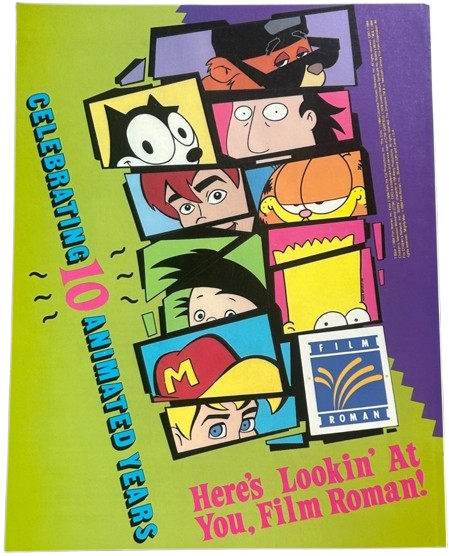
The Phantom makes an appearance in the series in TOON Magazine edition number 3, published in 1994. The cardstock cover magazine measures 8-3/8” x 10.75” with 80 black and white pages on gloss finish paper. The front and back covers can be seen below.
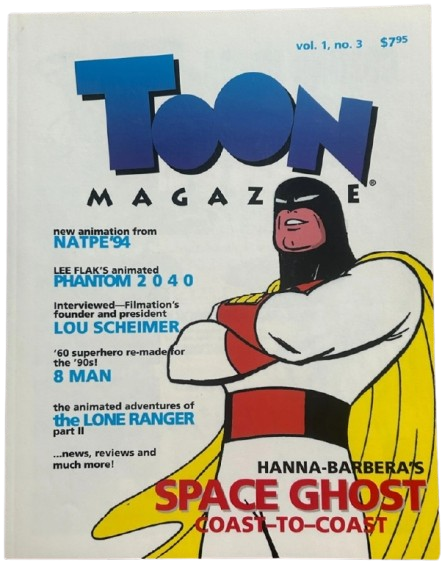
While the issue is most famous for its retro features on Space Ghost and Filmation, the Phantom 2040 section is historically significant because it captures the industry’s immediate reaction to the show’s groundbreaking aesthetic. A feature is found of the animated cartoon series Phantom 2040 as a “current events” spotlight, as the show had just premiered in syndication that same year.
The magazine emphasizes the involvement of Peter Chung (of Æon Flux fame) as the character designer. At the time, his highly stylized, elongated, and “wire-thin” character designs were a massive departure from traditional superhero animation, and the article discusses how this gave the show its unique “cyberpunk” look.
The article provides a brief “lineage” explanation, clarifying for readers that this hero is the 24th Phantom, the descendant of the classic Lee Falk character, effectively bridging the gap between the 1930s origins and this futuristic 2040 setting. Because this issue was published in late 1994, the information reads like a “Sneak Peek” or “First Look”, featuring early production art and promotional stills used to market the series to stations and viewers.
This specific edition is one of the few contemporary print sources that treated Phantom 2040 with serious journalistic interest. Most other magazines of the era were focused on the Disney Renaissance films (The Lion King) or the rise of CG, but Toon Magazine documented the specific trend of “Darker/Edgier” syndicated animation that Phantom 2040 spearheaded.
 thephantom.fan