
TEGN was a Norwegian magazine dedicated to comics, running from 1986 to 2005. For nearly two decades, it served as the country’s most significant and respected publication in the field, offering in-depth editorial content, critical analysis, and historical perspectives on the comic book medium. With 52 printed editions, TEGN provided a platform for both international and Norwegian comics, featuring translated works alongside original Norwegian series. Its role in shaping and documenting the local comics culture made it an essential resource for enthusiasts, creators, and scholars alike.
In 2001, with issue 46, TEGN merged its content with the Swedish magazine Bild & Bubbla, creating a collaboration that allowed for broader Scandinavian coverage of comics while still maintaining its individual identity. Despite this partnership, the Norwegian title was gradually phased out, disappearing entirely after issue 52. The magazine continued in an online-only format for its final years before formally ceasing publication in 2005. Its closure marked the end of an era for Norwegian comic journalism, leaving a significant gap in the market for serious comic book critique and discussion.
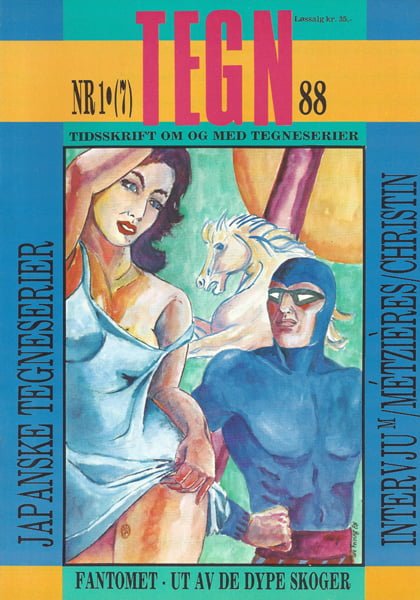
The Phantom was featured both within and on the cover of several TEGN magazines. Editions 7 (published in 1988), 30 (published in 1993) and 36 (published in 1995) feature the Phantom on the front cover, as seen below.


Before TEGN, a smaller publication called Tekst og Tegning (which translates to ‘Text and Drawing’) had set the stage, though with a more limited format and reach. Tekst og Tegning was a Norwegian magazine dedicated to comics, established and primarily managed by Jon Gisle, the author of ‘Donaldismen’. Functioning largely as a one-person endeavor, the magazine had a modest format and limited distribution. Its primary focus was on exploring and analyzing comic art, serving as a precursor to the more expansive TEGN magazine.
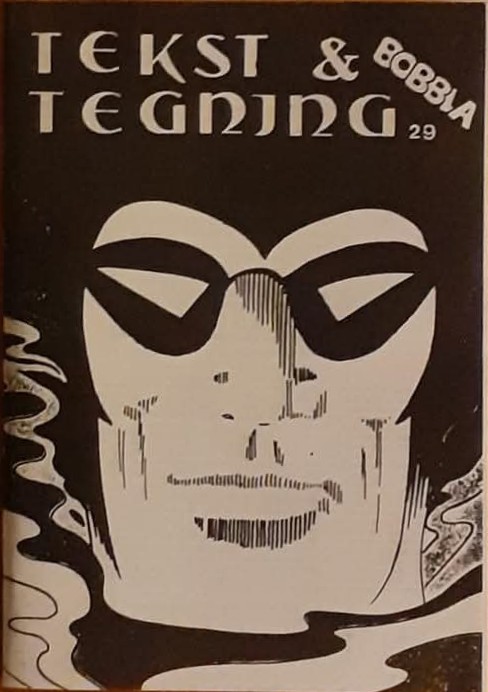
The Phantom was featured in Tekst og Tegning in edition number 29.
Both magazines played a crucial role in chronicling the evolution of the Norwegian comics scene, highlighting the artistic and literary value of the medium. Their archives serve as historical records, capturing the development of comic book culture in Norway from the 1980s into the early 2000s.
 thephantom.fan