
Published by Raleigh, North Carolina-based TwoMorrows Publishing, RetroFan is a bimonthly magazine that serves as a vibrant, full-color “grab bag” of 1960s, ’70s, and ’80s pop culture. Launched in 2018 and originally edited by comic book historian Michael Eury (with Ed Catto taking the editorial helm in 2025), the publication moves beyond the company’s traditional focus on comic book history to explore a broader nostalgic landscape of vintage television, toys, movies, and fads.
Each 84-page issue typically features eclectic “fun, fab” columns from pop culture experts like Andy Mangels and Scott Shaw, covering everything from Saturday morning cartoons and classic sitcoms to monster movies and celebrity interviews. With its tagline, “The Crazy, Cool Culture We Grew Up With,” RetroFan has established itself as a premier glossy periodical for enthusiasts of the “Silver” and “Bronze” ages of entertainment, available both in digital formats and physical retailers like Barnes & Noble.
TwoMorrows Publishing is a highly respected US-based publisher founded by John and Pam Morrow in 1994, initially as an offshoot of their advertising agency in Raleigh, North Carolina. The company quickly distinguished itself by focusing on providing in-depth coverage of the history and creators behind comic books and retro pop culture. Their mission is to create a lasting record of this unique American art form, documenting the careers and accomplishments of creators from the Golden, Silver, and Bronze Ages of comics, often attracting a readership that skews older and appreciates the medium’s history. The company prides itself on offering detailed, well-researched content with a fun, positive slant, having earned multiple Eisner Awards for their publications.
The company’s publishing venture began in 1994 with the launch of the Jack Kirby Collector, a fanzine dedicated to the work of the legendary comic book artist Jack Kirby, following his death. This initial success rapidly led to the expansion of their magazine line, which today includes several long-running and highly regarded titles. Key magazine publications include Alter Ego (focusing on Golden and Silver Age comics), Back Issue! (covering comics from the 1970s onward), Comic Book Creator (celebrating creators), and RetroFan (exploring general retro pop culture). In a unique diversification, they also publish BrickJournal, a magazine catering to LEGO enthusiasts.
Beyond their magazine lineup, TwoMorrows has a prolific output of trade paperbacks and hardcovers that further cement their role as preservers of comics history. Noteworthy book series include the comprehensive American Comic Book Chronicles, which provides a detailed, decade-by-decade history of the medium, and the Modern Masters series, which focuses on the careers of contemporary comic book artists. They also publish “Companion” books on specific publishers or characters and “How-To” books for aspiring creators. Despite being a small operation, relying on numerous freelance editors and contributors, TwoMorrows remains a premier source for fans and researchers seeking high-quality, specialized material on comics and pop culture history.
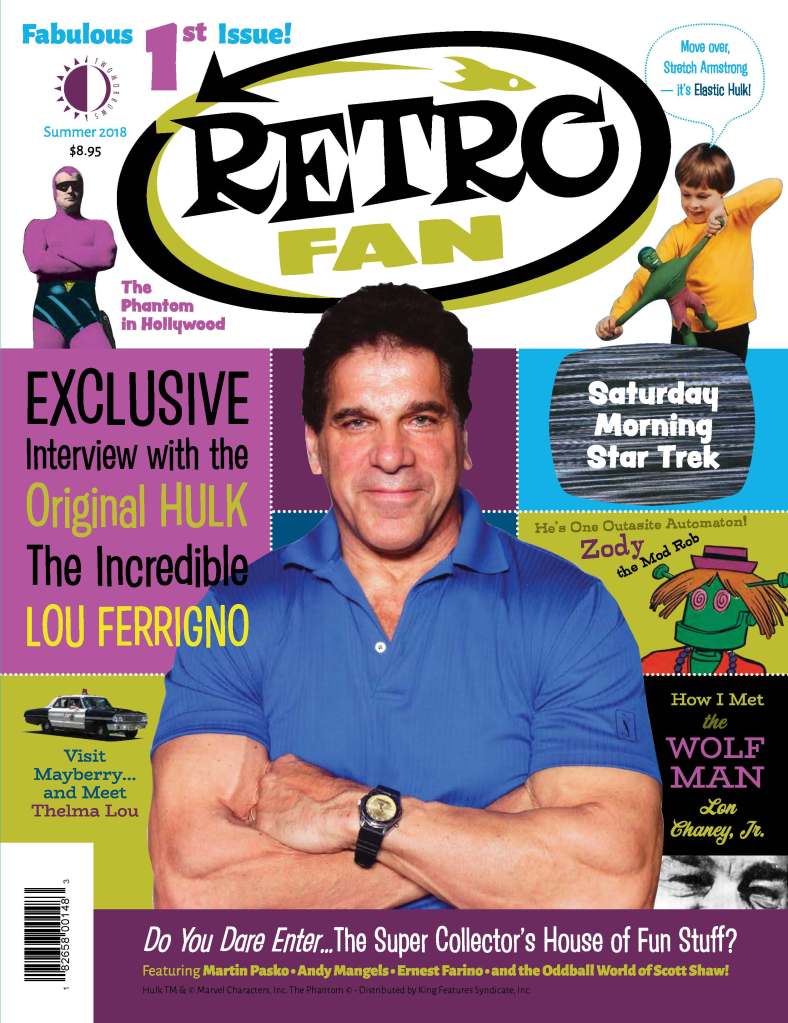
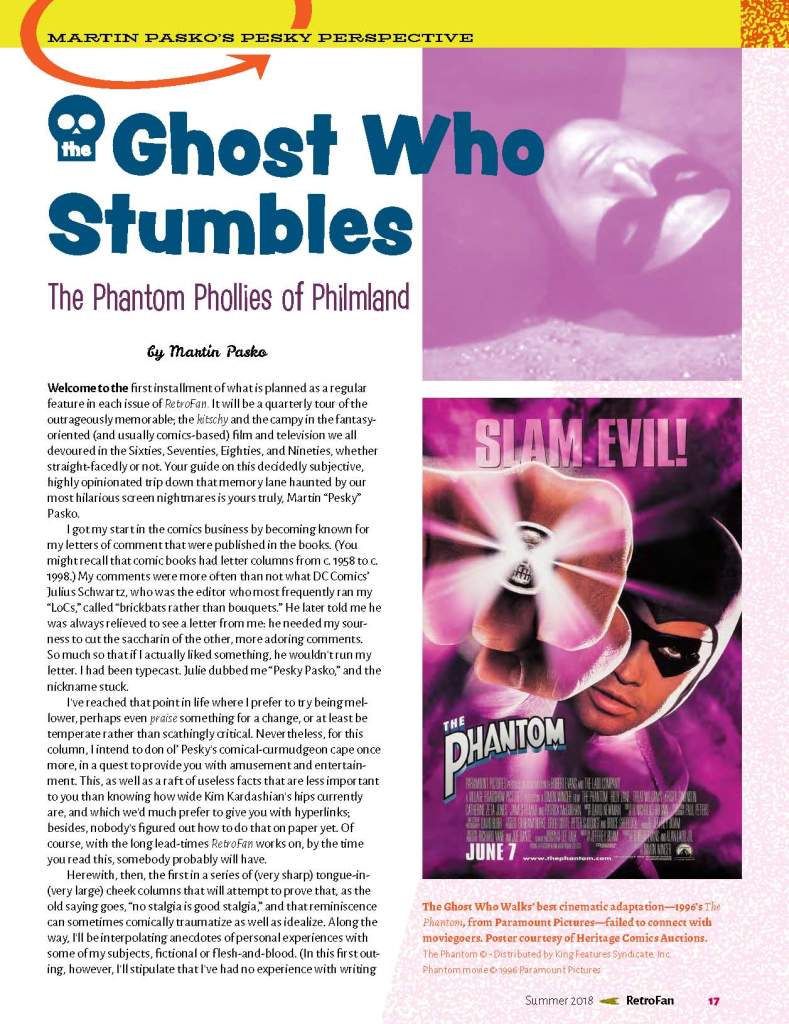
RetroFan Magazine edition number 1 was released in June 2018 featuring an article on the Phantom titled ‘Ghost Who Stumbles – The Phantom Phollies of Philmland’. In this article from RetroFan magazine, writer Martin Pasko explores the history and media adaptations of the Phantom, the “Ghost Who Walks”.
He highlights how creator Lee Falk established the character in 1936 as the first costumed hero to wear skin-tight “underwear on the outside” and establish the “legacy hero” concept, where the mantle is passed down through generations. Pasko details the character’s origins, including how Falk’s misconception of pupil-less Greek busts led to the Phantom’s iconic blank-eyed mask—a design choice later mirrored by Batman. Despite being a trailblazer, the author notes that the character’s jungle setting and “white protector” tropes have made him increasingly difficult to adapt for modern audiences without appearing as a relic of colonial-era imperialism.
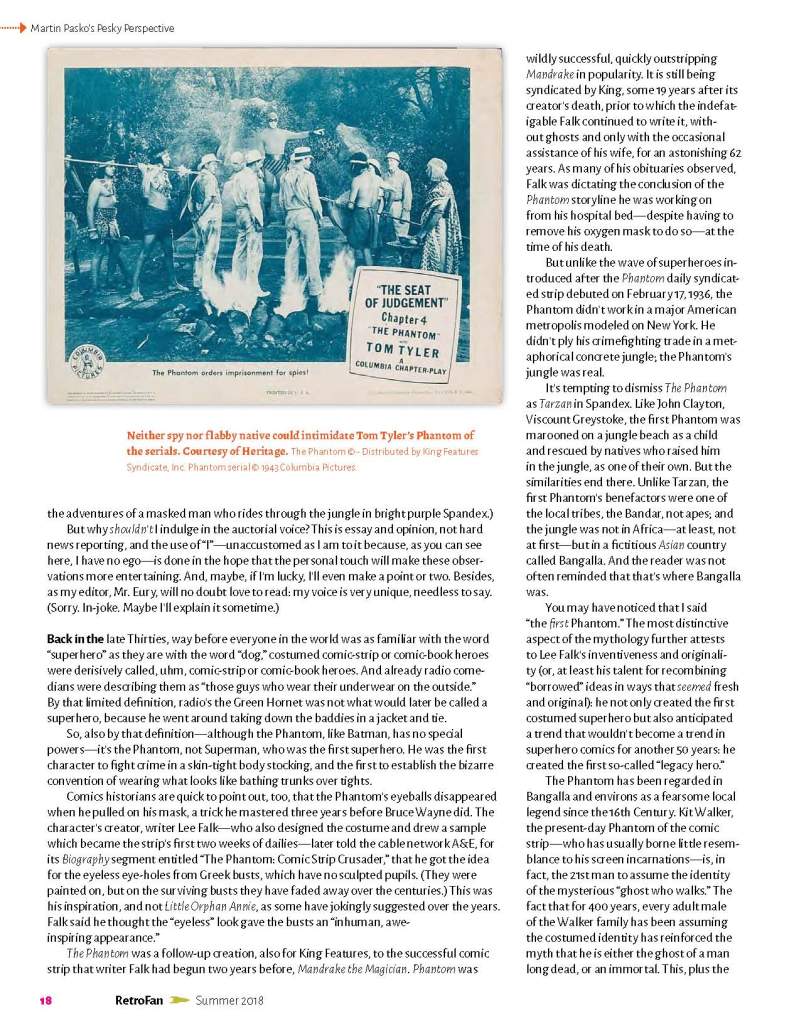
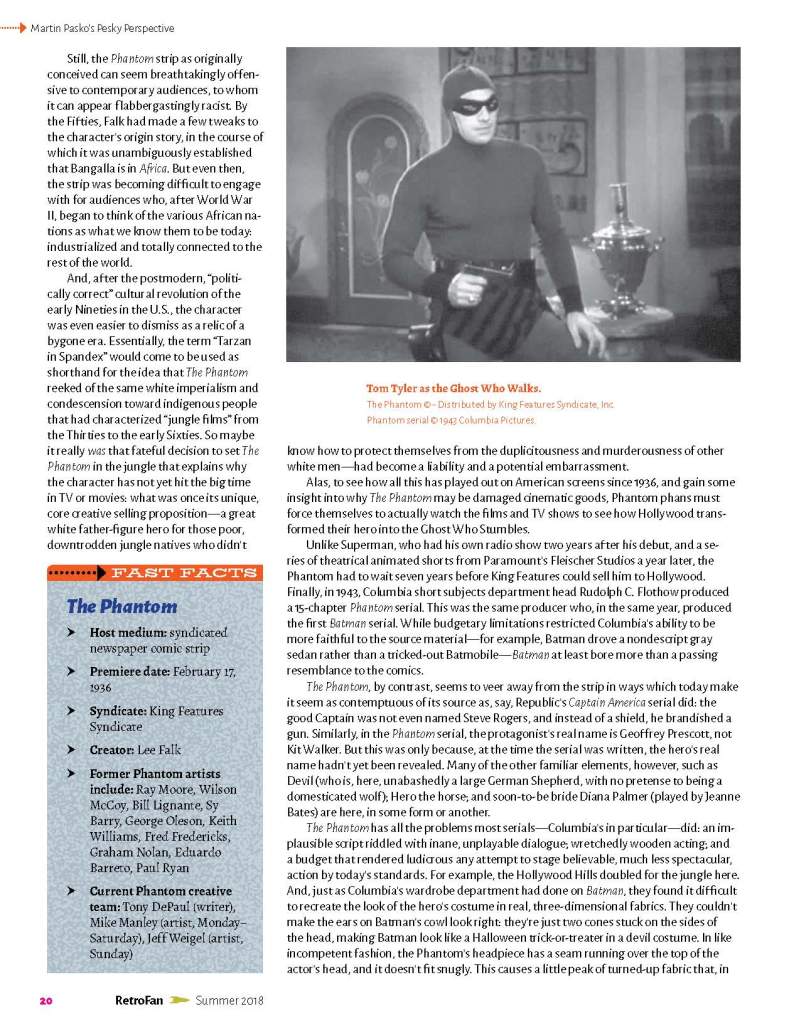
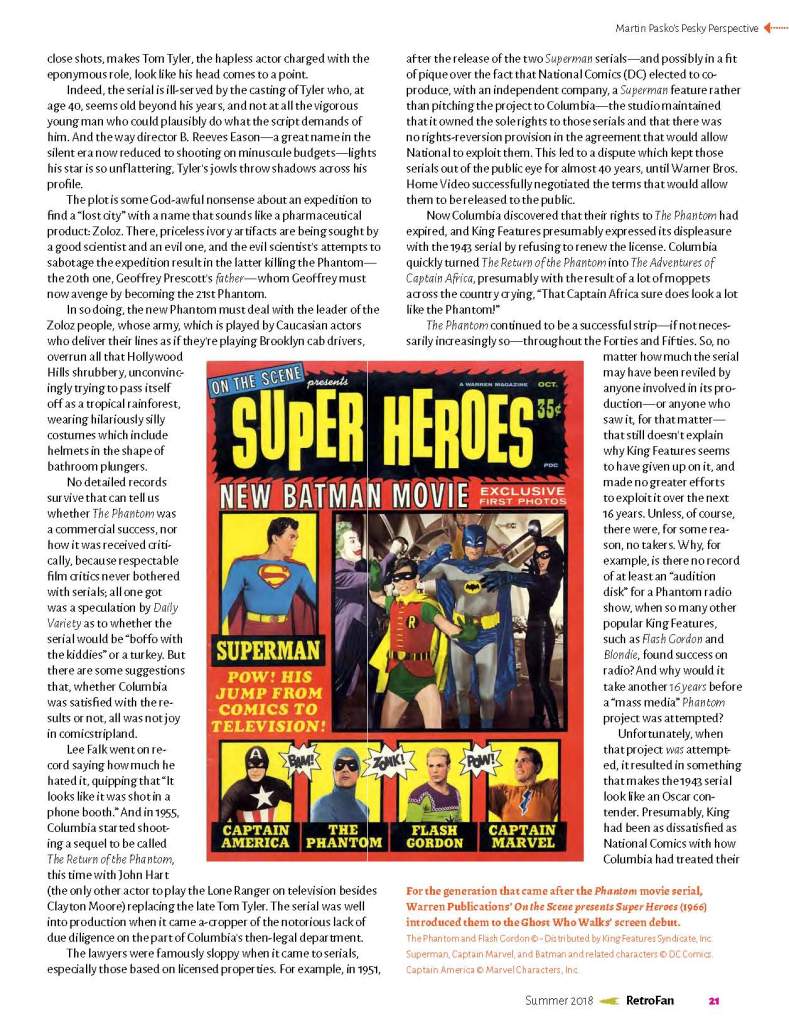
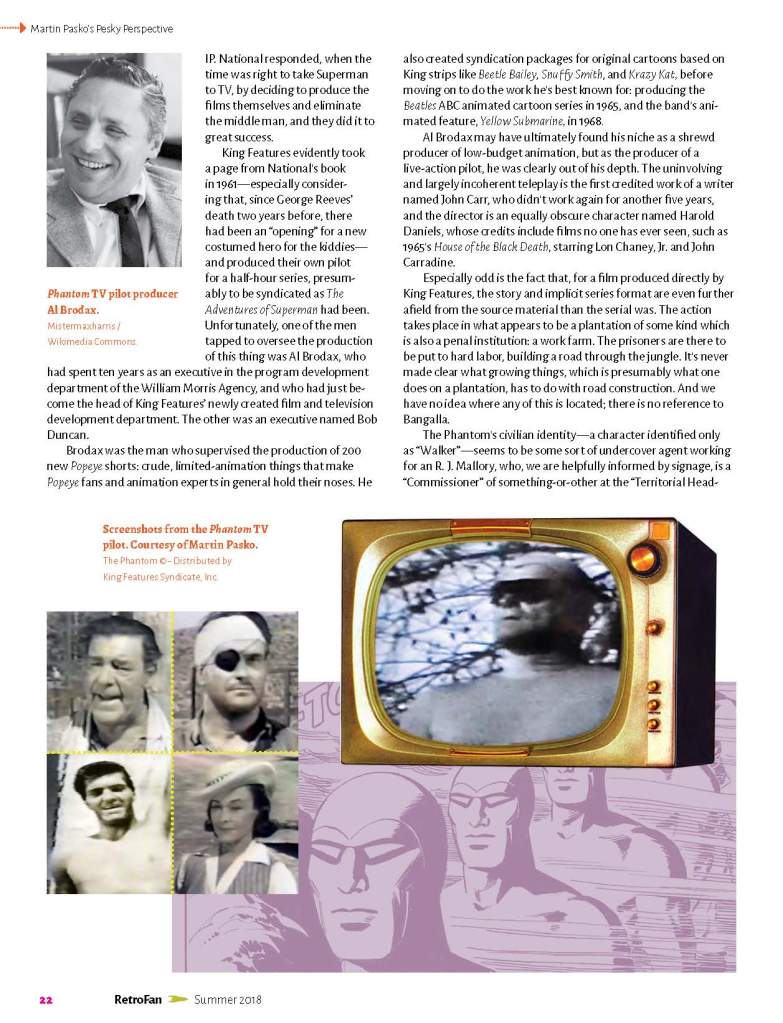
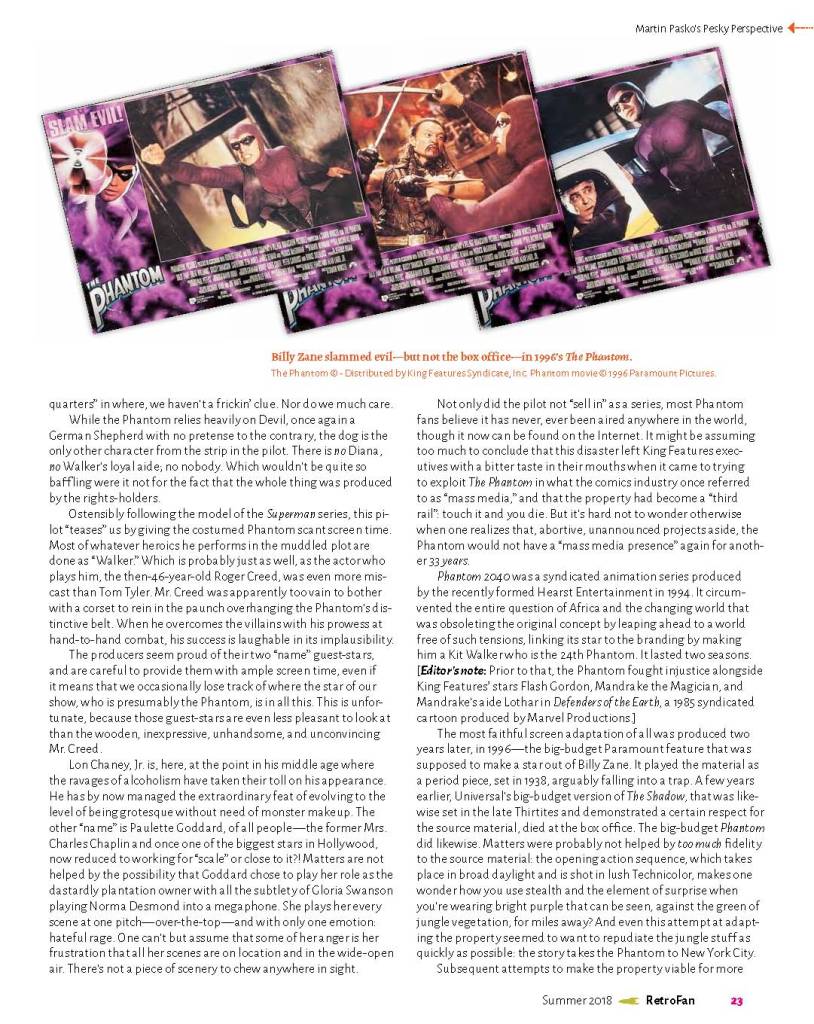
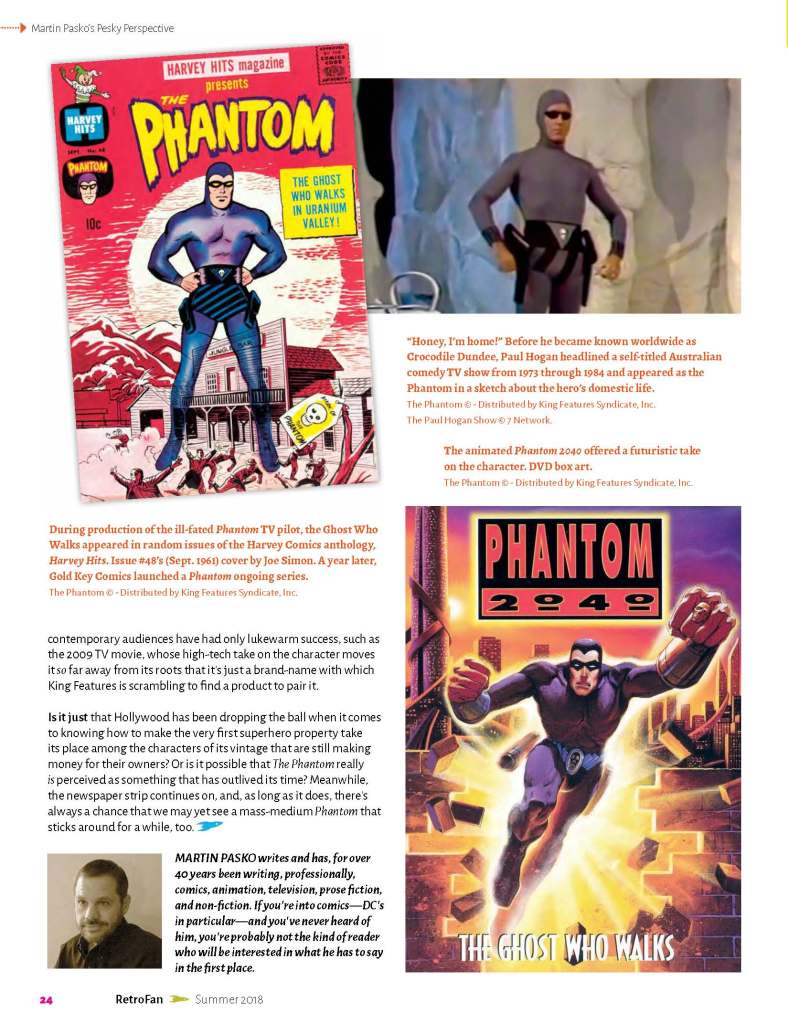
The article shifts into a critical critique of the Phantom’s “stumbles” on screen, ranging from the low-budget 1943 Columbia serial starring an aging Tom Tyler to the failed 1961 TV pilot produced by Al Brodax. Pasko spares little mercy for these adaptations, describing the 1943 serial as a “God-awful nonsense” production with wooden acting and a costume that featured a poorly fitted, “peaked” headpiece. He also discusses more contemporary attempts, such as the 1996 Billy Zane film—which he views as a faithful but commercially unsuccessful “period piece”—and the futuristic Phantom 2040 animated series. Ultimately, Pasko questions whether Hollywood has simply “dropped the ball” or if the character’s core mythology has finally outlived its cultural relevance.

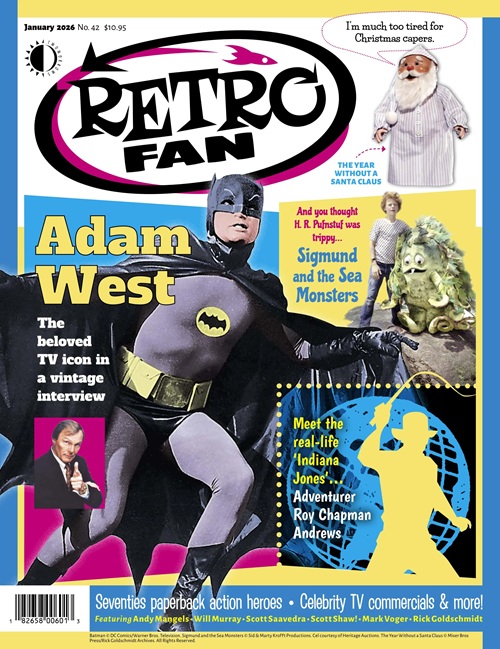
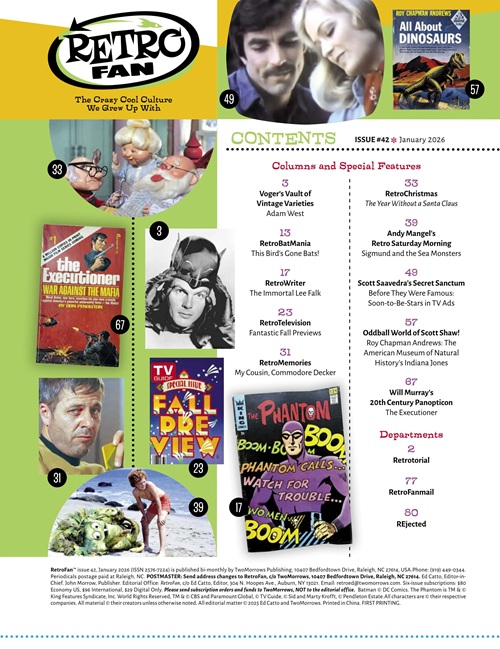
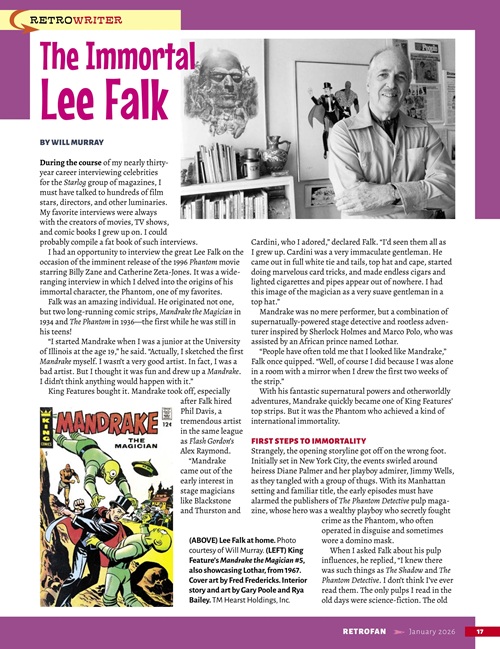
RetroFan Magazine edition number 42 was released in January 2026, published with 84 full color pages. Writer Will Murray explores the career of Lee Falk in an article titled ‘The Immortal Lee Falk’, who created both Mandrake the Magician and the Phantom comic strips.
Falk recounts how he created Mandrake while a 19-year-old college junior, originally drawing the character himself before King Features Syndicate purchased it and paired him with artist Phil Davis to develop the comic strip. The article highlights the transition from Mandrake’s stage-magic origins to the 1936 debut of the Phantom, which Falk initially envisioned as a wealthy New York playboy named Jimmy Wells. Falk eventually discarded the urban setting for the jungles of the South Seas, developing a deep mythos involving generations of the Phantom through his adventures and storytelling.
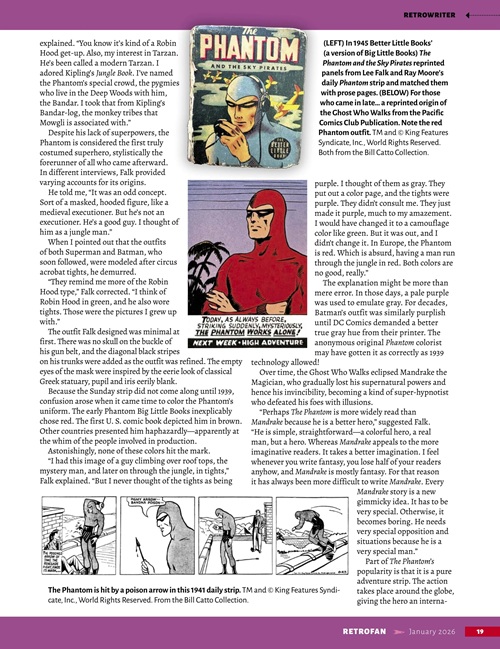
The text also delves into the visual evolution and international inconsistencies of the Phantom’s costume. Falk reveals that he originally imagined the hero’s tights as gray, but a colorist’s choice in the early Sunday strips led to the signature purple suit, while other international editions featured the character in red or brown. Despite being considered the first costumed hero, Falk viewed the character as a modern Tarzan or a Robin Hood type. The article also compares Falk’s two creations, noting that while Mandrake relied on illusions and specialized situations, the Phantom achieved greater global popularity due to his straightforward adventures and the relatable humanity shown in his comic strips.

 thephantom.fan