
Kapten Stofil (which translates to Captain Fogy) is a cult-classic Swedish comic book series created by Joakim Lindengren in 1999. The main character featured in the series is a “superhero” whose primary goal is to fight progress and modernism, championing a return to the values, aesthetics, and consumer goods of the mid-20th century, especially pomade, port wine jelly, and old trams.
Joakim Lindengren is a highly influential Swedish cartoonist and illustrator, born in 1962, whose work has defined the country’s alternative comic scene since the early 1980s. Formally trained at Konstfack in Stockholm, he is most famous for creating Kapten Stofil, a satirical superhero who champions mid-century nostalgia against the encroaching modern world. Lindengren’s artistic style is celebrated for its meticulous “Silver Age” pastiche and detailed architectural renderings of Swedish cities. His career has been recognized with numerous honors, culminating in the prestigious Guld-Adamson award for lifetime achievement in 2025, cementing his status as a master of the medium.
Beyond his signature characters, Lindengren’s versatility spans from the absurdist humor of John Holmes & Sherlock Watson to high-concept international collaborations, such as his graphic novel adaptation of Giannina Braschi’s United States of Banana. He has played a pivotal role in the publishing industry as a co-founder of the imprint Skadeglatt Leende and a frequent contributor to landmark magazines like Galago and Pyton. In addition to his adult-oriented comics, he is a prolific illustrator of children’s literature, collaborating with renowned authors to bring his distinct, often surreal aesthetic to a younger generation of readers.
Kapten Stofil, the iconic “World’s Foremost Retrograde,” stands as a monumental figure in Swedish underground comics, representing a satirical yet deeply affectionate rebellion against modernism. Created by Joakim Lindengren, the series first coalesced into a dedicated periodical in 1999, published primarily through Lindengren’s own imprint, Skadeglatt leende, in close collaboration with Optimal Press. The magazine ran for forty regular issues over an eleven-year span, concluding its primary print run in 2011. Unlike traditional superhero comics, the magazine functioned as a cultural artifact in its own right, blending Lindengren’s meticulously drafted comic panels with a substantial prose section titled Stupido, which featured essays on obscure cultural history, forgotten celebrities, and the preservation of mid-century aesthetics.
Before the launch of the dedicated magazine, the character’s early adventures were serialized in Galago and later collected by Ordfront Galago in the 1998 volume Kapten Stofil: Världens främste bakåtsträvare. As the series grew in popularity, several publishers stepped in to produce trade paperbacks and high-quality hardcovers to keep the backlog available. Jemi published Hut går hem in 2000, but it was Optimal Press that became the definitive home for the character’s collected works for over a decade. They released En man steg av spårvagnen in 2003 and the expansive omnibus Gammalt bröd rostar aldrig in 2005.
To manage the vast output of the magazine’s forty-issue run, Optimal Press released two significant chronological collections: För En Handfull Folkvett in 2007, covering the first sixteen issues, and Gammal är Äldst in 2009, covering issues seventeen through thirty-four. These editions can be seen below.
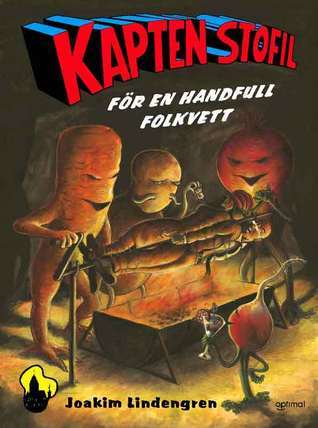
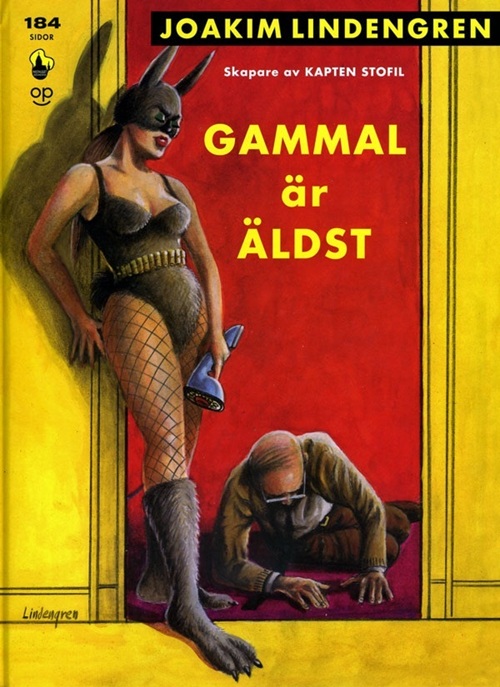
The legacy of the series continued even after the main magazine ceased publication. In 2012, Optimal Press released the Kapten Stofils Årsbok, a final yearbook that served as a swan song for the original era of the Royal Swedish Fogy Society. More recently, in 2018, Cobolt Förlag took over the mantle by publishing Dåligt är det nya bra, a comprehensive volume that collected the final issues of the magazine along with rare material originally published in the periodical Riksettan and various Christmas annuals.
Throughout its history, the series was defined not just by Lindengren’s vision, but by the intellectual contributions of David Nessle, Martin Kristenson, and John Andersson, whose collective work ensured the magazine remained a sophisticated critique of contemporary progress while maintaining a reverence for the nostalgic past.
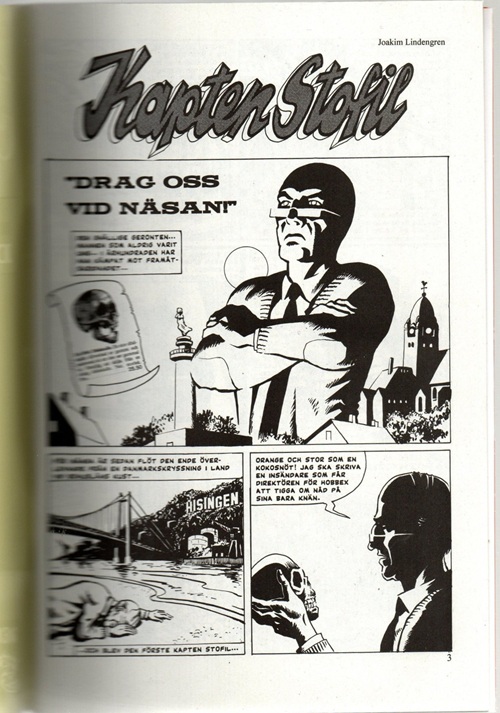
The Phantom made an appearance in the series as a parody in edition number Captain Stofil edition number 23-24 published in 2006. The softcover comic book contains 100 black and white pages measuring 17cm x 26cm. The front cover can be seen below, resembling the Phantom sitting on his Skull throne, with other touches seen on the front cover also seen on Fantomen comic book covers published in Sweden.
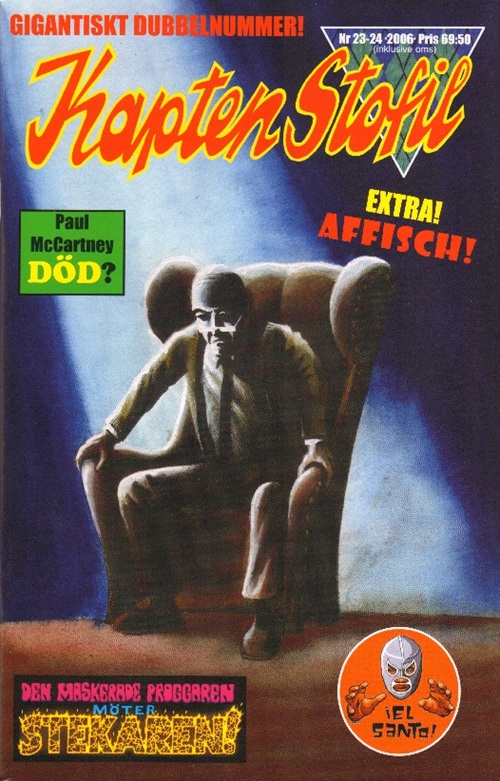
In this particularly dense installment of the series, Kapten Stofil receives reinforcements from his family, including a tale from the Stofil chronicles so antiquated that it eschews speech bubbles entirely. The narrative depth is further bolstered by the Masked Proggaren’s encounter with “The Fryer”, the suburban horror of Stureplan, alongside John Andersson’s evocative continuation of A Gentleman and His Dog. The issue serves as a vibrant cross-section of the Swedish indie scene, featuring twelve new anagrams by Joakim Pirinen, three pages of Max Wanloo’s signature wit, eight installments of Camilla Forsman’s Karro Ko, and Freddie Wadling’s shortsighted interpretation of Alfred Jarry’s King Ubu.
The publication also marks a significant debut for Daniel Ahlgren, who presents a genre-bending “conglomerate” of X-Men and Fucking Åmål titled The Mystery of the Mysterious Toilet. In a gesture of artistic lineage, Joakim Lindengren offers a humble tribute to the forgotten mastery of Jeff Cobb cartoonist Pete Hoffman. The Stupido section maintains its reputation for exhaustive cultural inquiry, dissecting both the “Paul is dead” McCartney conspiracy and the phenomenon of “Kindergarten Psychedelia”, while providing a definitive profile of the wrestling icon Santo. To complete this comprehensive package, the magazine—noted for its modest price point—includes a vibrant four-color poster mapping the territory of “Stofilenland”.
A sample of internal pages can be seen below.

 thephantom.fan