
Fumo di China is Italy’s longest-running magazine dedicated to comics and illustration, renowned for its comprehensive coverage of the medium in all its forms, including adaptations in animation, film, and television. Established in 1978 as a mimeographed bulletin by the ‘Club Giovani Amici del Fumetto’, it evolved through various formats before becoming a monthly publication available in newsstands from 1989 onwards. Over the decades, it has solidified its reputation as a cornerstone of Italian comics journalism, offering in-depth articles, interviews, reviews, and critical essays that cater to both enthusiasts and professionals.
The Club Giovani Amici del Fumetto (Young Friends of Comics Club) was a pivotal grassroots organization in Italy that played a crucial role in cultivating a serious and sustained appreciation for comic art during the late 20th century. Founded by passionate young fans and aspiring creators, the club served as a community hub for those who saw comics not just as entertainment, but as a rich artistic and cultural medium. Through meetings, newsletters, and correspondence, the club created a network of like-minded individuals who could exchange ideas, share their work, and celebrate their love for graphic storytelling.
One of the club’s most lasting contributions was the creation of Fumo di China, which began in 1978 as a simple mimeographed bulletin distributed among members. The publication started as an amateur fanzine filled with commentary, news, and essays, but it quickly evolved into a respected voice in the Italian comics scene. It provided a platform not only for critical discourse about comics, but also for emerging artists and writers who would later influence the national and even international industry. The club’s dedication to quality and depth helped establish a tone of intellectual and artistic seriousness that was rare in comics journalism at the time.
Beyond publishing, the Club Giovani Amici del Fumetto helped foster a generation of Italian creators, scholars, and fans who would go on to shape the country’s comics culture. It functioned as both a support system and a launchpad, encouraging young talents to explore their craft and think critically about the medium. Even as the original club eventually evolved or dissolved, its spirit lives on through the legacy of Fumo di China and the many artists and professionals it helped inspire. The club’s influence can still be felt in how Italian comics are discussed, appreciated, and produced today.
Throughout its history, Fumo di China has been instrumental in spotlighting both emerging and established talents within the comics industry. It has featured contributions from notable figures and has been a platform for discovering new voices in the field. The magazine’s commitment to quality content and its role in chronicling the evolution of comics have made it a respected publication among readers and creators alike.
As of 2025, Fumo di China is undergoing a significant transformation. The magazine is taking a brief hiatus from newsstand distribution to revamp its format and content strategy, aiming to blend its rich heritage with a modern approach that appeals to newer generations of readers. This evolution is part of a broader initiative to ensure that Fumo di China remains a vibrant and relevant voice in the ever-changing landscape of comics and visual storytelling.
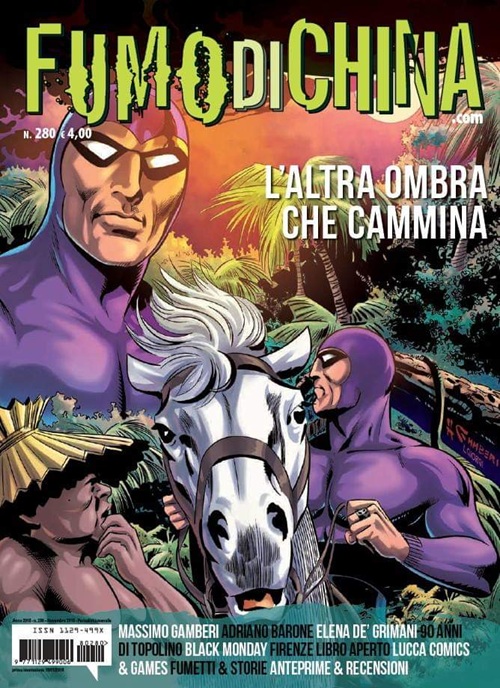
The Phantom has appeared in the magazine series on several occasions, both within and on the cover. Below are various examples of the Phantom featured on the front covers, from left to right:
- Edition number 172 in 2009
- Edition number 280 in 2018

 thephantom.fan