
Bellona Magasin (which translates to Bellona Magazine) was published by Miljøstiftelsen Bellona in Norway commencing in 1989. The magazine series reports on and brings awareness to environmental issues, well before a focus on the impact of climate change and pollution became mainstream in public discourse.
Miljøstiftelsen Bellona, which translates to the ‘Bellona Environmental Foundation’ was founded on the 16th of June 1986, seven weeks after the Chernobyl Nuclear Power Plant accident.
The founders are involved in how authorities mislead Norwegians about radiation risks. Driven by a strong environmental commitment and a desire to be more effective than traditional environmental groups, six young men decided to create their own independent foundation.
Named after the war goddess Bellona, who was known for her fairness and social gatherings, the foundation introduces the term “environmental crime” during a press conference that releases a report on “Environmental crime in Norwegian industry”. The next day, Dagbladet reports the founding of the “environmental police”, marking a shift in the public’s focus from traditional nature protection to environmental protection.
Frederic Hauge and Rune Haaland were initial founders, but Haaland gave up his rights in 2002, leaving Hauge as the sole founder of Bellona, which continues to be highly active to this day.
Bellona Magasin edition number 1 published in 1989 contains 100 full color pages measuring 29.7cm x 20.5cm in Norwegian text. The front cover of this edition can be seen below.

This first edition contains a 16 page supplement of a Phantom comic strip story under the Phantoms local title ‘Fantomet’. The story is titled ‘Dødelig Last’, which translates to ‘Deadly Cargo’, written by Terje Emberland and illustrated by Knut Westad.
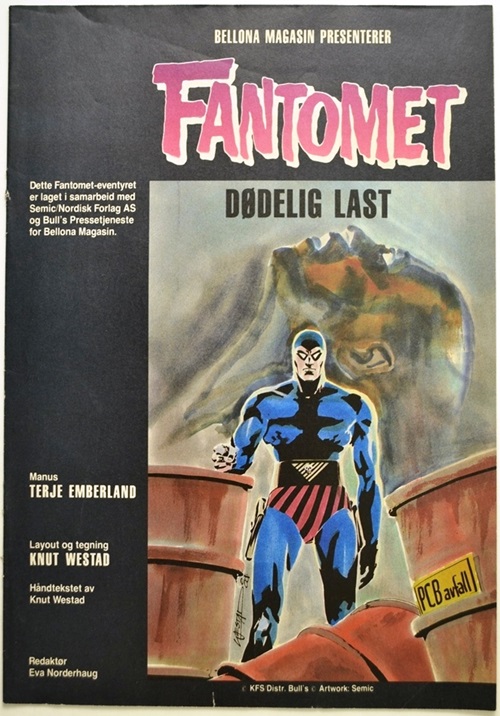
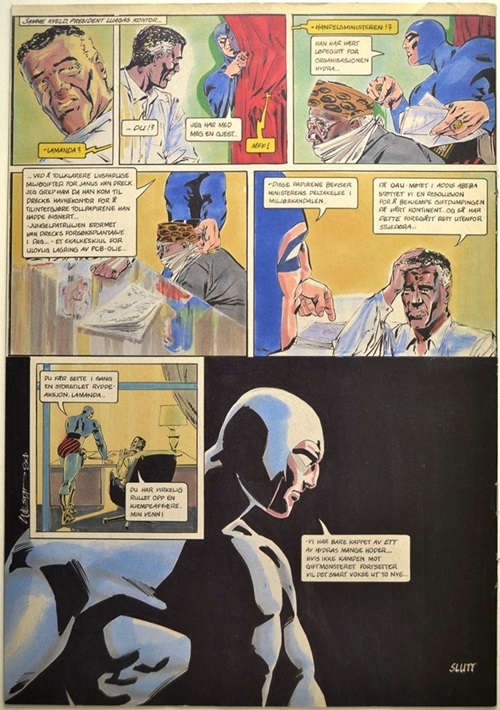
This compelling comic strip story was created exclusively for Miljøstiftelsen Bellona, delving into the pressing issue of environmental hazards as it narrates a suspenseful tale about toxic waste arriving on the shores of Bengali. The narrative unfolds as the protagonist, armed with his trademark courage and moral compass, uncovers a sinister plot involving the illegal dumping of hazardous materials, revealing the broader implications of corporate greed and its devastating impact on vulnerable communities. Emberland’s sharp storytelling, combined with Westad’s evocative illustrations, draws readers into a vivid world where the stakes are incredibly high, forcing them to confront the grim realities of pollution and its effects on both the environment and human health, ultimately inspiring a call to action for global awareness and environmental justice.
 thephantom.fan