

King Features Syndicate, Inc. is one of the world’s largest and most influential print syndication companies, owned by Hearst Communications. It distributes approximately 150 comic strips, newspaper columns, editorial cartoons, puzzles, and games to nearly 5,000 newspapers and digital platforms across the globe. The company has played a pivotal role in shaping the landscape of syndicated content for over a century, providing readers with iconic characters and thought-provoking editorial features.
King Features Syndicate operates as a unit of Hearst Holdings, Inc., which oversees Hearst Corporation’s diverse media ventures, including cable-network partnerships, television programming, digital content distribution, and other syndication enterprises. Through its extensive global reach, King Features has expanded beyond traditional print media, adapting its content for digital platforms, mobile applications, streaming services, and merchandise licensing, ensuring its classic properties remain relevant in an evolving media landscape.
In addition to its flagship operations, King Features Syndicate is affiliated with North America Syndicate and Cowles Syndicate, further extending its syndication and licensing capabilities. Reed Brennan Media Associates, another unit under Hearst, is responsible for the editorial processing and distribution of more than 200 syndicated features per week for King Features, ensuring that newspapers and digital platforms receive high-quality, engaging content on a consistent basis.
Beyond syndication, King Features actively manages a vast portfolio of beloved intellectual properties, including Popeye, The Phantom, Flash Gordon, Beetle Bailey, Hagar the Horrible, and Blondie, among many others. The company has also expanded its reach into animation, television, film, gaming, and consumer products, collaborating with studios and brands to bring its legendary characters to new generations of fans.
With a legacy spanning over a century, King Features continues to innovate and evolve, balancing its rich history with modern storytelling, ensuring its place as a leader in the global syndication industry.
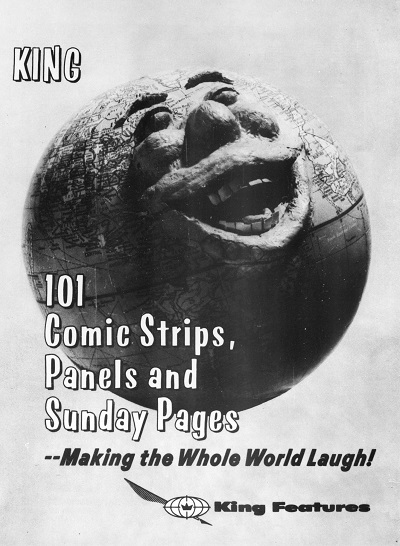
King Features Syndicate was founded in 1915 by media tycoon William Randolph Hearst as part of his growing newspaper empire. It has remained a cornerstone of Hearst Communications for over a century, continuing to shape the world of comic strips, editorial content, and entertainment syndication. The company was named in honor of Moses Koenigsberg, a key figure in Hearst’s publishing operations, as “Koenig” is the German word for “king.” Koenigsberg played a crucial role in organizing and overseeing the nationwide distribution of Hearst’s editorial features, comic strips, and columns, ensuring that content from Hearst-owned newspapers reached a much wider audience.
By the 1930s, King Features had established itself as a dominant force in American media. At the time, the Hearst newspaper empire was one of the most powerful in the world, controlling dozens of major newspapers and magazines. King Features, as its syndication arm, played a vital role in expanding the reach of Hearst’s content. The company was one of 130 syndicates operating in North America, collectively distributing a staggering 1,600 features to more than 13,700 newspapers across the continent. However, King Features’ vast output was not always directly distributed under its own name. Some of its content was syndicated through “second-tier” agencies, including International Feature Service and Premier Syndicate, which served smaller publications or specialized markets.
Throughout the Golden Age of newspaper comics (1920s–1950s), King Features played an instrumental role in the rise of comic strips as a dominant form of popular entertainment, launching legendary titles such as Popeye (1929), Blondie (1930), Flash Gordon (1934), Mandrake the Magician (1934), and The Phantom (1936). These characters became household names, appearing not only in newspapers but also in radio, film serials, and later television and merchandising.
King Features’ influence continued to grow throughout the 20th century, pioneering new approaches to syndication, licensing, and multimedia expansion. Its success was tied to the evolution of the newspaper industry, as it adapted to shifts in media consumption. While many syndicates disappeared or merged over the decades, King Features remained a dominant force, expanding beyond print to embrace digital syndication, animation, gaming, and global licensing.
Today, King Features stands as one of the longest-running and most successful syndication companies in history, maintaining its legacy while embracing new technologies and platforms to bring its iconic characters and syndicated content to audiences worldwide.
Many of King Features’ most beloved characters found new life beyond the newspaper pages, making their way into animation, comic books, television, and film. The transition to other media helped solidify King Features as a multimedia powerhouse, ensuring that its iconic properties reached audiences far beyond traditional print readership.
Animation and Film Adaptations
Throughout the 20th century, many King Features Syndicate characters were adapted into animated cartoons, both for theatrical releases and television series. Some of the most notable adaptations include:
- Popeye the Sailor (1933-1957) – One of the earliest and most successful King Features characters to transition to animation, Popeye starred in a long-running series of theatrical animated shorts produced by Fleischer Studios (later taken over by Famous Studios/Paramount). The character’s popularity skyrocketed, making him one of the most recognized cartoon icons of all time.
- Flash Gordon (1936-1940) – The sci-fi hero appeared in a series of live-action serials, featuring dramatic space adventures that captivated audiences in cinemas.
- The Beatles (1965-1969) – King Features produced an animated television series based on the legendary rock band, marking one of the first TV cartoons based on real-life musicians.
- The King Features Trilogy (1960-1961) – The company directly financed animated adaptations of Popeye, The Phantom, Mandrake the Magician, and Flash Gordon. These syndicated series were produced by Paramount Cartoon Studios, Halas and Batchelor, and other animation studios, expanding the audience for King’s most famous properties.
King Features’ animation legacy continued into the modern era with collaborations with Netflix, Warner Bros., and other entertainment companies, bringing new animated projects like The Cuphead Show! (2022), based on the retro-style video game inspired by classic King Features cartoons.
Comic Book Expansion and King Comics (1966-1967)
Before the rise of dedicated comic book publishers, many King Features Syndicate comic strips were reprinted in comic book format by publishers such as Dell, Harvey, Charlton, and Gold Key Comics. Recognizing the potential of the comic book market, King Features made an ambitious attempt to establish its own publishing arm by launching King Comics in 1966.
King Comics was an effort to create an in-house comic book line, featuring some of the syndicate’s most popular characters. The imprint released seven titles, including:
- Beetle Bailey
- Blondie
- Flash Gordon
- Jungle Jim
- Mandrake the Magician
- The Phantom
- Popeye
King Comics had notable creative talent, including Al Williamson, Gil Kane, Wally Wood, and Archie Goodwin, working on its titles. However, despite the strong lineup of characters and creators, the imprint lasted only a year and a half, with cover dates running from August 1966 to December 1967. The venture ultimately proved unsuccessful, due to factors such as distribution challenges, competition from established publishers (like DC and Marvel), and the decline of comic book sales during that era.
When King Comics folded, its properties were once again licensed out to other publishers, with Charlton Comics taking over many of its former titles, such as The Phantom and Mandrake the Magician. These characters continued to appear in comic book form through various publishers in subsequent decades, with The Phantom enjoying particularly strong publication history internationally, especially in Sweden, Australia, and India.
Legacy in Comics and Beyond
Even though King Comics was short-lived, King Features’ presence in the comic book industry remained significant. Many of its most famous characters continued to be adapted into graphic novels, limited series, and digital comics in the years that followed. Today, King Features works with various publishing partners to produce new comic books and reprint classic strips, ensuring that its legendary properties continue to entertain new generations.
Beyond comics and animation, King Features has expanded into video games, merchandise, live-action adaptations, and streaming content, proving its enduring influence across multiple forms of media.
Comics Kingdom
In November 2008, King Features Syndicate launched Comics Kingdom, a pioneering digital platform designed to provide newspapers with a way to integrate syndicated comics into their websites while generating advertising revenue. This initiative marked a significant step in modernizing the syndication business, allowing newspapers to embed comic strips and editorial cartoons directly on their sites. Revenue was shared through a dual advertising model—local sales were managed by individual newspapers, while King Features handled national ad sales, ensuring a sustainable monetization structure.
During the initial 30-day period, when new strips were available on newspaper websites, readers could also engage in online discussions through local community forums, fostering an interactive comic-reading experience that encouraged audience participation.
Comics Kingdom Today: A Leading Digital Comics Destination
Over the years, Comics Kingdom has evolved into one of the premier digital comics platforms, offering a vast library of comic strips, editorial cartoons, and interactive puzzles to a global audience. Readers can access daily-updated comic strips, ensuring that they stay up to date with their favorite content.
Key features of Comics Kingdom include:
- Free Access & Archives – A one-year archive of comics is available for free, allowing users to catch up on missed strips or discover new favorites.
- Premium Subscription – Comics Kingdom Royal – For those who want expanded access, Comics Kingdom offers a premium membership called Comics Kingdom Royal. Subscribers gain access to a massive archive of vintage comics, stretching back decades.
- Exclusive Member Benefits – Comics Kingdom Royal members enjoy several perks, including:
- The ability to save and organize favorite comic strips in a personal scrapbook.
- Daily email updates, delivering the latest comics directly to their inbox.
- Access to rare and classic comics that are not available to free users.
Additionally, Comics Kingdom recognizes the diversity of its audience and offers over 30 comic strips in Spanish, expanding its reach to Spanish-speaking readers worldwide.
Impact & Future of Comics Kingdom
With the decline of traditional newspapers and the shift toward digital content consumption, Comics Kingdom has become an essential platform for both classic and modern syndicated comics. By offering a mix of free and premium content, King Features has successfully adapted to the evolving media landscape, ensuring that its legendary characters and new comic creations remain accessible to fans everywhere.
As digital engagement continues to grow, King Features continues to innovate, exploring mobile apps, social media integration, and new ways to enhance the online comic-reading experience. Comics Kingdom remains at the forefront of digital comic syndication, preserving the rich history of newspaper comics while embracing the future of digital entertainment.

Timeline
King Features Syndicate, established in 1915, has played a pivotal role in shaping American comic strips and popular culture. Here’s a chronological overview of its significant milestones:
1896: William Randolph Hearst hires Richard Outcault to draw The Yellow Kid, one of the first modern American comic strips.
1903: Grace G. Drayton, the first nationally syndicated female cartoonist and creator of the Campbell’s Soup Kids, launches her comic, Toodles, with Hearst.
1910: George Herriman’s Krazy Kat appears for the first time in Hearst newspapers. Herriman was likely the first nationally syndicated African-American cartoonist, though he concealed his race to maintain his comic’s popularity.
1915: William Randolph Hearst and Moses Koenigsberg establish King Features Syndicate to distribute Hearst’s content worldwide.
1919: Olive Oyl makes her debut as the leading lady of Thimble Theatre, created by E.C. Segar.
1929: Popeye wins Olive Oyl’s heart—and the hearts of readers worldwide—when he appears in Thimble Theatre on January 17.
1930: Blondie makes her first appearance as a young flapper in love with the wealthy Dagwood Bumstead, created by Chic Young.
1934: Flash Gordon’s world is threatened by Ming the Merciless for the first time on January 7.
1934: The first modern superhero comic, Mandrake the Magician, debuts on June 11, created by Lee Falk and syndicated by King Features.
1936: Lee Falk introduces his second iconic superhero, The Phantom, who appears for the first time on February 17.
1939: Cuties, by E. Simms Campbell, launches with King Features as the first nationally syndicated comic strip by an African-American cartoonist whose racial identity was known to readers.
1941: America enters World War II, and many King Features cartoonists, including Hank Ketcham, Ted Shearer, and Mort Walker, serve in the military.
1950: King Features brings Mort Walker’s Beetle Bailey to newspaper readers.
1951: Dennis the Menace, by Hank Ketcham, makes his debut.
1954: Mort Walker teams up with Dik Browne to create Hi & Lois, a spin-off of Beetle Bailey, starring Beetle’s sister, Lois Flagston.
1958: The first-ever licensed character PEZ dispenser arrives—featuring Popeye.
1960: Family Circus, by Bil Keane, is launched in syndication.
1968: King Features produces the classic animated Beatles movie, The Yellow Submarine.
1973: Funky Winkerbean, by Tom Batiuk, launches as a comic strip reflecting the worldviews of the Baby Boomer generation as they come of age.
1974: Dik Browne’s Hagar the Horrible pillages onto the comics scene.
1977: King Features teams up with Marvel Comics to bring The Amazing Spider-Man to readers around the world.
1980: Both Popeye and Flash Gordon premiere as major motion pictures in the same year and are both considered cult classics today.
1988: Curtis by Ray Billingsley, the first African-American cartoonist to win the prestigious Reuben Award, is launched.
2015: King Features Syndicate celebrates its 100th anniversary.
2017: King Features welcomes the hit video game property Cuphead into its portfolio.
2019: Popeye celebrates his 90th anniversary with a global celebration, and Olive Oyl celebrates her 100th anniversary.
2019: Darrin Bell, a King Features cartoonist, becomes the first African-American to win a Pulitzer Prize for editorial cartooning.
2020: King Features collaborates with Netflix to produce The Cuphead Show!, an animated series based on
 thephantom.fan