
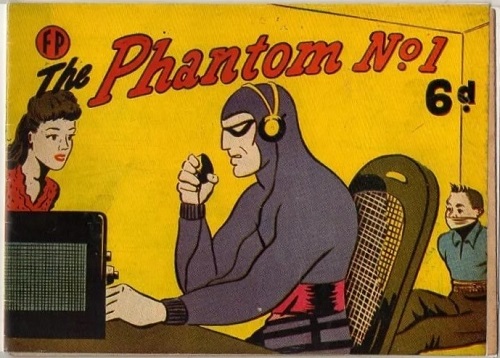
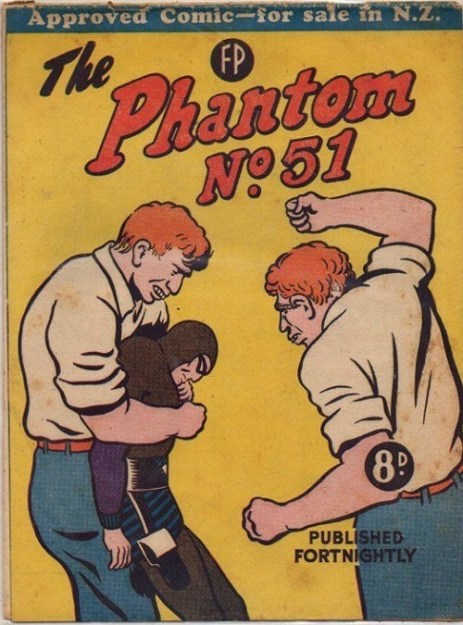
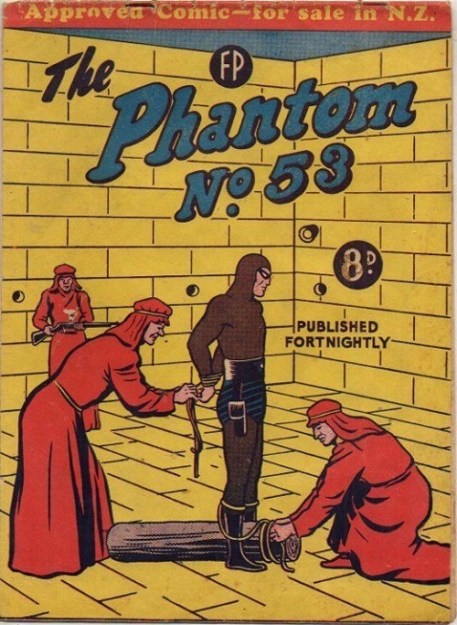
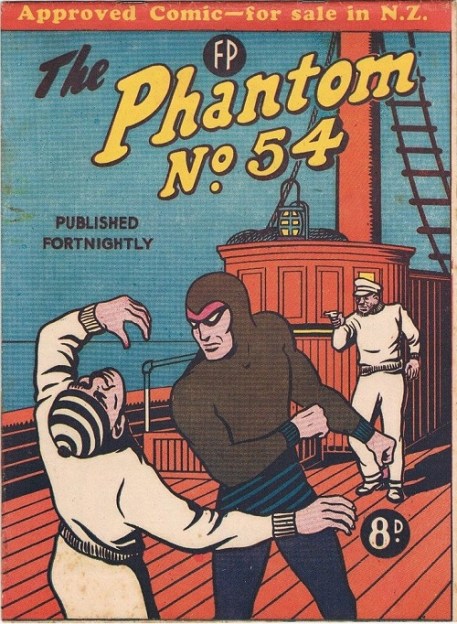
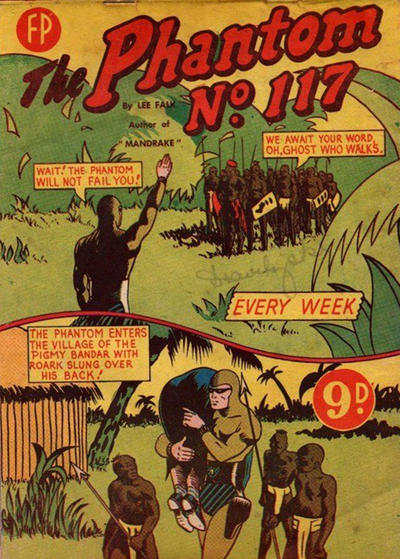
The Phantom was published by Feature Publications in Wellington, New Zealand from October 1949 thru till 1965. The series contains 556 editions, fully licensed by King Features Syndicate.
Feature Publications (FP), based in Lower Hutt, Wellington, was a major player in New Zealand’s early comic book scene, flourishing during the 1940s and 1950s comic mini-boom. Run by brothers Hugh and Jack Warnes, the publisher specialised almost exclusively in reprinting syndicated American newspaper comic strips into affordable comic book format, which were typically black-and-white interiors on low-grade newsprint with three-colour covers. They began this venture around 1944 with titles like “The Adventures of Brick Bradford” and quickly became one of the two largest comic book printing and publishing houses in New Zealand, alongside Times Printing works in Auckland.
Feature Publications’ stable of reprinted material was extensive, drawing from popular US newspaper strips to attract a wide readership. Among their numerous titles were major characters like the Phantom, which ran for a remarkable 556 editions from October 1949 until 1965, and Mandrake the Magician. They also published series featuring characters such as “Superman” (in The Boy’s Paper), “Flash Gordon”, “Blondie”, “Katzenjammer Kids”, and “Johnny Hazard”. The distinctive “FP” logo on the front cover helped easily identify their publications. Their longevity with titles like the Phantom is particularly notable, continuing well past the industry’s peak.
The company’s commercial success, however, was dramatically impacted by the moral panic and government censorship that engulfed the New Zealand comics industry in the mid-1950s. The 1954 “Mazengarb Inquiry” singled out comic books as a potential cause of juvenile delinquency, leading to stricter censorship and the outright banning of hundreds of imported titles under new regulations. Although Feature Publications was larger and survived the initial crackdown, its main competitor, Times Printing, closed in 1954. The clampdown fundamentally undermined the market for reprinted American-style comics, and while Feature Publications’ the Phantom series continued until 1965, the wider local comic book publishing industry was largely destroyed, driving local comic creators and production largely underground for decades.
The comic books comprise approximately 20 black-and-white pages per edition. This series features reprints of daily and Sunday newspaper comic strips which were originally published in United States newspapers, with a singular Phantom comic strip story typically extending across multiple comic book editions.
The comics were issued on a monthly basis from 1949 until 1952, subsequently transforming to a fortnightly publication until 1955, followed by a weekly schedule until 1962. This was then reverted to a monthly frequency until 1963, and ultimately transitioned to a weekly release until the final issue in 1965.
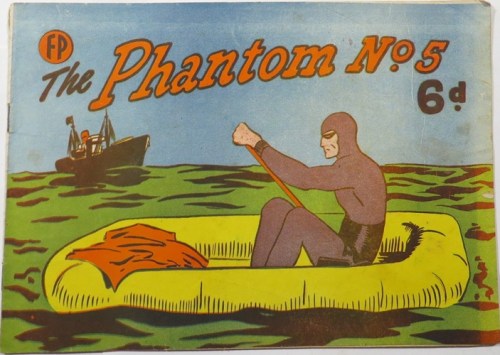
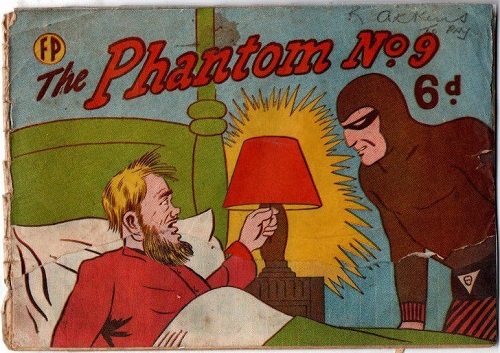
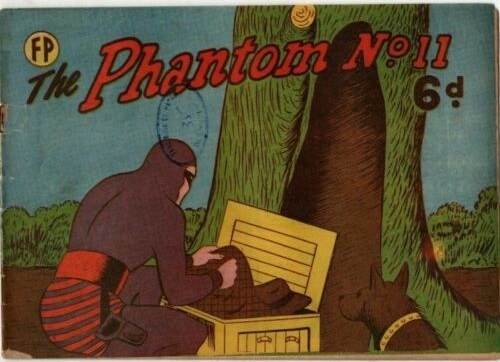
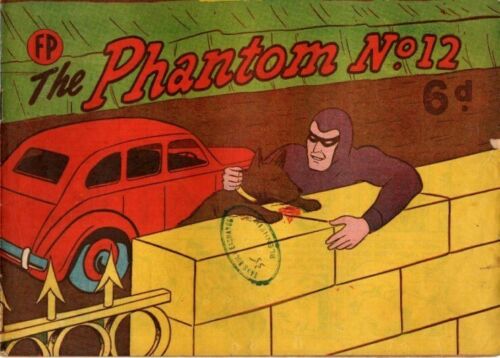
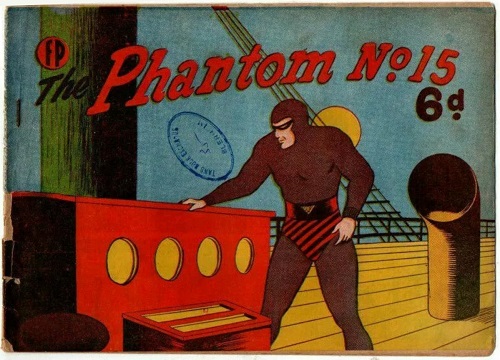
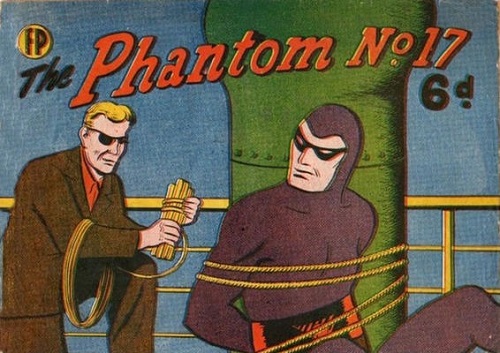
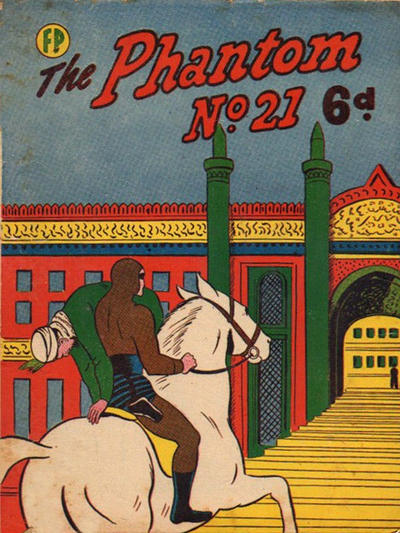
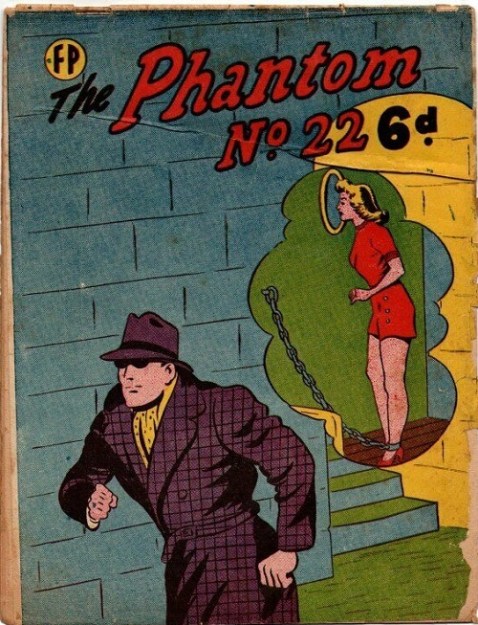
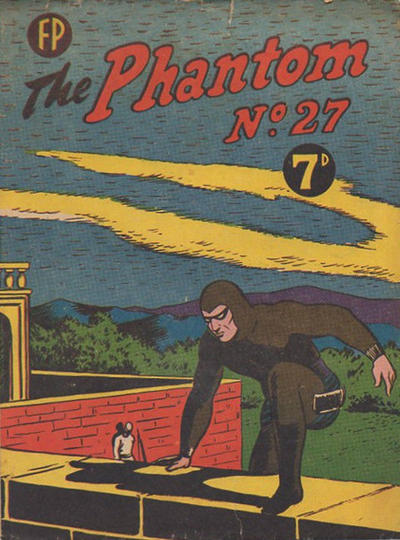
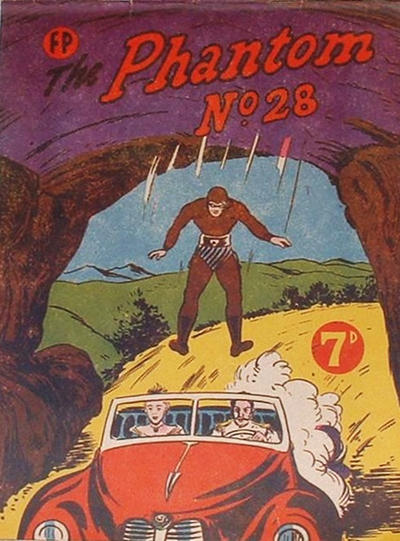
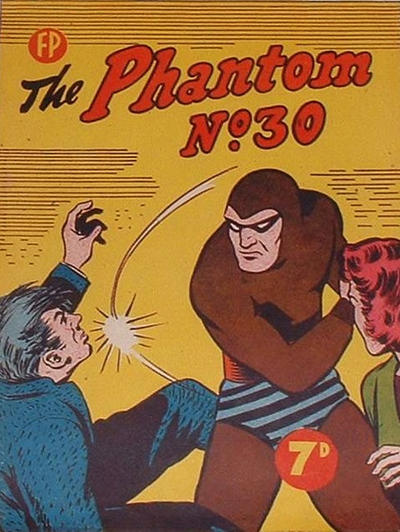
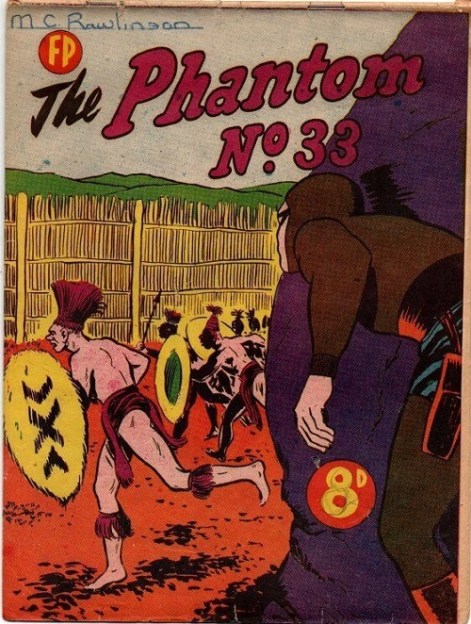
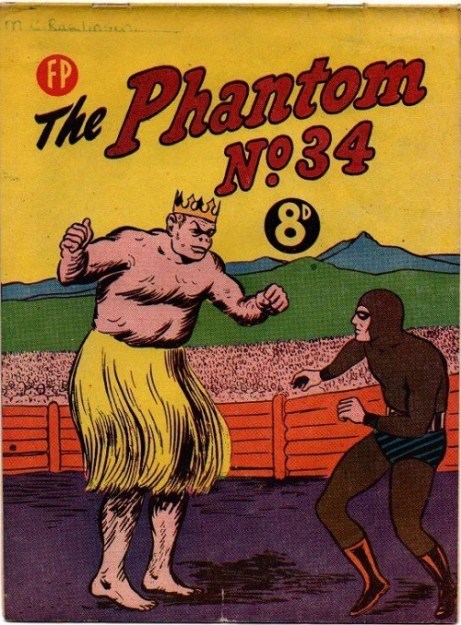
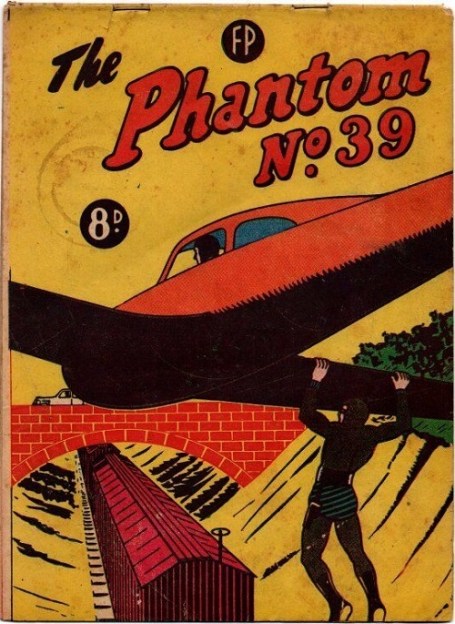
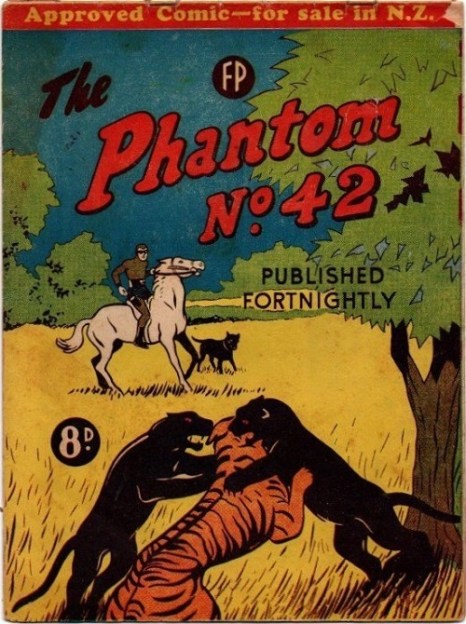
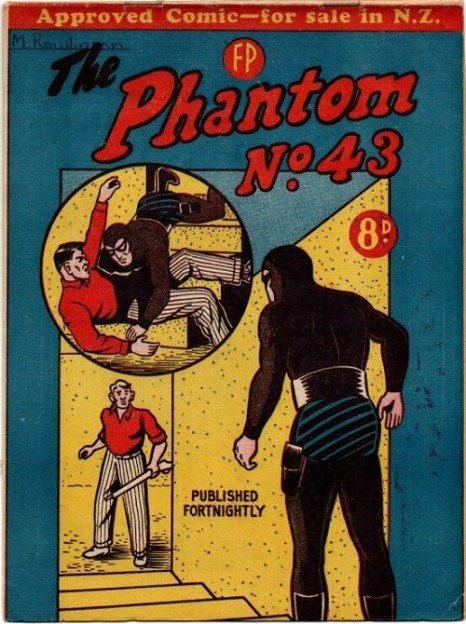
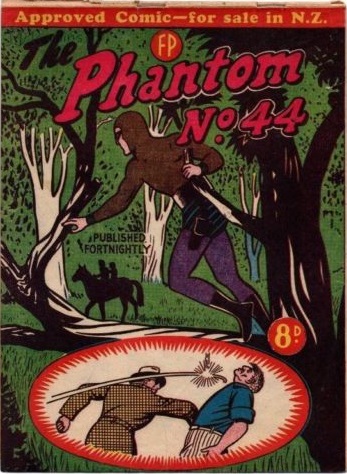
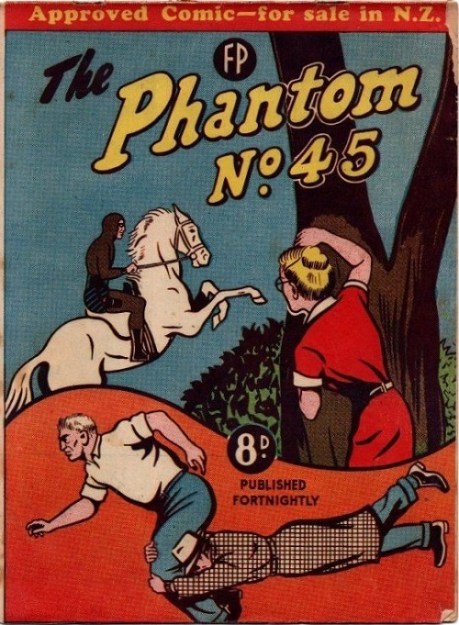
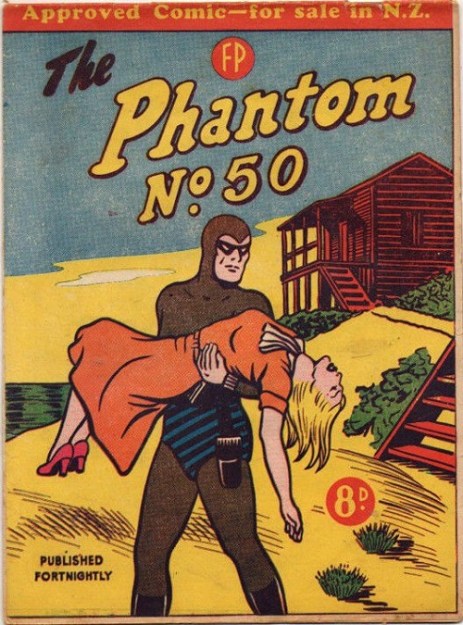
The initial twenty comic covers were produced in a landscape format (measuring 24.7cm x 18.0cm), whereas the subsequent issues of the series adopted a portrait orientation (measuring 24.6cm x 18.7cm); however, the comic strip contained therein maintained a landscape format throughout the entirety of the series. Consequently, minimal editing or formatting was necessitated by Feature Publications, thereby preserving the stories in a manner that remains faithful to the originals.
The color of the Phantom’s costume, as depicted on the covers of the comics, presents a distinctive hue of brown and green, particularly evident in the covers of the later issues. This specific color of the Phantom’s costume is not observed in any other comic publications globally.



















A sample of internal pages can be seen below.
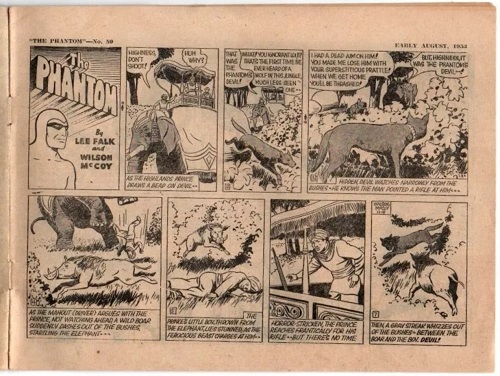
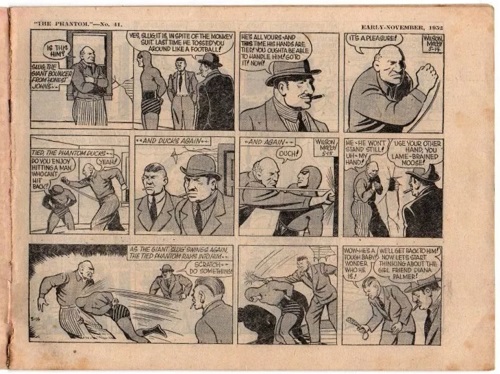

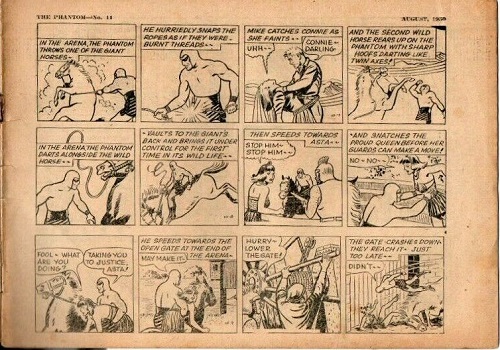


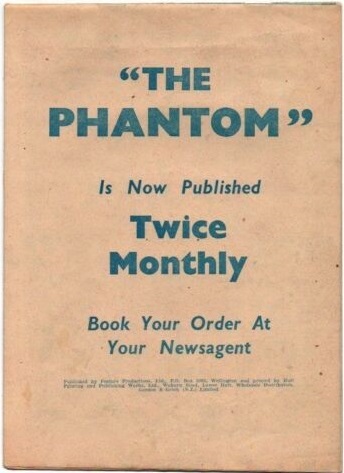
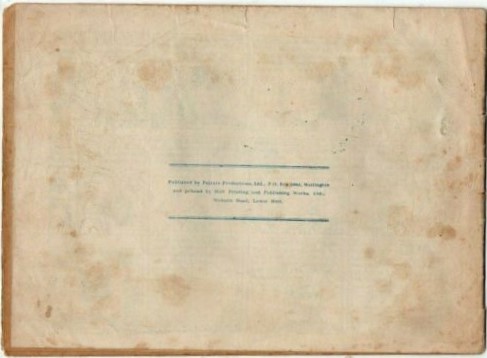
A sample of comic book back covers can be seen below, typically devoid of illustrations, and generally comprising of information concerning other comic book character editions published by Feature Publications as well as copyright details. The inside front and back covers are void of any print.



 thephantom.fan