
Tarzan Sied Aladghal (which translates to Tarzan, Lord of the Jungle) is a comic book series published by Dar Bisat Al-Rih in Beirut, Lebanon commencing in either 1977 or 1978 thru till 1982. The series ran for a total of 77 issues and was characterized by its high-quality production compared to other regional weeklies of the time.
While the title was centered on Edgar Rice Burroughs’ legendary character, the content was largely sourced from European distributors rather than American syndicates. Most of the stories featured in this run were translated from the Italian publisher Fratelli Spada, which was known for its distinct, often more mature take on jungle adventure tropes.
Dar Bisat Al-Rih (translated as Magic Carpet House) was a powerhouse of Lebanese comics publishing, founded in Beirut during the early 1960s. The publishing house was established by Fawzi Aitani, who sought to bring international adventure and superhero stories to the Arabic-speaking world. Operating during the Golden Age of Lebanese publishing, the house became famous for its flagship weekly magazine, Bisat Al-Rih, which debuted in 1962. It served as a cultural bridge, translating and localizing a massive variety of European and American content, ranging from Franco-Belgian classics like Asterix and Lucky Luke to iconic American pulp heroes.
The publisher’s output is often categorized into distinct series or versions based on their production eras. The First Series (1962–1966) laid the groundwork for the brand, while the Fourth Series (starting in the late 1970s) is particularly legendary among collectors for its high production quality and expanded roster. Dar Bisat Al-Rih was instrumental in introducing Arab audiences to the King Features Syndicate characters, most notably The Phantom, Mandrake the Magician, and Flash Gordon. They also published various standalone titles and Albums that compiled several issues into single volumes, often featuring vibrant, hand-painted cover art that has since become highly sought after in the vintage comic market.
Despite the onset of the Lebanese Civil War in 1975, Dar Bisat Al-Rih showed remarkable resilience, continuing to print and distribute comics throughout the Middle East and North Africa even as Beirut faced immense instability. However, the escalating conflict and shifting economic landscape eventually led to the cessation of their primary runs by the early 1980s. The publisher’s legacy remains significant today; they are credited with professionalizing comic book translation in the region and fostering a generation of Comics-philes. Their editions of The Phantom (often referred to as Al-Shabah) are particularly celebrated for their unique Arabic lettering and historical value as some of the earliest international iterations of the character.
The Tarzan Sied Aladghal comic book series typically followed a consistent format that appealed to the broader adventure fanbase in Beirut and beyond, with each edition led with a Tarzan comic strip story, often illustrated by Italian masters such as Cambiotti, Belardinelli, or Lombardi. The front covers often featured striking, colorful collages or repurposed Italian artwork, tailored with Arabic calligraphy that became a signature of Dar Bisat Al-Rih’s aesthetic.
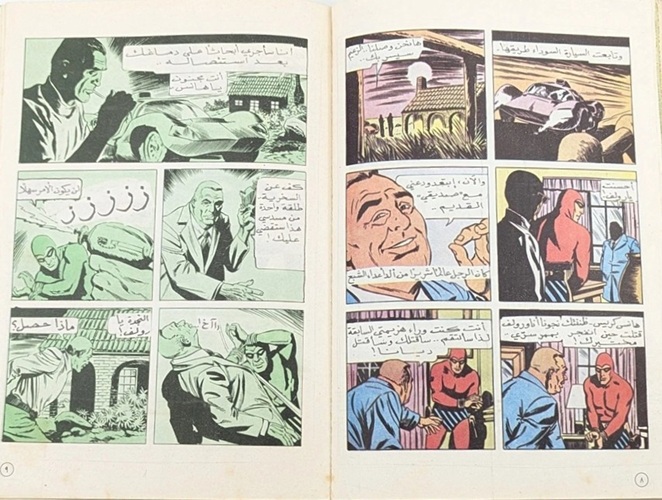
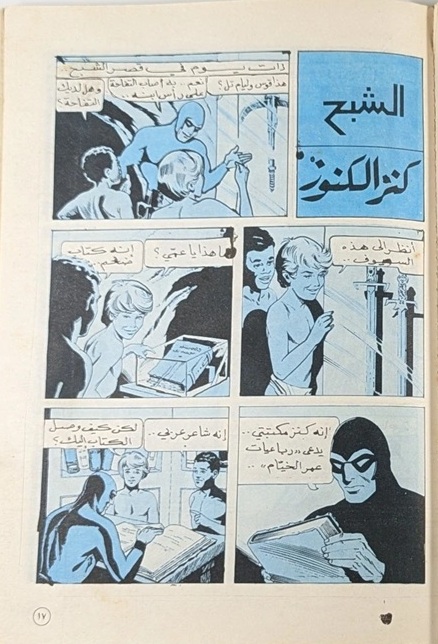
While the comic book front covers were full-color, the interior pages, usually 36 pages per edition, often utilized a mix of color and violet (monochrome) ink, a common cost-saving but stylistically unique practice in mid-century Lebanese printing.
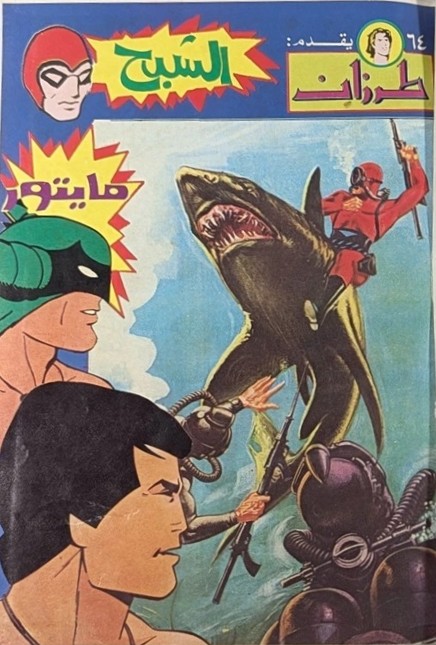
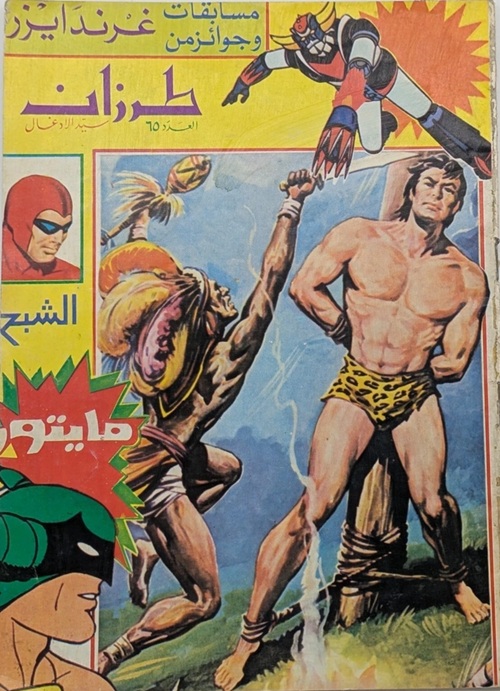
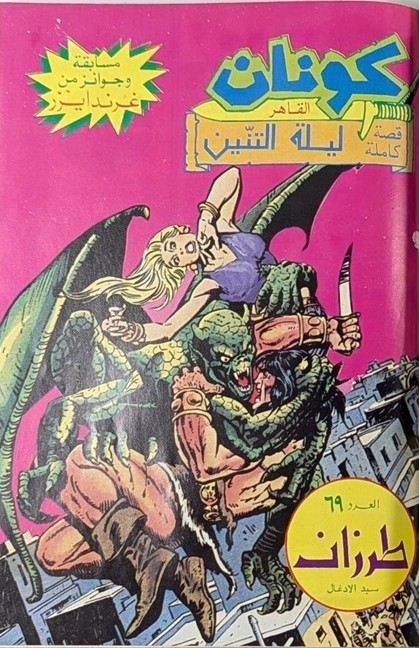
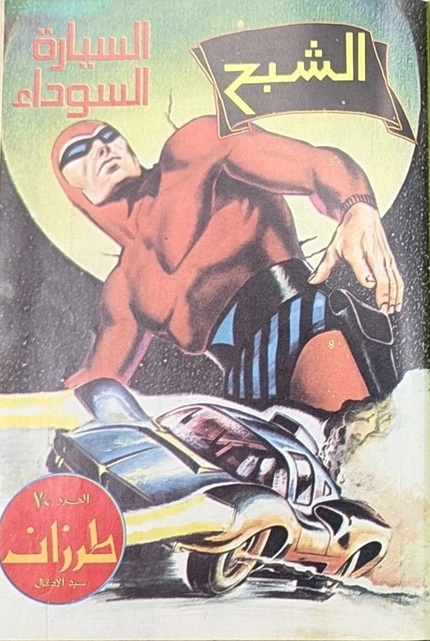
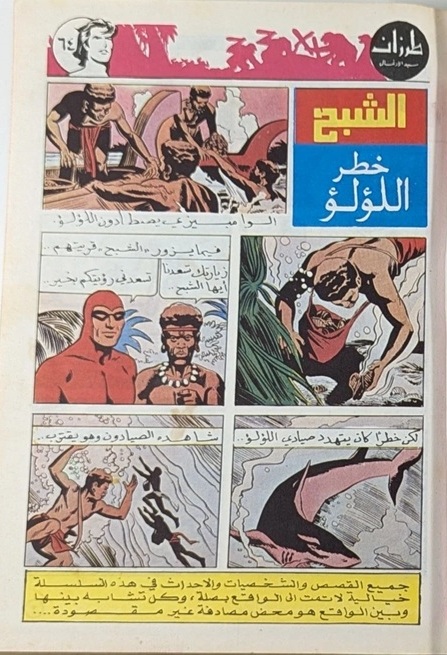
Tarzan Sied Aladghal was notable for including guest appearances from other comic strip heroes. The Phantom (or locally known as Al-Shabah) appeared as a back-up title within four specific editions, number 64, 65, 69, and 70 (which can be seen below) and appearing on three of these front covers, number 64, 65 and 70.
A sample of internal pages can be seen below.
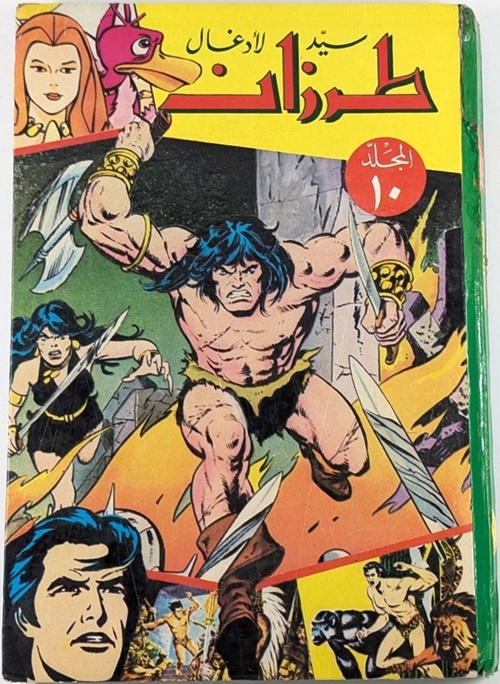
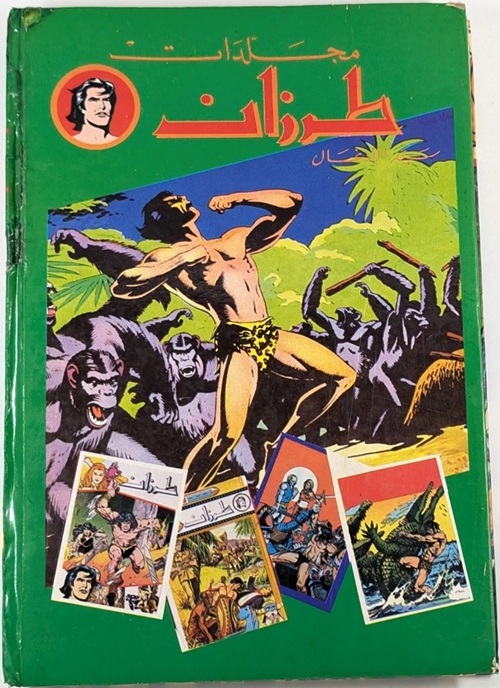
Unsold copies of Tarzan Sied Aladghal were subsequently compiled and offered in a collection consisting of eleven hardcover, album-style comic books. Edition number 10 encompasses edition numbers 64, 65, 66, 67, 68, 69, and 70, which feature the comic book editions containing the Phantom. The front and back covers of album edition number 10 are displayed below.
 thephantom.fan