
Biblioteka Nostalgija (which translates to Library Nostalgia) is a series of comic books published in Yugoslavia by Dečje Novine from 1981 thru till 1991. The series contained 14 hardcover album style comic books, with the Phantom appearing in 4 of these editions.
Dečje Novine, which translates to “Children’s Newspaper,” was a highly influential and prolific publishing house from Gornji Milanovac, Serbia, that operated during the existence of SFR Yugoslavia. Founded in 1956 by Srećko Jovanović, it began as a simple school magazine. Initially named “Dečija Politika,” it was soon renamed “Dečje Novine” following a dispute with the prominent daily “Politika.” What set Dečje Novine apart was its innovative concept: it was a magazine not just for children, but largely by children. It actively encouraged submissions from young readers across Yugoslavia and even involved pupils in the editorial process. This unique approach resonated widely, leading to rapid expansion, with print runs reaching 45,000 copies within just two years.
Dečje Novine quickly became a powerhouse in the world of comics, emerging as the largest comics publisher in former Yugoslavia. They held almost exclusive rights to publish comics from The Walt Disney Company and were also major publishers of DC Comics and Marvel Comics titles. Beyond international hits, they championed domestic comics, most notably the immensely popular Mirko and Slavko series. Launched in 1958, this series, chronicling the adventures of two Partisan couriers, became a cultural phenomenon and is even credited with influencing the League of Communists’ more favorable view of comics. Another significant domestic series was Nikad robom (Never a Slave), which featured heroic tales from South Slavic history.
The publishing house’s offerings extended far beyond comics, encompassing a diverse range of materials. They published various magazines, including Dečje novine for older school children, Tik-Tak and Zeka for younger audiences, and specialized comic magazines like Eks almanah, Yu strip (later Yu strip magazin), and Gigant. Their portfolio also included popular culture magazines such as the music-focused Džuboks and the visual media publication Moment, alongside the literature and culture magazine Venac. In addition to periodicals, Dečje Novine produced a wide array of books across different genres and were also known for their popular sticker albums.
The success story of Dečje Novine, however, came to an abrupt end with the tumultuous events of the early 1990s. The outbreak of war in Yugoslavia and the subsequent dissolution of the state proved to be insurmountable challenges for the publishing house. Like many institutions from that era, Dečje Novine faced significant difficulties and ultimately collapsed. The company entered lengthy bankruptcy proceedings that finally concluded in 2001, when its remaining assets were sold off to satisfy its numerous creditors. Despite its demise, Dečje Novine left an indelible mark on Yugoslavian culture, particularly for its pioneering work in children’s literature and its dominant role in the comics industry.
Biblioteka Nostalgija were all produced with hardcovers with black and white pages found within measuring 23cm x 31cm. Each edition contains approximately 130 pages, with several comic strip stories found within each edition.
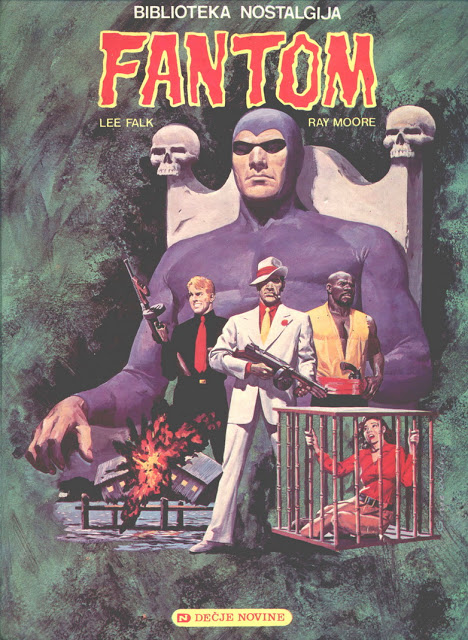
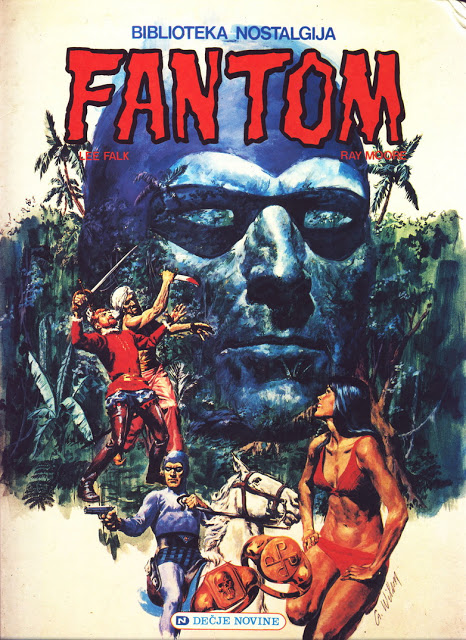
The Phantom appeared under his local title of ‘Fantom’ and was published in editions 2 (in 1981), 4 (in 1985), 7 (in 1988) and 12 (in 1991). The front covers of these 4 editions can be seen below.


 thephantom.fan