
The Penguin Book of Comics, a seminal work devised by George Perry and Alan Aldridge, holds a distinctive place in the annals of comic scholarship and popular culture. First published in 1967, its release was remarkably opportune, coinciding with the burgeoning Pop Art movement. This artistic and cultural phenomenon, characterized by its embrace and elevation of popular media forms and commercial imagery, provided an exceptionally fertile ground for a serious exploration of a medium often dismissed as ephemeral. The book’s timing within this context was not merely coincidental; it was a foundational element that significantly bolstered its initial reception and long-term cultural significance. Pop Art’s blurring of the lines between “high” and “low” art meant that comics, traditionally relegated to the latter category, found a more receptive and intellectually curious audience.
The Penguin Book of Comics emerged not just as a historical account of comics, but as a cultural artifact of a movement that helped legitimize comics as a subject worthy of academic and critical attention. This contributed significantly to its foundational status in comic studies, setting the stage for future scholarly engagement.
The volume offered an early and remarkably comprehensive lively history of the American comic strip (with one chapter devoted to American comic books and another on British strips). Its visual appeal was notably enhanced by the distinctive color cover and spot illustrations, all provided by the acclaimed British graphic designer Alan Aldridge, celebrated for his iconic work with musical legends like The Beatles and Elton John. This report aims to meticulously detail the various printing versions of this influential work, tracing their publication countries and release years, offering a comprehensive guide for collectors and enthusiasts eager to understand its rich and evolving publishing history.
The Penguin Book of Comics has been issued in three distinct editions.
1st Print: The 1967 Original Edition
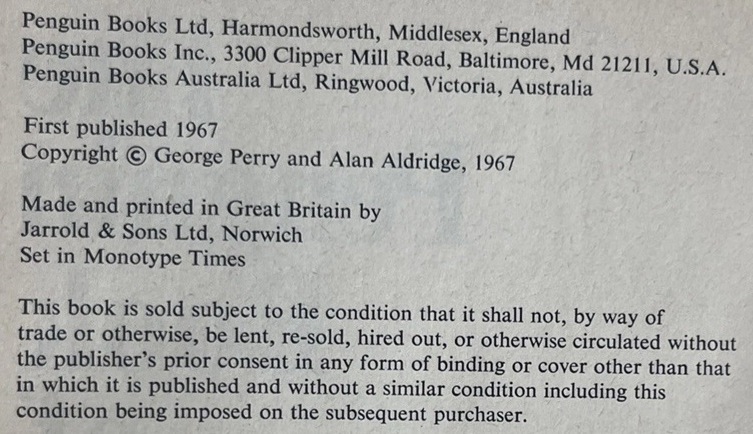
The inaugural edition of The Penguin Book of Comics made its debut in 1967, establishing itself as a pioneering work in the nascent field of comic history. It was published by Penguin Books in Harmondsworth, Middlesex, United Kingdom, the historical home of Penguin Books, firmly rooting its origins within the British publishing landscape.
Physically, the first edition was characterized as a softcover publication, often referred to as “wraps”. It was presented in a large format, boasting substantial dimensions of 11.3 inches in height and 8.75 inches in width. The book comprised 256 pages, with illustrations predominantly rendered in black & white. Its content, as noted, provided a lively history of the American comic strip (with one chapter devoted to American comic books and another on British strips).
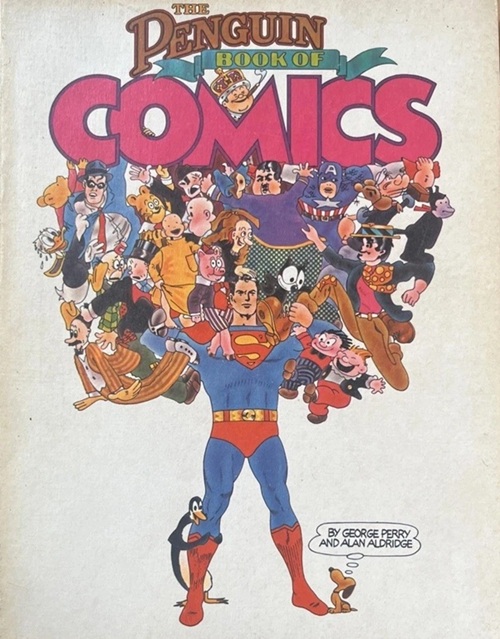
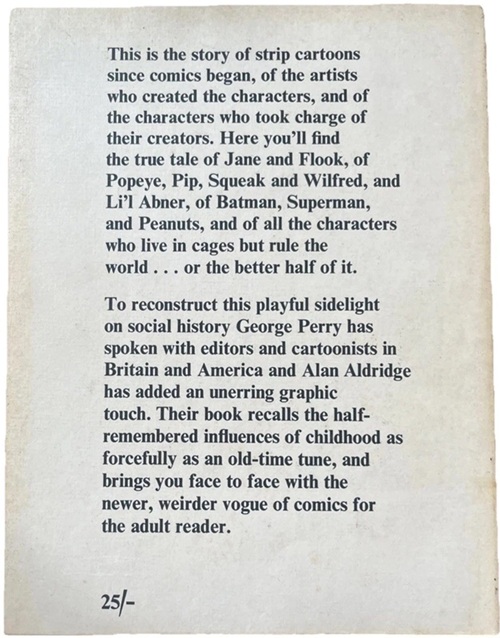
The decision by Penguin Books, a publisher renowned for its mission to make quality literature accessible and affordable, to release a book on comics in 1967 represents a pivotal moment in the mainstreaming and intellectual legitimization of comics as a subject of serious study. At this historical juncture, comics were frequently viewed as disposable, lowbrow entertainment, and had recently faced significant moral panic and censorship, particularly in the United States. Penguin’s endorsement through publication lent considerable intellectual weight and mainstream credibility to the study of comics. It signaled that comics were not merely for children or a niche audience, but rather a legitimate cultural form deserving of historical analysis, critical discourse, and academic attention, akin to established literary or artistic genres. This strategic move by such a respected publisher was instrumental in shifting public and academic perception, laying crucial groundwork for the burgeoning field of comic scholarship.
2nd Print: The 1971 Revised and Expanded Edition
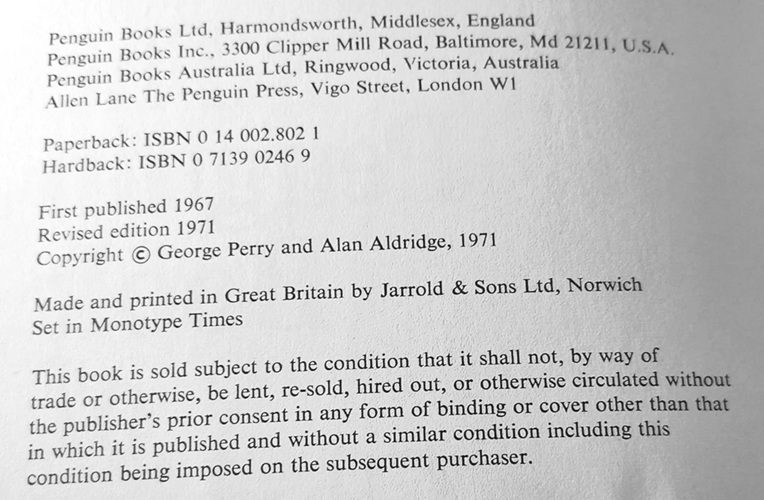
A significant revised edition of The Penguin Book of Comics was released in 1971, a mere four years after the original. This rapid turnaround indicates both the book’s immediate impact and the dynamic, evolving nature of the comics medium it documented. The swift, substantial revision, which included updated original text and the addition of color sections, implies a strong initial market demand and a recognition of the burgeoning academic interest in comics. The inclusion of color, a more costly endeavor, further suggests a commitment to enhancing the visual experience, acknowledging the inherently visual nature of comics, and potentially responding to reader feedback or rising production standards. This accelerated revision cycle, particularly with content and visual enhancements, underscores the book’s immediate influence and its role in shaping early comic studies, indicating that the field was rapidly gaining momentum and intellectual legitimacy.


This 1971 edition saw publication by Penguin Books in the United Kingdom (specifically Harmondsworth) and also marked its clear presence in the United States. In the US, it was published by Penguin Books (Baltimore, MD) and Penguin Group USA (E Rutherford, NJ). Various US sellers are listed, confirming widespread availability across the country. Notably, a hardcover format was also released in 1971 by Allen Lane, an imprint of Penguin Books, catering to different market segments. The simultaneous publication of the 1971 revised edition under both the main Penguin Books imprint (paperback) and the Allen Lane imprint (hardcover) represents a deliberate and strategic publishing approach. Penguin Books was renowned for its affordable paperbacks, making literature accessible to the general public, while Allen Lane was Penguin’s more academic and often hardcover imprint, typically targeting libraries, educational institutions, and serious collectors.
The 1971 edition was available in both Paperback and Hardback. A notable detail for collectors is the page count. While the 1967 original was 256 pages, the 1971 revised edition is widely cited as 272 pages. The increased page count of 272 is consistent with the revised and expanded nature of the content. Content updates were substantial: George Perry updated the original text, and Alan Aldridge provided further evidence of his graphic brilliance and keen eye for social history. Crucially, this revised edition included some sections in full color.
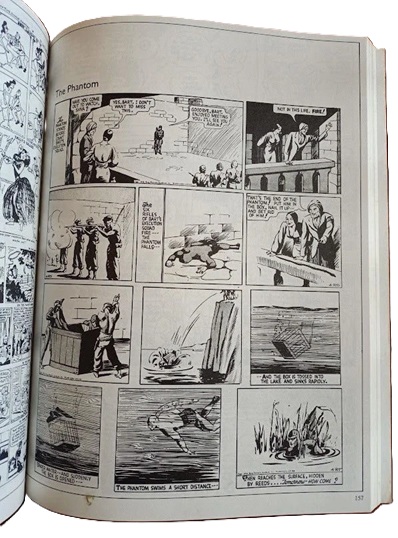
The Phantom was published on page 157 in this edition featuring a full page black and white comic strip written by Lee Falk and illustrated by Ray Moore.

3rd Print: Later Editions and Reprints
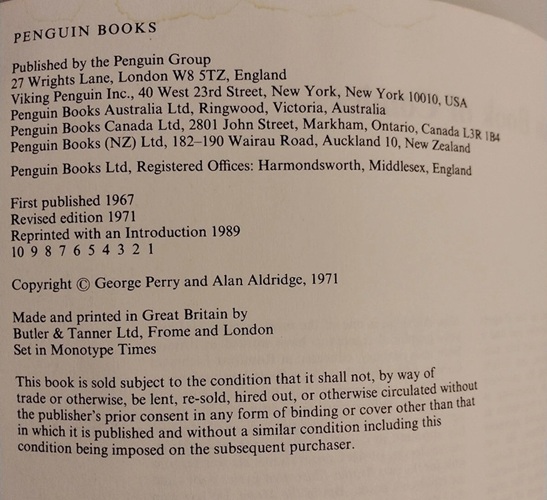
The Penguin Book of Comics continued its publishing journey with a notable reprint in 1989. This 1989 edition was published by Penguin Books across the Atlantic, with locations listed as London, England, and New York, New York, USA. This confirms its consistent availability in both the UK and US markets.
The 1989 reprint was explicitly described as a “Reprint with a new Introduction”. It clearly stated its lineage, having “Originally published: Rev. ed. Harmondsworth, England ; Baltimore, Md. : Penguin Books, 1971”, indicating it was a reprint of the updated 1971 content. It maintained the 272 pages of the revised edition. The 1989 reprint, specifically noting a new introduction, is a strong indicator of the book’s enduring relevance and its transition into a canonical text. By 1989, the landscape of comics had undergone significant transformation, with the rise of the direct market, independent comics, graphic novels, and a blossoming of formal comics scholarship in the US. A new introduction typically serves to re-contextualize the original work for a contemporary audience, acknowledge its historical place, and perhaps address its limitations or update its ongoing relevance in a changed field.


The Phantom was published on page 157 in this edition featuring a full page black and white comic strip written by Lee Falk and illustrated by Ray Moore.
The Penguin Book of Comics by George Perry and Alan Aldridge remains a landmark publication, a testament to the burgeoning interest in comics as a legitimate art form and cultural phenomenon during the Pop Art era. Its publishing history, marked by the pioneering 1967 original edition, the significantly expanded and visually enhanced 1971 revised edition (available in both paperback and hardcover), and the important 1989 reprint with a new introduction, reflects its evolving role and enduring appeal. Primarily distributed within the English-speaking world through its UK and US editions, the book played a crucial role in legitimizing comics as a subject of serious study.
 thephantom.fan