
Tegneserier i undervisningen (which translates to Comic Books in Education) was published in Denmark, an influential educational and analytical text written by the prominent Danish author and professor Torben Weinreich.
The primary subject matter of the book centers on the integration, analysis, and pedagogical value of comic books within the school curriculum. During the late 20th century, comics frequently faced skepticism from educational authorities who viewed them as lowbrow entertainment or a threat to traditional literacy. Weinreich’s work serves as both a defense and a blueprint for teachers, arguing that comics are a legitimate and powerful medium for engaging students, developing critical media literacy, and examining cultural narratives.
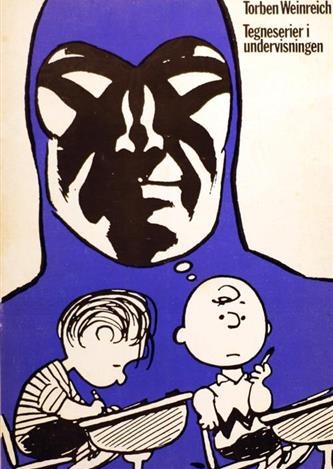
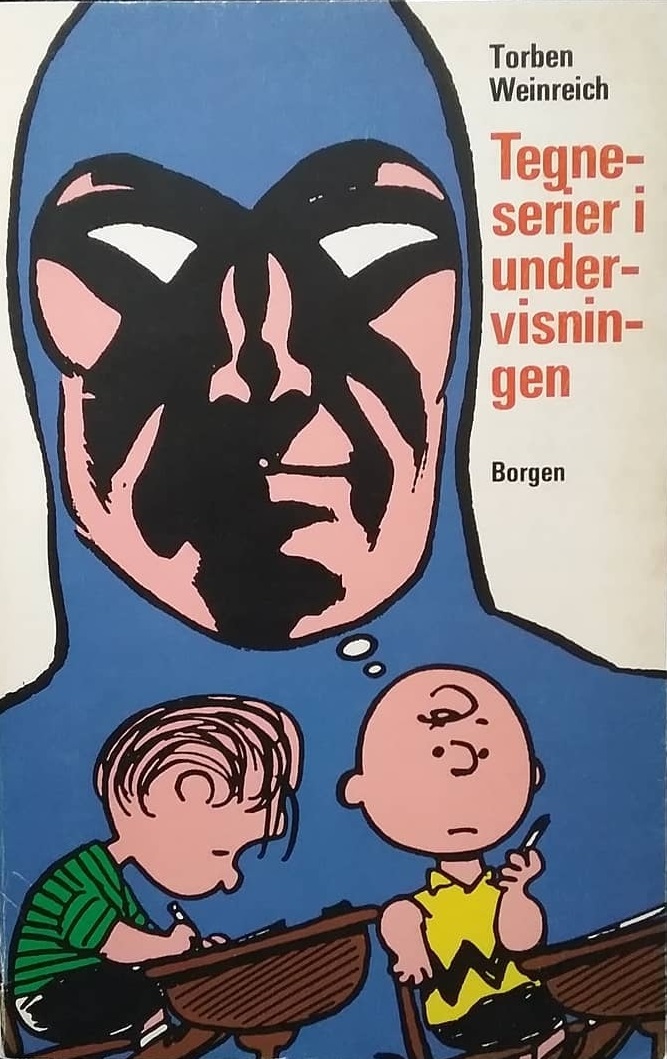
The eye-catching cover artwork beautifully bridges the educational and pop-culture themes explored inside. It prominently features Peanuts characters Charlie Brown and Linus van Pelt sitting at their school desks, with Charlie Brown looking up in contemplation. Emerging from his thought bubble is a massive, striking close-up of the Phantom (Fantomet as he’s known in Denmark), symbolizing how deeply comic book mythology captures the imaginations of young students even while they sit in a traditional classroom setting.
Tegneserier i undervisningen was originally published as a softcover book by TUI in Denmark in 1974 containing 112 black and white pages measuring 14.5cm x 21cm (seen below left). A second version was published as a softcover book by Borgen in Denmark in 1981 containing 164 black and white pages measuring 14.5cm x 21cm (seen below right).
The book provides historical context on the evolution of comic strips, categorizes various genres, and critiques how commercial comics function in society. It provides teachers with practical pedagogical frameworks and discussion points to dissect visual storytelling, character archetypes, panel transitions, and textual structures. Rather than dismissing mass-market media, the book encourages educators to utilize students’ existing reading habits as a bridge to deeper literary analysis.
Crucially, the book taps into the massive Scandinavian popularity of the Phantom, known locally as Fantomet. In Nordic countries, Fantomet was not just a minor strip but a cultural phenomenon anchored by its own dedicated comic book magazines. Weinreich leverages this specific franchise to analyze the “superhero” archetype and adventure tropes, studying how the character’s long-running lore, moral code, and jungle setting influenced young readers’ perceptions of justice, colonialism, and heroism.
Ultimately, Tegneserier i undervisningen represents a historical turning point in Scandinavian media pedagogy. By using household titles ranging from Charles Schulz’s Peanuts to Lee Falk’s Fantomet, Torben Weinreich successfully demystified the comic medium for skeptical educators. The book stands as an early, essential guide that helped transform comic books from forbidden classroom distractions into respected tools for modern literacy.
 thephantom.fan