
Çizgi Roman Kitabı (which translates to The Comic Book) is a book published by Kitabevi Yayınları in Istanbul, Turkey in 2018. It’s a comprehensive academic and cultural study of the history and evolution of comics in Turkey. Edited by Emine Gürsoy Naskali, it serves as an essential resource for understanding how the medium transformed from simple entertainment into a significant cultural touchstone.
Prof. Dr. Emine Gürsoy Naskali is a distinguished Turkish academic, linguist, and historian whose career has been defined by a deep commitment to preserving and analyzing Turkic heritage. After receiving a prestigious education at the University of Oxford and later earning her doctorate from Istanbul University, she spent over a decade teaching at international institutions like the University of Helsinki and the University of Oxford. In Turkey, she became a foundational figure at Marmara University, serving as the Dean of the Faculty of Arts and Sciences and contributing extensively to the fields of Turkology and modern history.
Beyond her administrative roles, Naskali is renowned for her prolific work as an editor and researcher of “thematic culture.” She has curated a massive collection of scholarly volumes that treat everyday objects and concepts as vital cultural artifacts. Her bibliography includes deep dives into the history of salt, coffee, shoes, and even abstract concepts like fear and prison life. This “micro-history” approach has made her one of the most respected voices in documenting the evolution of Turkish social life, often bridging the gap between Ottoman traditions and modern Republic identity.
Naskali’s scholarly pursuits are also deeply intertwined with her personal history as the granddaughter of Celal Bayar, the third President of the Republic of Turkey. As the Chairperson of the Celal Bayar Foundation, she has dedicated significant effort to publishing historical archives, including the transcripts of the Yassıada trials and her grandfather’s personal papers. By balancing these high-stakes political histories with her unique studies on popular culture, she has created a body of work that captures the full spectrum of the Turkish experience, from the corridors of power to the pages of a comic book.
Çizgi Roman Kitabı explores the anatomy of Turkish comics through several lenses, tracing their historical evolution from early Ottoman satirical drawings to the mid-20th-century boom and the rise of modern graphic novels. It features deep dives into iconic national heroes such as Malkoçoğlu, Karaoğlan, and Tarkan, while also examining the localization and translation of foreign “fumetti” like Zagor and Teksas as they were adapted for Turkish audiences. Furthermore, the text analyzes the narrative adaptations between comics and Yeşilçam cinema, as well as the unique linguistic styles and slang that defined the genre’s cultural footprint.
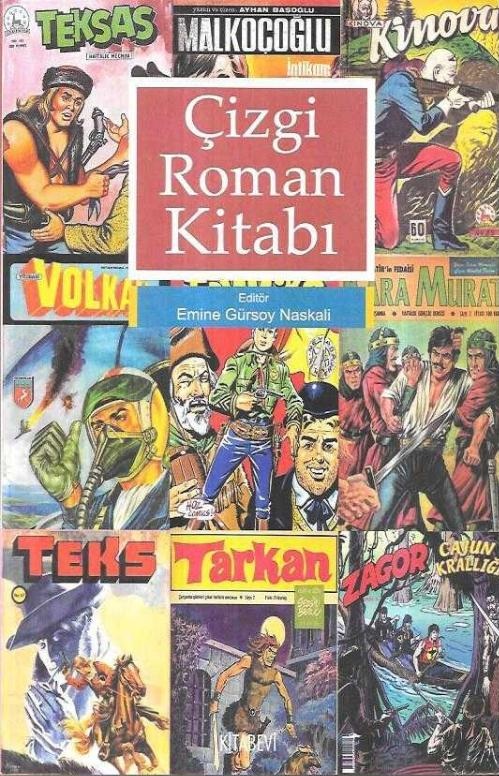
For a long time, comics were viewed in Turkey as “childish” or even “harmful” distractions. This book treats them with academic seriousness, showcasing how they reflected the social and political anxieties of their time. The cover itself is a collage of the “Golden Age” of Turkish comics, featuring a mix of local historical heroes and beloved Italian fumetti exports.
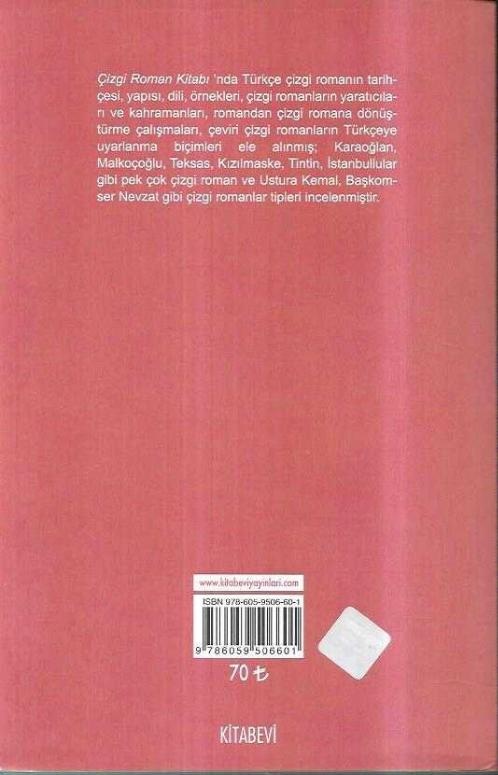
Çizgi Roman Kitabı is a softcover book containing 414 black and white pages measuring 13.5cm x 21cm with Turkish text. Rich in text and images, the book features a large array of comic book characters, with the Phantom also making an appearance under his local title Kizilmaske. The front and back covers can be seen below.
A sample of internal pages can be seen below.
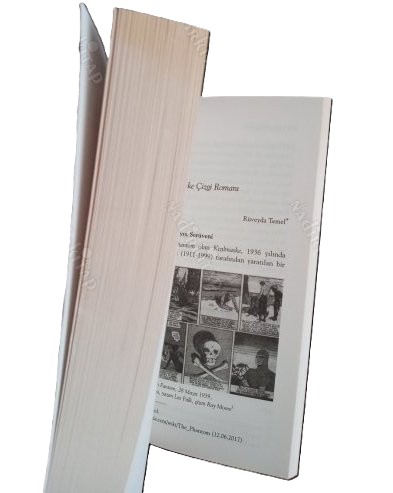
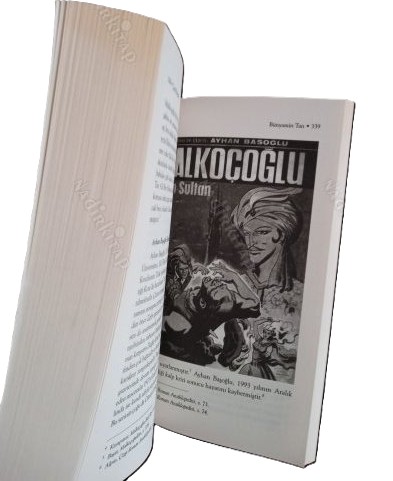
The back cover of Çizgi Roman Kitabı provides a small description of the contents within:
The book “Comic Book” examines the history, structure, language, and examples of Turkish comics, their creators and heroes, the process of converting novels into comics, and the adaptation methods of translated comics into Turkish. It also analyzes numerous comics such as Karaoğlan, Malkoçoğlu, Teksas, Kızılmaske, Tintin, and İstanbullular, as well as comic character types like Ustura Kemal and Başkomser Nevzat.
 thephantom.fan