
In 1954, Swedish psychiatrist Nils Bejerot published ‘Barn – Serier – Samhälle’ (which translates to ‘Children – Comics – Society’), a critical examination of contemporary comic books and their perceived impact on youth and society. The book was influenced by an article by Åke Lundqvist in the 1948 issue of Bonniers litterära magasin and the work of German-American psychiatrist Fredric Wertham, known for his critique of comics in ‘Seduction of the Innocent’.
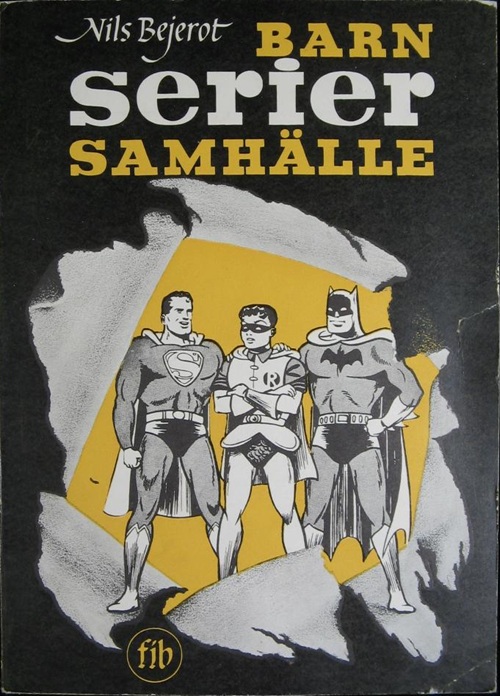

Bejerot argued that many comic books of the time glorified violence, portrayed women in stereotypical roles, and exhibited racist themes. He believed these elements contributed to a decline in cultural and moral standards among young readers. In the introduction, he emphasized that the issue of comics was “a significant mental hygiene and cultural problem that concerns us all“.
The book provides an analysis of various comic publications, offering critiques such as:
- “Superman is one of the most detestable magazines with its mix of violence, crime, brutality, superhuman worship, and pseudo-science.”
- “Donald Duck is somewhat amusing, has a decent vocabulary, and is brilliantly translated into genuine Swedish colloquial language, something very rare when it comes to comic magazines… Most acts of violence in Donald Duck & Co are of a humorous nature; everyone knows that the little pigs manage, but it seems strange that comic jokes must have this character. There is, after all, humor of another kind.”
On the Phantom, published under the title of Fantomen in Sweden, Bejerot argued that the masked hero embodied a lynch mentality historically associated with groups like the Ku Klux Klan. He contended that such comics promoted violence, misogyny, and racism, which he believed dulled young minds.
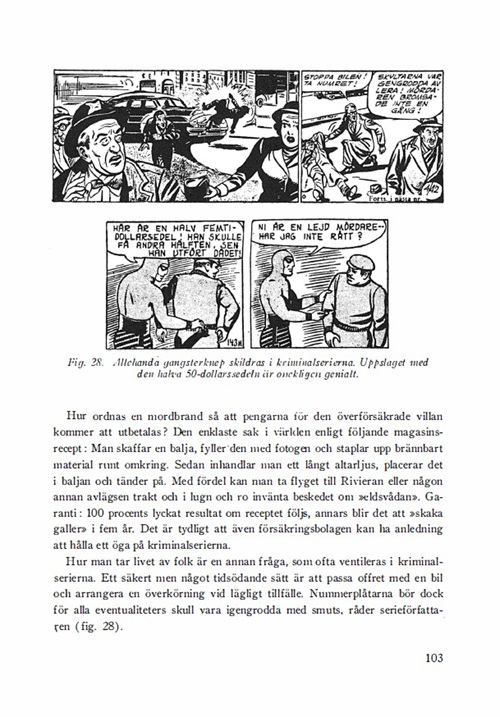
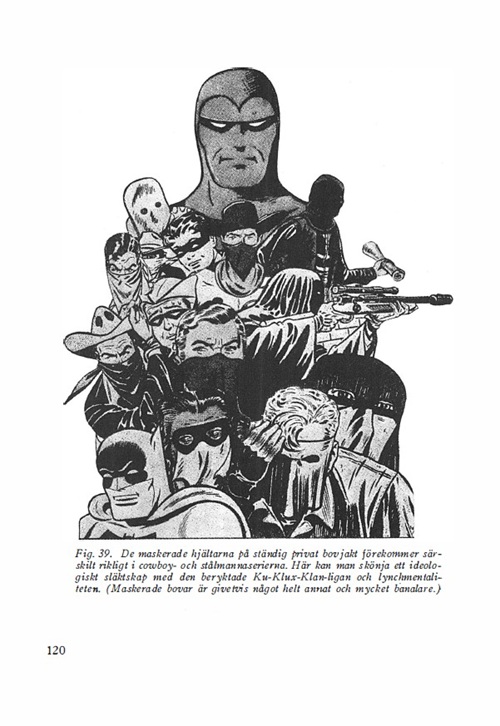
Bejerot’s critique was part of a broader debate in Sweden during the early 1950s concerning the influence of comic books on children. This discussion reached its peak in a radio debate on the 23rd of November 1954, in which Bejerot participated following the publication of his book.
The book contains 224 black and white pages, with comic strip panels featured alongside text. It was initially published by Folket i bild/Kulturfront in 1954, with a print run of 5,000 copies. A second edition followed in 1955, also with 5,000 copies, and a facsimile edition was released in 1981 with 3,000 copies.
Today, Barn – Serier – Samhälle is viewed as a reflection of the moral concerns of its time. While Bejerot’s arguments were influential in shaping public opinion on comics in Sweden during the 1950s, contemporary perspectives often consider his views on the medium to be somewhat unbalanced.
Beyond this work, Nils Bejerot is better known for his contributions to the field of drug addiction research and his role in shaping Sweden’s drug policies. His early critique of comic books remains a notable aspect of his diverse career.
 thephantom.fan