
Born in 1949 in the vibrant cultural landscape of Turkey, Yalçın Dağlı emerged as a formidable talent whose work would eventually bridge the gap between classical Turkish illustrative traditions and the burgeoning global market for popular media. His early years were marked by a rigorous dedication to draftsmanship, a skill that allowed him to navigate the competitive world of Turkish publishing during a golden age of local comic production and graphic art.
Dağlı became a central figure in the prestigious studio of Sezgin Burak, where he honed a style characterized by clean, anatomical precision and a sophisticated use of shadow that gave his figures a cinematic presence. This period of his life was instrumental in establishing his reputation as a reliable and visionary artist capable of handling both historical epics and contemporary adventures with equal finesse.
During the pivotal decade of the 1970s, Yalçın Dağlı’s career was deeply intertwined with the “Golden Age” of the Turkish comic book industry, a period defined by the transition from newspaper strips to dedicated weekly magazines.
Much of his most influential work was produced for the major publishing houses that dominated the market, specifically within the orbit of Tay Yayınları. As the leading publisher of the decade, Tay held the license for many international properties, and Dağlı’s meticulous style was a natural fit for their high-output requirements. He operated during an era where local artists were tasked with bridging the gap between original foreign strips and the specific tastes of the Turkish public, often creating unique internal art or supplemental panels to ensure the stories flowed seamlessly for a weekly audience.
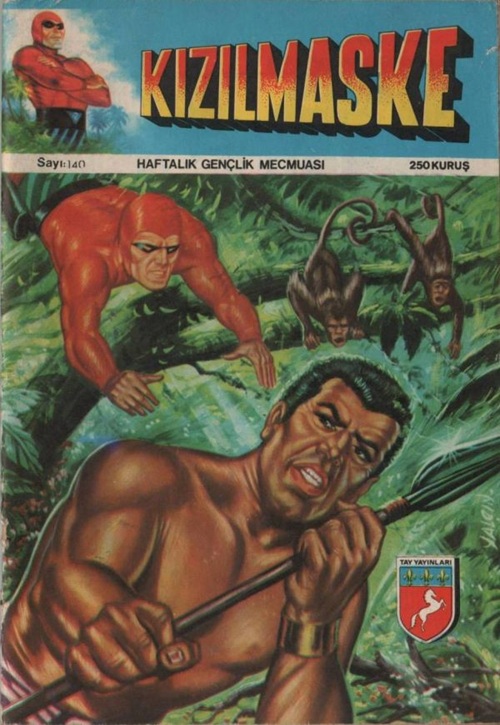
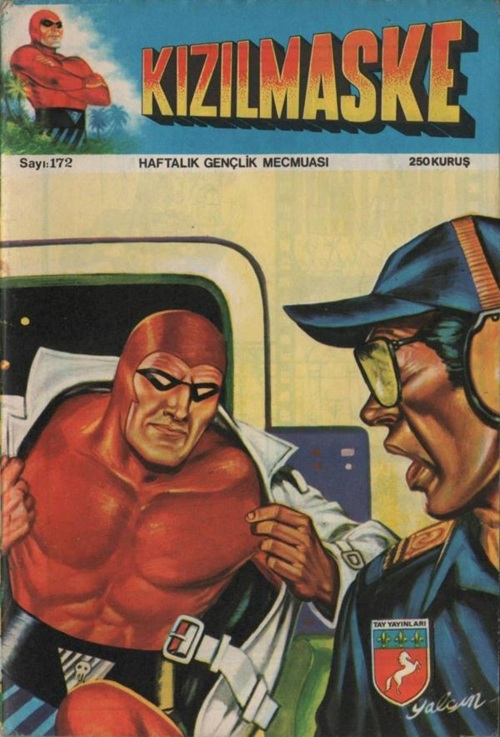
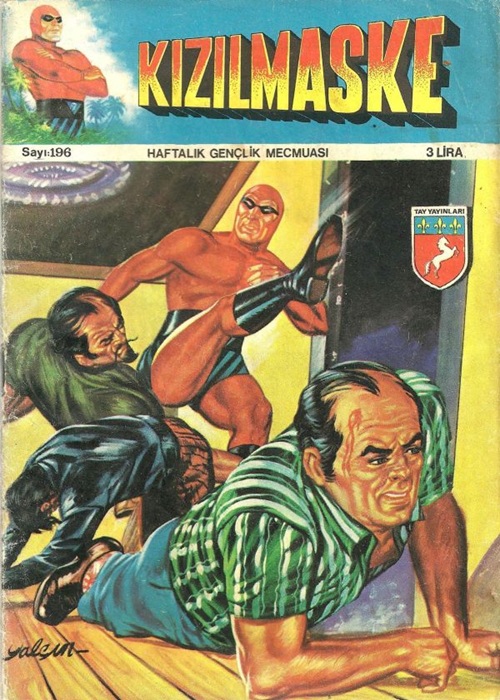
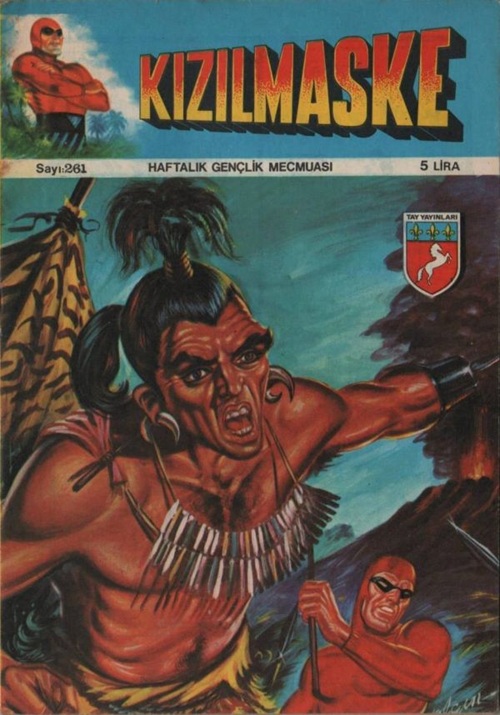
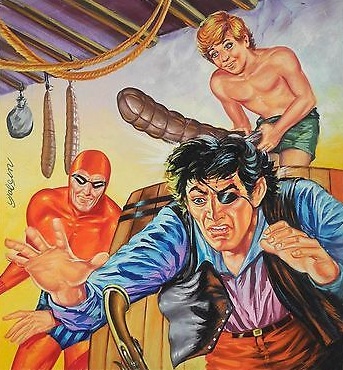
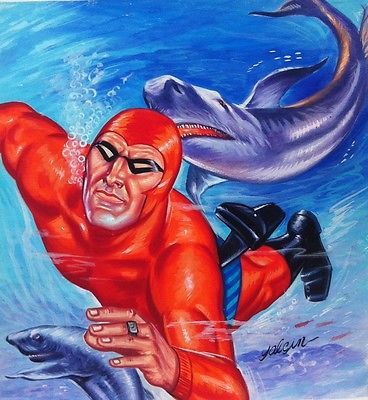
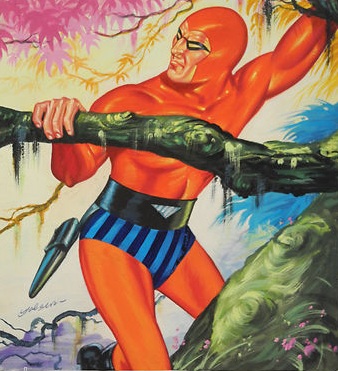
Tay Yayınları initially published Yalçın Dağlı’s work on the front cover for issue number 140 of their Kizilmaske comic book series in 1976. He subsequently illustrated a minimum of 28 front covers, with the final one appearing on the front cover of edition number 261, published in 1978. A sample of his illustrative work can be found below, with the Phantom appearing in a red costume, as he’s traditionally published in Turkey.
Beyond the reach of Tay Yayınları, Dağlı’s contributions were also seen in the publications of Türkiye Yayınevi, which handled numerous adventure titles including early monthly specials for iconic western and superhero characters. During the early 1970s, before photography and offset printing fully revolutionized the press, publishers relied heavily on artists like Dağlı to provide the visual identity for their periodicals. His work was frequently featured alongside other legendary figures in the field, contributing to a diverse marketplace where American-origin comics like The Phantom (Kızılmaske) and Mandrake the Magician maintained a strong foothold against the rising tide of Italian “fumetti” such as Zagor and Tex.
Collaboration with editorial teams at Güneş and other regional distributors also marked this era, as the demand for “Kızılmaske” adventures led to a proliferation of albums and repackaged editions. In these formats, Dağlı’s draftsmanship helped maintain a consistent visual standard for the character, even as the publishing rights shifted or multiple series ran concurrently. His ability to navigate these different editorial environments—from the prestige of Sezgin Burak’s studio to the commercial pressure of the weekly “album” format—solidified his status as a cornerstone of the 1970s Turkish comic scene, ensuring that the visual legacy of adventure heroes remained vibrant and locally relevant.
As the Turkish publishing industry expanded its reach in the mid-20th century, Dağlı’s versatility caught the attention of international syndicates and local editors looking to adapt world-renowned characters for the Turkish audience. He became particularly celebrated for his contributions to the visual legacy of iconic adventure heroes, most notably his work on the Turkish editions of The Phantom. His interpretation of the character offered a unique blend of the traditional American aesthetic and a distinct European flair, often characterized by more atmospheric backgrounds and a grittier, more textured line than many of his contemporaries. His work did not merely replicate existing tropes; instead, it infused global icons with a specific Turkish sensibility that resonated deeply with a generation of readers, making him one of the most respected illustrators in the “Kızılmaske” lineage.
The later stages of Dağlı’s career were defined by a transition from the frantic pace of weekly comic serialization to more contemplative and prestigious projects, including book covers and independent illustrations. Even as digital media began to reshape the industry, his portfolio remained a testament to the enduring power of ink and paper. Throughout his life, he maintained a reputation for professional integrity and artistic humility, often serving as a mentor to younger artists entering the Turkish graphic arts scene. His legacy is preserved today not only in the weathered pages of vintage magazines and collectible albums but also in the continued study of Turkish pop culture history, where his name is synonymous with a period of extraordinary creativity and the globalization of Turkish artistic talent.
 thephantom.fan