

Timo Wuerz, born on the 7th of April 1973 in Schwäbisch Hall, Germany, has carved out an extraordinary path as a globally recognized illustrator, designer, and comic artist. From a remarkably young age, Wuerz exhibited an innate connection to the visual world, beginning to draw at the tender age of two and, as he puts it, “never stopped,” viewing art as his fundamental mode of self-expression. This early immersion in creativity laid the groundwork for a career that would defy conventional boundaries, earning him the moniker “rock star of the comic scene” from the Süddeutsche Zeitung. His journey is a testament to the power of passion, versatility, and an unwavering commitment to both artistic integrity and social responsibility.
Wuerz’s formative years were steeped in a rich tapestry of visual narratives, with comic books playing a significant role in shaping his early artistic sensibilities. He grew up engrossed in the adventures of iconic characters like Spider-Man and Batman, which undoubtedly influenced his dynamic approach to sequential art. As he matured, his appreciation broadened to include the nuanced storytelling of Bill Watterson’s Calvin and Hobbes and the distinctive style of Kyle Baker’s Why I Hate Saturn. Beyond comics, Wuerz cites a diverse pantheon of artistic heroes, including the revolutionary Pablo Picasso, the innovative comic artist Bill Sienkiewicz, and the evocative photographer Matt Mahurin, all of whom contributed to his eclectic and expansive creative vision. His dedication bore fruit early; his first printed story appeared when he was just fifteen, foreshadowing a prolific future. In 1993, he co-created “Aaron und Baruch,” a comic book born from a shared vision of what a comic should embody, which quickly found a publisher. This was followed by other notable works like “XCT” for Carlsen in 1997, “Drakan,” the comic adaptation of the Sony computer game, and “Black Metal” in 2001, showcasing his early mastery across various genres and formats.
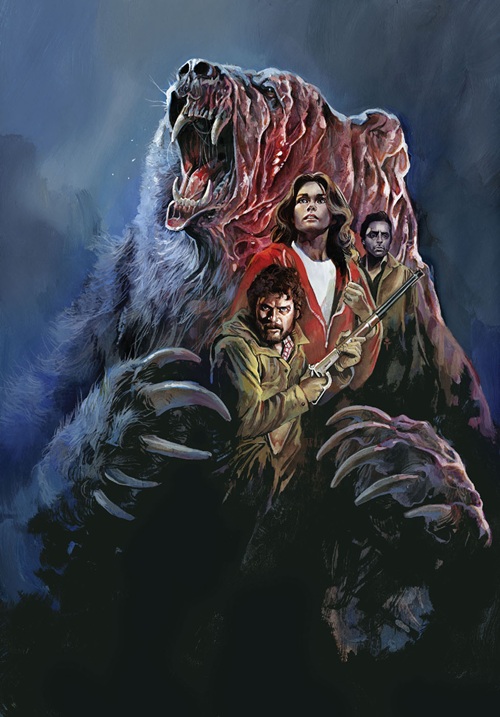
The hallmark of Timo Wuerz’s artistic style is its immediate and striking visual impact. His work is characterized by bold, confident lines and a vibrant, often electrifying, use of color that imbues his subjects with a palpable energy. This distinct aesthetic has been described as “neo-traditional,” particularly evident in his commercial art, where it combines a “striking distant effect” with “clear and black lines.” His primary mediums include acrylics, watercolors, and ink, which he masterfully applies before often scanning his physical artwork for digital rendering, a process that allows him to fuse traditional craftsmanship with modern technological precision. Uniquely, Wuerz often prefers to draw from his imagination rather than relying heavily on real-life references, believing his internal wellspring of creativity serves him better. This imaginative approach is particularly evident in his celebrated animal portraits, which, as noted by Professor Edward O. Wilson of Harvard University, are “thrilling” because they “simultaneously capture the spirit of the species and our human perception of it, constituting a blend of art and science.” This ability to convey both the essence of a subject and a deeper interpretive layer is a cornerstone of his artistic philosophy.
Wuerz’s professional portfolio is as expansive as his artistic vision. Over the years, he has designed and illustrated more than a thousand covers for a wide array of rock and metal bands, films, and books, making his visual signature instantly recognizable across various cultural landscapes. His client roster reads like a who’s who of global industry leaders, including collaborations with Adidas, for whom he produced an animated film, as well as Daimler, Disney, Marvel, DC Comics, McLaren, Porsche, and the renowned Roncalli circus. His work for Porsche, such as the neo-traditional art for the 911 Carrera Coupe, exemplifies his ability to adapt his unique style to high-profile commercial projects. Beyond these giants, his commissions have spanned diverse fields, encompassing architectural design, the creation of official postage stamps for Post Luxembourg (a dozen of which bear his name), CD covers for bands like Edge of Paradise, corporate branding, snowboard graphics, posters, and even toys. He is also known for leading “creative intervention teams” dedicated to the development and design of films, shows, and theme parks worldwide, demonstrating his capacity for large-scale, multidisciplinary projects. With over 100 published books to his name, Wuerz’s prolific output is a testament to his relentless creative drive.

His career is also punctuated by a fascinating array of anecdotes that underscore his unique journey. He has recounted painting for the President of the Maldives, seeing one of his paintings travel into space, and even having his “cow” displayed in the Hamburg Planetarium. For two decades, he drew and partly animated political cartoons, exploring his voice in that medium. He famously had a portrait of Steve Jobs, depicted as a penis, stolen from an exhibition—the only piece nabbed. He was instrumental in creating a book series that sold over two million copies and was translated into numerous languages, from Greek to Persian. His introduction to DC Comics by “Mister Batman” Dennis O’Neil speaks to his respected standing in the comic world. He has navigated complex collaborations, including working with Yoko Ono, and faced unusual situations like being under police protection at a book signing or an eight-hour drive home through a snowstorm after Marilyn Manson failed to show for an appointment. These stories paint a picture of an artist who embraces the unpredictable nature of a creative life, always finding inspiration and opportunity in the unexpected.
Beyond his commercial and artistic achievements, Timo Wuerz is a passionate and vocal advocate for sustainability, nature, and wildlife conservation, embodying what he terms “Activism in Colors.” This commitment is not merely a sideline but a deeply ingrained aspect of his personal and professional philosophy. He has actively engaged in significant environmental projects, collaborating with prominent figures such as Yoko Ono and Captain Paul Watson, the founder of the Sea Shepherd Conservation Society, whose quote, “If the Oceans die, we die. We cannot live on this planet with a Dead Ocean,” resonates deeply with Wuerz’s own convictions. One of his initiatives has even received recognition from UNESCO, highlighting the tangible impact of his efforts. Through his art, and increasingly through his public speaking engagements and university lectures on business, culture, and “all things wild and free,” Wuerz champions the necessity of individual action. He urges people to “Just pick a problem you ‘like’ and help. Do something. Contribute,” emphasizing that collective small steps can lead to monumental change. His art book, “GIVE A FUCK!,” exemplifies this ethos, as a portion of its sales directly contributes to purchasing and permanently protecting ecologically valuable land through Wilderness International. He believes art and music possess the unique power to inspire, shape perceptions, and motivate individuals to act for a better future, even when facing daunting global challenges.
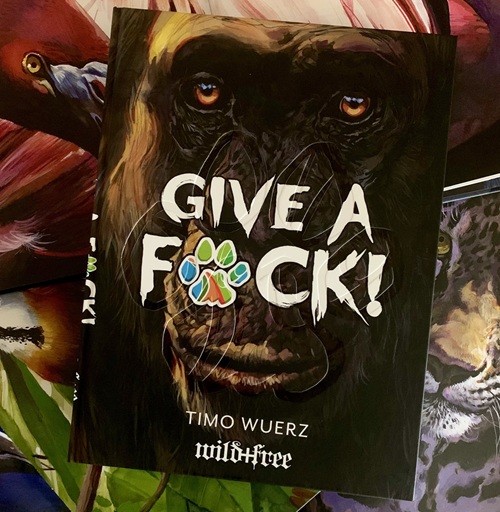
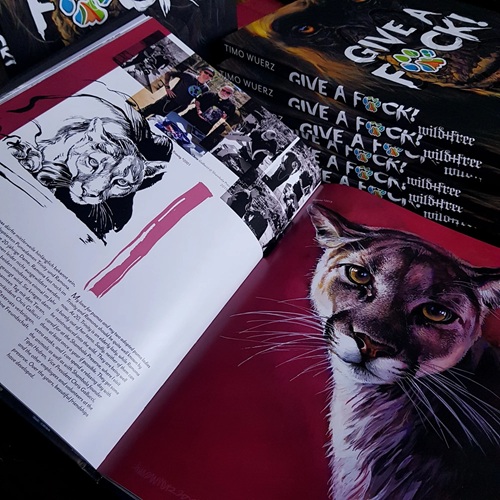
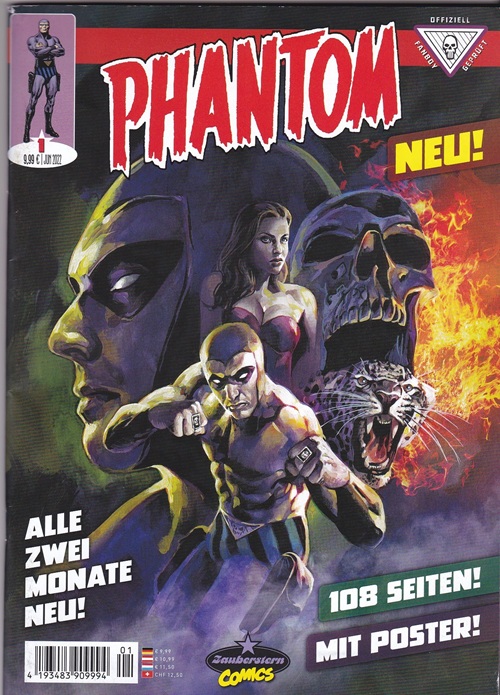
Wuerz’s contribution to the world of comic books is substantial, and his work on the Phantom stands out as a particular highlight. His unique artistic vision has consistently graced the covers of publications featuring the Ghost Who Walks, both in his native Germany and in Australia. For Zauberstern Comics, a German publisher that launched its regular Phantom comic book series in 2022, Wuerz’s cover art was pivotal in generating initial excitement and establishing the series’ visual identity. He has provided several striking covers for their bi-monthly Phantom series, including the inaugural issue and subsequent editions like Phantom edition numbers 2, 4 and 13, each showcasing his dynamic and vibrant style that perfectly complements the adventurous spirit of the character. His ability to render the jungle, the Phantom’s iconic costume, and the dramatic action sequences with such intensity has made him a fan favorite.

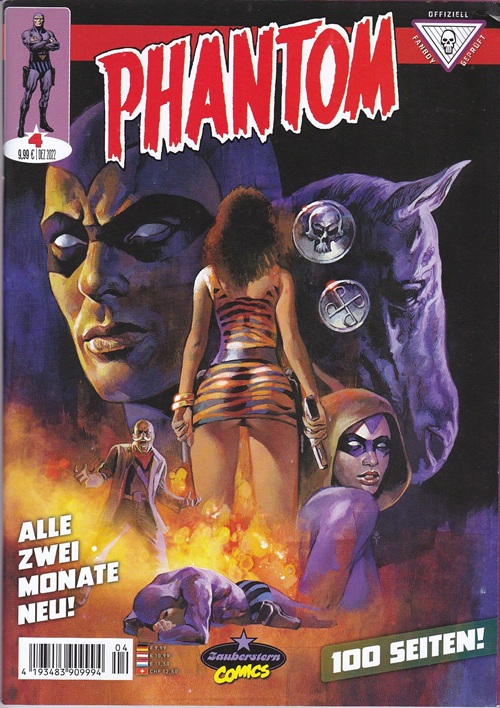
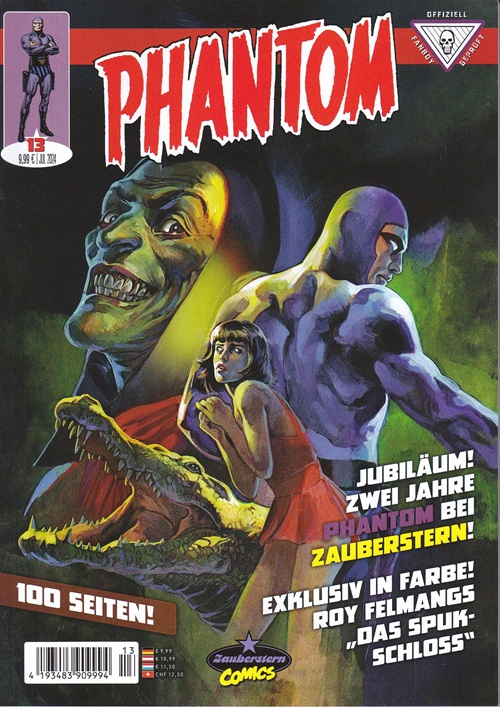

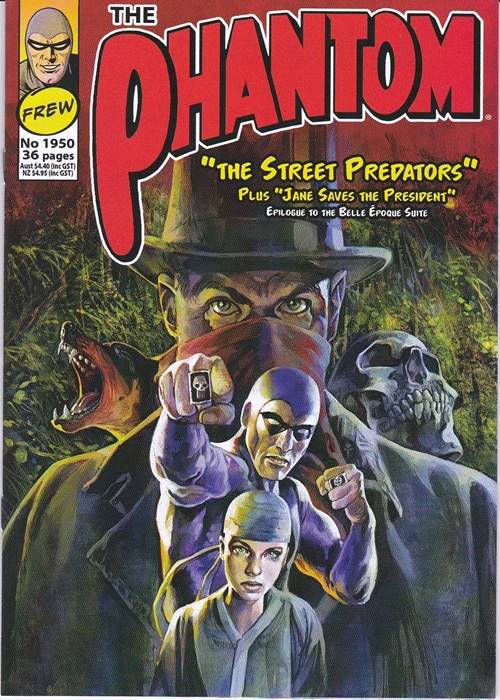
Perhaps one of his most significant contributions to the Phantom’s visual legacy in Germany came with the launch of Zauberstern Comics’ “Phantom Spezial” series. The highly anticipated inaugural issue, released on the 28th of January 2025, prominently featured Wuerz’s distinctive artwork on its cover. This particular cover art was lauded for its exquisite representation of animals, a recurring strength in Wuerz’s portfolio, which perfectly aligns with the Phantom’s deep connection to the natural world and his animal companions. This commission underscored his continued importance to the visual branding of the Phantom in the German market, demonstrating how his art can both honor the character’s long history and infuse it with a contemporary, compelling aesthetic. Beyond Germany, Wuerz’s talent has also reached Australian shores, where he has contributed cover art for Frew Publications, the long-standing Australian publisher of the Phantom. Notably, he provided the cover for Frew’s the Phantom #1950 in 2023, which featured the story “The Street Predators,” and also contributed to the Phantom #1975 in 2024, which can both be seen below. These international collaborations further solidify his reputation as a sought-after artist within the global Phantom community, consistently delivering covers that are both visually stunning and true to the essence of the legendary hero.

At the core of Timo Wuerz’s prolific output and diverse engagements lies a profound philosophy centered on creative freedom and purpose. He expresses deep gratitude for being able to pursue what he loves and be compensated for it, a freedom he clearly cherishes. He sees himself not merely as an artist but as a “problem solver” and, colloquially, an “arschretter”—someone who helps in difficult situations. This self-perception extends to his role in leading creative intervention teams, where his artistic problem-solving skills are applied to complex design challenges across various industries. Wuerz believes that art and music are powerful tools for inspiration, capable of shaping our worldview and motivating action, even when faced with overwhelming odds. His unwavering belief in personal responsibility and the collective power of individuals to contribute to solutions underscores his entire career.
Whether through a vibrant comic cover, a powerful animal portrait, or a public lecture, Timo Wuerz uses his extraordinary talent to not only captivate audiences but also to inspire them towards a more conscious and engaged existence. His journey is a testament to the transformative power of art when wielded with passion, skill, and a deep sense of purpose, ensuring his lasting impact on both the artistic and activist landscapes.
 thephantom.fan