
Studio Recreo (often referred to simply as Recreo Studio) was a prominent Spanish art studio that operated as a production house for international comic book publishers during the mid-to-late 20th century. Based in Barcelona, Spain—a hub for comic art syndication—the studio was part of a wave of European agencies that provided high-quality illustration work for American and European markets.
Establishment and Origins
Established in Barcelona in 1968 by the artist and businessman José Ferrer (often professionally identified as José Ferrer Recreo), Studio Recreo emerged as a premier Spanish production house that specialized in the international syndication of comic book art. During an era when Spanish illustrators were highly sought after for their technical mastery and realistic anatomy, Ferrer acted as a pivotal bridge between local talent and major foreign publishers like Charlton Comics in the United States, Fleetway in the United Kingdom, and Fratelli Spada in Italy. The studio operated under a “shop” model where Ferrer managed a collective of artists, ensuring their moody, ink-heavy aesthetic met the specific stylistic demands of the global market, particularly in the genres of horror, westerns, and high-stakes adventure.
The studio is perhaps most celebrated for its prolific contributions to the Phantom, specifically during the 1970s when they became the visual engine for the Italian publisher Fratelli Spada. This body of work is famously associated with the “Red Phantom” era, where the character’s traditional costume was colored red rather than purple to suit European tastes. Studio artists such as Mario Pedrazzi, Umberto Sammarini, and Josep Tello González were instrumental in these productions, delivering dynamic, atmospheric layouts that emphasized the Phantom as a brooding, noir-inspired figure. Much of this work was later imported and repackaged for American readers in the pages of Charlton Comics’ “The New Phantom” series, solidifying the studio’s influence on the character’s visual legacy.
Beyond their work on licensed properties, Studio Recreo left a significant mark on the horror genre through extensive collaborations on titles such as Ghost Manor, Creepy Things, and The Many Ghosts of Doctor Graves. Their signature style—defined by a heavy use of chiaroscuro and detailed, cinematic backgrounds—helped define the look of Bronze Age horror comics.
Beyond Studio Recreo, at around the same period of time (during the 1960s and 70s), the Barcelona comic scene became a competitive powerhouse of talent, largely driven by agencies like Selecciones Ilustradas (S.I.) and Bardon Art. These studios acted as gateways for Spanish artists to reach the American and British markets, creating a “Spanish Invasion” of the global comic industry.
After nearly fifteen years of operation, the studio began to wind down in the early 1980s as José Ferrer transitioned into new leadership roles within the industry, including serving as the art director for Comicup Design Studio. Today, Studio Recreo is remembered as a cornerstone of the Spanish art agency boom that globalized the comic book industry and introduced European artistic sophistication to a worldwide audience.
Body of Work and Artistic Style
The studio’s work is characterized by a European Noir aesthetic: heavy use of shadows (chiaroscuro), realistic human anatomy, and highly detailed backgrounds. They were a versatile house, but they specialized in three specific genres:
- Horror and Mystery: They were frequent contributors to Charlton Comics in the 1970s, producing art for titles like Ghost Manor, Creepy Things, and The Many Ghosts of Doctor Graves.
- Westerns: The studio produced numerous Western strips for the European market, which were often later translated or syndicated to other regions.
- Adventure and Licensed Properties: Beyond horror, they worked on various licensed properties, including work for Disney Comics in the early 1990s (such as Autumn Adventures and Summer Fun).
Work on The Phantom
Studio Recreo’s most significant contribution to comic history is arguably their extensive work on the Phantom. Their involvement primarily occurred during the late 1960s through the 1970s via major publishers such as Fratelli Spada in Italy and Charlton Comics in the United States.
Collaboration with Fratelli Spada
The Italian publisher Fratelli Spada held the license to produce original Phantom stories for the Italian and European markets. Because they required a massive volume of content, Studio Recreo was a staple of the Italian publisher during their massive output from 1962–1980. While they contributed to hundreds of issues, the studio’s peak years were in the following series:
- Avventure Americane (Series 2 & 4): This was the flagship title where most original Italian-produced stories appeared. Recreo artists often provided the interior pencils for the “I Classici dell’Avventura” segments.
- Super Albo (L’Uomo Mascherato): The studio provided art for several dozen issues in this run, characterized by the cinematic layout common in European comics of that time.
- The “Special” Editions (1970s): Recreo was often tasked with drawing the longer, 40+ page Giants or Special issues that required a team of artists to complete on tight deadlines.
Charlton Comics Era
When Charlton Comics in the U.S. took over the Phantom license in 1969, they occasionally utilized art from European studios to fill their issues. Studio Recreo artists contributed to several issues during this run, helping to maintain the character’s legacy in the U.S. during a period of transition for the title.
In 1974, Charlton Comics print on the front cover of issue number 60, ‘Beginning with this issue, The New Phantom’, which as can be seen below. In the mid-70s, when Charlton Comics in the US was struggling with budgets, they realized it was cheaper to license the pre-existing art from Recreo/Spada than to hire new American artists.

This is why issues like Charlton’s Phantom editions from number 60 thru to 63 look so strikingly different from the rest of the series—they are actually Spanish-drawn stories originally meant for the Italian market. As a result, to save on production costs, they began importing stories from the Fratelli Spada library, many of which were drawn by Studio Recreo artists. Comic strip pages from edition number 63 can be seen below.
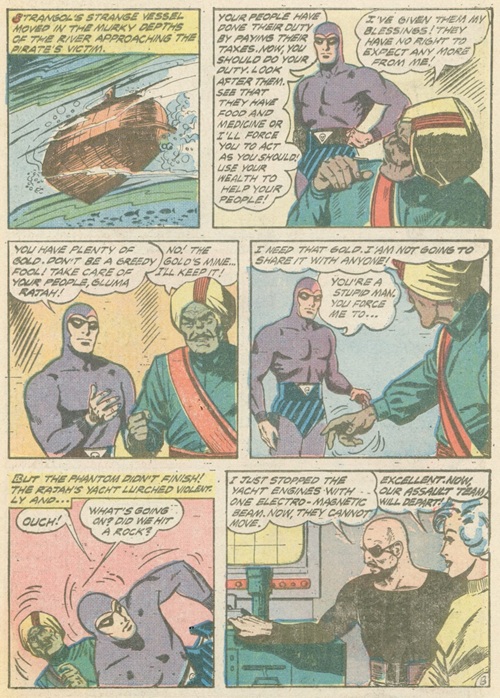
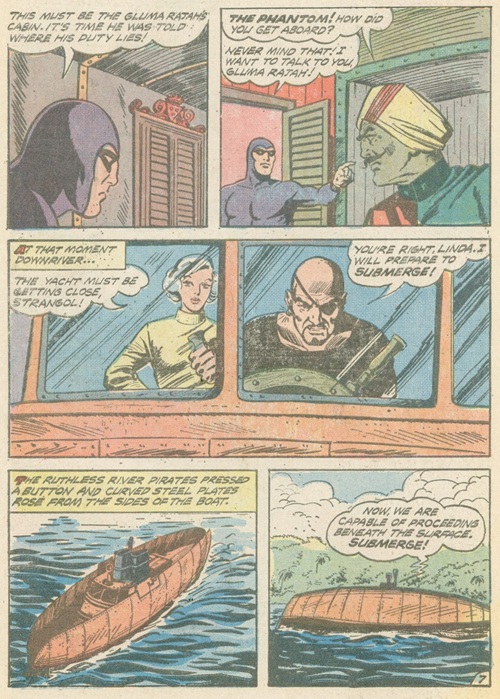
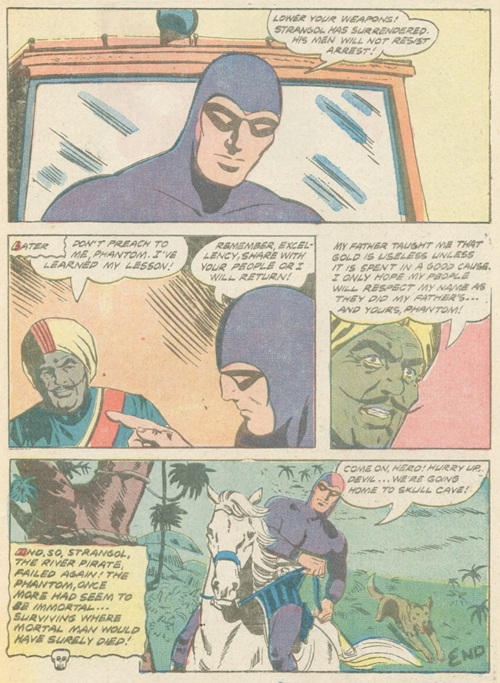
Because Recreo was a production house, individual artists often didn’t receive a byline. Instead, the art was simply credited to the studio or left blank, though historians have since identified key contributors as part of this pipeline.
Key Artists Associated with the Studio
While many stories were credited to the studio as a whole, several notable artists were the backbone of the Recreo / Phantom partnership:
- Romano Felmang: Though Italian, he worked closely with the studio and became one of the most prolific Phantom artists in history. He eventually became a solo legend for the Swedish Fantomen comic books, his early years and some of his middle-period work flowed through the collaborative studio systems that included Recreo.
- Umberto Sammarini (Usam): A powerhouse for Fratelli Spada, his work through the studio is known for its heavy inks and gritty detailed style that defined the Spada/Recreo era.
- Germano Ferri: Another artist whose work often flowed through these studio pipelines to reach international audiences.
- Mario Pedrazzi: He was the primary artist for the transition into the Charlton “New Phantom” era. His style was leaner and more agile than the American newspaper strip.
- Josep Tello: Known for his work on the backgrounds, he made the jungle feel lush and dangerous, moving away from the sparse backgrounds of earlier eras.
Legacy
Studio Recreo represents a pivotal era in the internationalization of comics. They helped bridge the gap between European artistic sensibilities and American superhero icons. For fans of the Phantom, the Recreo era is often remembered for its atmospheric, moody depictions of the Skull Cave and the Deep Woods, which added a layer of European sophistication to Lee Falk’s classic creation.
 thephantom.fan