

Rafael López Espí, born in Barcelona in 1937, is one of Spain’s most important and recognizable comic book artists, whose vivid and dramatic style has left a deep imprint on Spanish popular culture. His name is often associated with the golden age of superhero comics in Spain, a reputation earned through his dedication, distinct technique, and the sheer volume of iconic imagery he created during his long career. Rafael López Espí’s journey in art began early; by 1953, he was already working professionally, illustrating war stories for Editorial Símbolo. This early exposure to historical and action themes would inform much of his later work, grounding his illustrations in dynamic tension and meticulous detail.
In the mid-1950s, Rafael contributed to various projects, including notable series like La Atlántida and Los Tambores del Bruc for the newspaper Solidaridad Nacional. He also produced striking portraits for La Prensa, honing his sense of realism and human expression. Around this time, he formed important collaborations, notably with Josep Toutain, a key figure in Spanish comics publishing, even before the creation of the influential Selecciones Ilustradas agency. With Toutain’s guidance, Rafael became part of the post-war generation of Spanish artists who found an audience beyond Spain’s borders.
Through Selecciones Ilustradas and later the Bardon Art agency, López Espí expanded his horizons into international markets. His brush brought to life numerous war and romance comics for British publishers such as Fleetway and DC Thomson. Among the British titles he worked on were Air Ace, Battle Picture Library, War Picture Library, and romance titles like Roxy, Marilyn, and Valentine. These assignments demanded a strong grasp of realism, dynamic page composition, and the ability to depict human emotion—a combination that López Espí mastered early. In parallel, he illustrated western series like Rex Raven, Billy McGregor, and Riffle, projects that, while successful in foreign markets, were largely unknown in Spain until decades later.
The true turning point in Rafael López Espí’s career came in 1966 when he began collaborating with Ediciones Vértice, a Barcelona-based publisher that had acquired licenses to publish Marvel Comics material in Spain. This partnership would lead to one of the most prolific and celebrated periods in his life. At Vértice, Rafael’s main role was to produce cover art for the Spanish editions of Marvel superheroes, including Spider-Man (El Hombre Araña), The Fantastic Four (Los 4 Fantásticos), The X-Men (La Patrulla X), Daredevil (Dan Defensor), Thor, Iron Man (El Hombre de Hierro), Captain America (Capitán América), The Avengers (Los Vengadores), and The Incredible Hulk (La Masa).
Unlike the American originals, Vértice’s editions were printed in black and white, which made López Espí’s vivid, full-colour cover illustrations all the more important for attracting readers. His covers weren’t mere reproductions of American artwork; they were often reinterpretations, imbued with his own sense of drama, movement, and colour theory. For many young Spanish readers of the 1960s and 1970s, Rafael López Espí’s covers were their first and primary visual exposure to the Marvel Universe, shaping their imaginations and perceptions of these now-iconic characters.
Over his years with Ediciones Vértice, Rafael is estimated to have created more than 2,000 covers, an astounding output that included not only superhero comics but also science fiction and fantasy series like Conan the Barbarian, Planet of the Apes (El Planeta de los Simios), and adaptations of television series such as The Invaders and Star Trek. His work defined the visual identity of superhero comics in Spain during this era, and he remains affectionately regarded by fans as a “father” of Spanish superhero comic art.
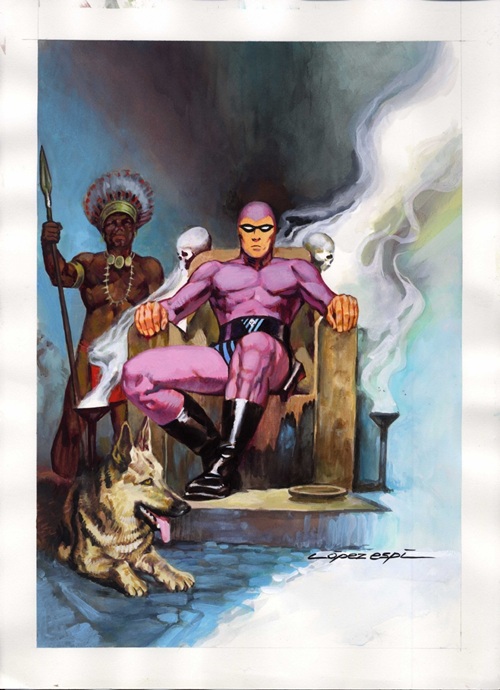
In addition to his extensive Marvel work, Rafael López Espí’s career also intersected with one of the most legendary figures in the history of comics: The Phantom. Originally created by Lee Falk and artist Ray Moore in 1936, the Phantom had long enjoyed international popularity, including in Spain. López Espí’s work on the Phantom is particularly notable because it showcased a different, yet equally compelling, side of his artistic skill set.
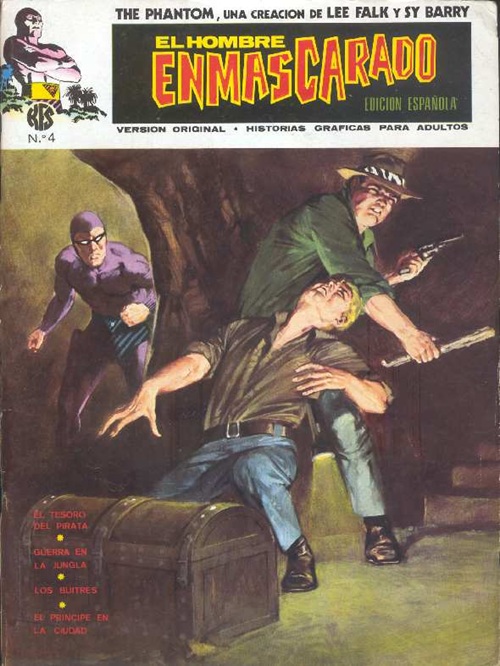
During the late 1960s and early 1970s, López Espí produced cover art and occasional interior illustrations for Spanish editions of the Phantom (El Hombre Enmascarado), published primarily by Editorial Valenciana and later by Ediciones Vértice. His interpretations of the Ghost Who Walks maintained the mysterious, almost mythic aura of the character while imbuing him with a heroic physicality perfectly suited to the Spanish readership’s tastes. Rafael’s Phantom covers often highlighted lush jungle environments, intense action sequences, and a keen eye for the character’s signature purple costume—a vibrant colour that he rendered with extraordinary depth and texture.
This period of work on the Phantom was particularly significant because it demonstrated Rafael’s versatility. While his Marvel covers leaned heavily into superhero dynamism and urban fantasy, his Phantom illustrations captured a more pulpy, classic adventure tone reminiscent of early serials and noir films. Rafael was able to shift artistic gears without losing his distinctive flair, proving that he could successfully handle both the high-fantasy, larger-than-life drama of American superheroes and the subtler, mythological heroism of classic adventure strips.


In the 1980s, following the gradual decline of Ediciones Vértice and changes in the Spanish comics market, Rafael López Espí diversified his career. He spent several years away from mainstream comics, working in advertising and illustration. However, the pull of comics proved too strong to resist. In the early 1990s, he returned to sequential art by collaborating with the Swedish agency Dalger Press, creating content for the magazine Min Häst, where he illustrated the girls’ comic series Conny. This series proved popular in Scandinavia and Germany, once again demonstrating Rafael’s ability to adapt to different genres and readerships.
Rafael López Espí’s legacy is profound and multifaceted. To Spanish comic book readers, he is the brush that gave color to their black-and-white childhood memories of superheroes. To art collectors, he is a master craftsman whose covers transcend their commercial purpose to stand as vibrant pieces of pop art. His work on the Phantom continues to be celebrated for its authenticity and vitality, bridging the classic sensibilities of 1930s adventure strips with the evolving visual languages of the 1960s and 1970s.
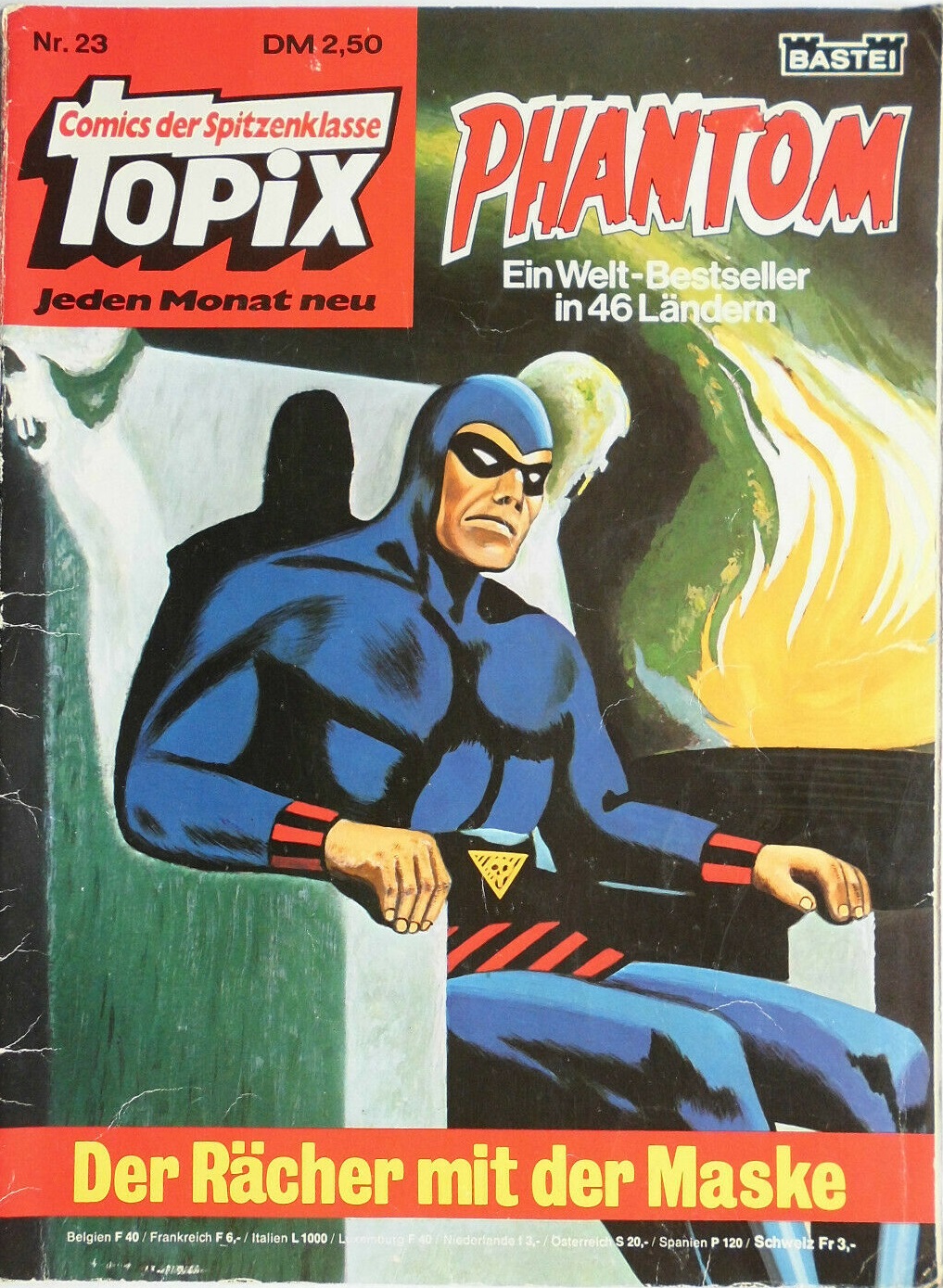
In the early 1970s, Rafael López Espí collaborated with the German publisher Bastei Verlag specifically on their editions of the Phantom, bringing his dynamic, painterly style to a new audience. For Bastei’s Phantom comic books, López Espí created striking cover illustrations that captured the spirit of Lee Falk’s legendary character while adding a dramatic European flair. His covers often depicted the Phantom in tense jungle confrontations, mysterious temples, or dramatic rescues, emphasizing atmosphere, shadow, and movement. Unlike the more straightforward American interpretations, López Espí’s Phantom appeared both heroic and mythic, blending pulp action with an almost ghostly, romantic aura that appealed strongly to German readers.
Working with Bastei on the Phantom allowed Rafael López Espí to further refine his mastery of depicting tension, adventure, and exotic landscapes, all while remaining faithful to the core legend of the Ghost Who Walks. His German Phantom covers are remembered for their bold use of color, their cinematic compositions, and their ability to evoke both immediate danger and timeless myth. This collaboration strengthened his reputation as one of Europe’s premier interpreters of classic American comic heroes, ensuring his version of the Phantom became a cherished vision across both Spain and Germany during the golden years of European pulp comics.


In the new millennium, López Espí embraced his legacy, dedicating time to producing commissioned artworks for collectors, participating in exhibitions, and attending conventions across Spain and Europe. He established a personal website and fan club where he shared insights into his artistic process, his memories of the Vértice era, and his reflections on the evolution of the comic book industry.
His career, spanning more than six decades, reflects the history of European comics themselves—a constant negotiation between national traditions and international influences, between commercial demands and artistic ambition. Even today, López Espí’s covers for characters like Spider-Man, the Fantastic Four, and the Phantom are reprinted, sold, and admired by new generations who may never have known the scarcity and excitement of buying a Vértice comic with one of his dazzling illustrations on the cover.
In a landscape increasingly dominated by digital art, Rafael López Espí’s mastery of traditional painting techniques, his bold compositions, and his powerful sense of storytelling remain enduring symbols of a heroic age of comic book artistry. His art, full of energy and soul, reminds us of a time when a single image on a comic book stand could ignite the imagination of an entire generation.
 thephantom.fan