

Rafael Gallur was born in Puebla, Mexico City, Mexico on the 10th of December 1948. His journey into the artistic realm began not in the hallowed halls of fine art academies, but in the bustling, ink-stained world of comic books, a medium that would define much of his prolific career and allow his distinctive style to flourish across countless pages and covers. From his earliest days, Gallur displayed an innate talent for capturing movement, emotion, and the raw energy of human drama, qualities that would become the hallmarks of his iconic work.
His initial foray into the professional art scene saw him assisting established figures like Zótico Fonseca and Carlos Mabridis, a foundational period that undoubtedly honed his technical skills and provided him with invaluable insights into the intricacies of sequential art. This apprenticeship paved the way for his first published work, appearing in the pages of the newspaper La Prensa. This early exposure marked the beginning of a relentless output that would see him become a cornerstone of Mexican comic book illustration.
Gallur’s career truly took flight with his extensive work for the publishing house Edar, later known as Vid. Here, he contributed to a diverse array of comic books, including titles such as Mini Terror, Mini Aventuras, and Mini Policíaras. These early works, though perhaps less celebrated than his later, more visually arresting pieces, were crucial in developing his storytelling prowess and his ability to convey complex narratives within the confines of a comic panel. He also lent his talents to EJEA, working on series like Frank Kein, Posesion Diabolica, and Sangre India, further broadening his experience across various genres, from horror to adventure.
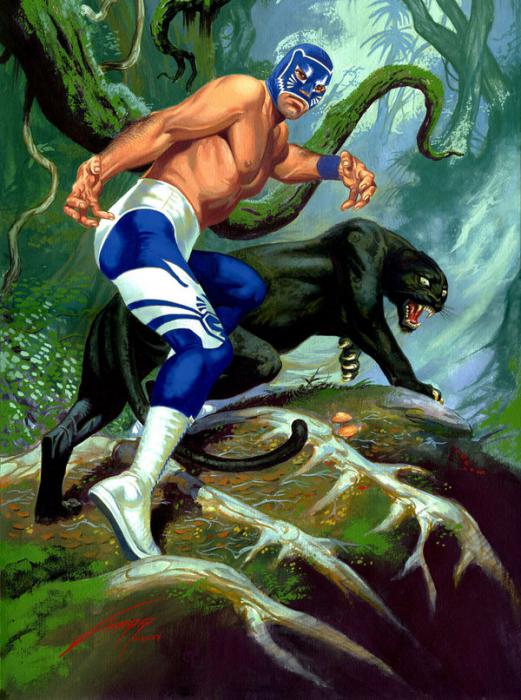
It was, however, his pivot to cover paintings that truly cemented his legendary status. Under the pseudonym “Garr,” Gallur began to produce the striking, often hyper-realistic and intensely dramatic covers for publications such as Sensacionales de Lucha, Vaqueros, and Maestros. These covers were not merely illustrations; they were powerful, standalone works of art that demanded attention, drawing readers into the fantastical worlds within. His mastery of color, composition, and anatomy became evident in these pieces, transforming mundane newsstand racks into galleries of miniature masterpieces. The Sensacionales de Lucha covers, in particular, became a canvas for his unparalleled ability to depict the raw power and theatricality of lucha libre, Mexico’s iconic professional wrestling. He captured the masked heroes and villains in mid-air, locked in powerful holds, or poised for devastating blows, imbuing each image with a palpable sense of tension and excitement. His painted artwork for these covers was so distinctive and influential that many have retrospectively compared him to the renowned American comic artist Alex Ross, noting that Gallur was creating beautifully painted artwork long before Ross became a household name in the industry.
Beyond the world of mainstream comics, Gallur also became a significant illustrator for the “Ghetto Librettos,” a series of small Mexican pulp comic books published by Editorial Mango. These publications, known for their themes of sex and violence, included wrestling comic titles such as Blue Demon, Sensacionales de Luchas, and Arena, along with others like El Pisolero, Guerreros del Ring, and Guerreros Del Ring Especiales. In these works, Gallur’s art often took on a grittier, more visceral quality, perfectly matching the raw and unvarnished narratives they contained. His ability to adapt his style to the specific demands of each genre, while still maintaining his signature flair for dynamic action and expressive characterization, speaks volumes about his versatility and artistic range.
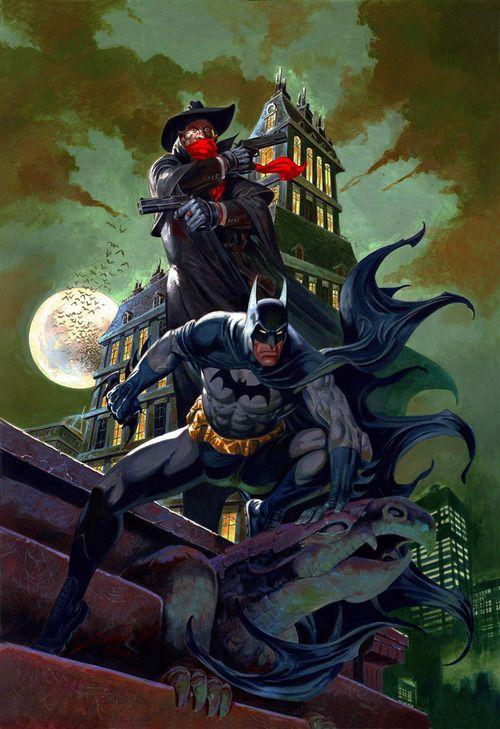
Despite his success as a cover artist, Gallur eventually returned to interior art, contributing stories for Arena and undertaking inking jobs for major American publishers like DC Comics, and even a Star Trek mini-series. This return to sequential storytelling demonstrated his enduring passion for the narrative form and his willingness to engage with different facets of the comic book industry. His work for DC, though perhaps less overtly celebrated than his Mexican output, nonetheless showcased his meticulous attention to detail and his ability to contribute to established universes while maintaining his unique artistic voice.
Rafael Gallur’s artistic style is characterized by its powerful dynamism, meticulous detail, and a profound understanding of human anatomy and motion. He possessed an uncanny ability to convey intense action and emotion through his brushstrokes, making his characters leap off the page. His use of acrylic paint for many of his covers allowed for a richness of color and a depth of texture that set his work apart. There’s a certain dramatic flair to his compositions, often employing striking angles and exaggerated perspectives to heighten the sense of conflict or heroism. His figures are often muscular and imposing, reflecting the physical prowess of the luchadores and other action heroes he so frequently depicted. Yet, beneath the powerful exteriors, there is often a subtle vulnerability or intense determination that adds layers of complexity to his characters. His art often evokes a sense of classic pulp fiction, with its bold lines and vibrant palettes, but elevated by a level of technical skill and artistic vision that transcends mere illustration. He channeled the raw energy of artists like Frank Frazetta into modern cover art, bringing a much-needed sense of power and epic scope to the genre.
The impact of Rafael Gallur’s work extends far beyond the individual comic books and magazines he illustrated. He became a master painter who defined the visual aesthetic of an era for many Mexican readers, particularly those immersed in the world of lucha libre. His covers were not just advertisements; they were cultural touchstones, instantly recognizable and deeply beloved by fans. He elevated the art of the comic book cover to a fine art form, demonstrating that popular entertainment could also be a vehicle for profound artistic expression. His influence can be seen in the work of subsequent generations of Mexican artists, many of whom cite him as a significant inspiration. He showed that it was possible to achieve artistic excellence within the commercial confines of the comic book industry, and that there was immense artistic value in depicting the heroes and villains of popular culture.

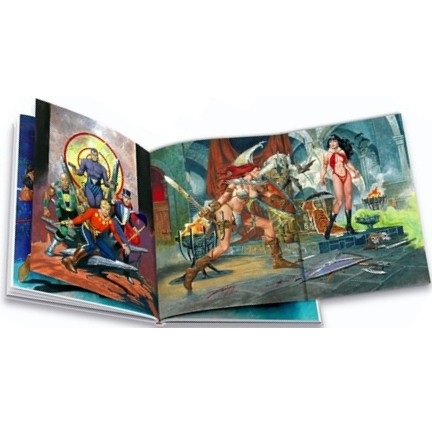
In recent years, there has been a renewed appreciation for Gallur’s extensive body of work. In 2023, his 50-year career was celebrated, marking a significant milestone for the artist. Comikaze Books, an independent Mexican publisher, spearheaded a project to create a deluxe art book titled Sensational Master: The Art of Rafael Gallur. This initiative, funded through a successful Kickstarter campaign, aimed to rescue and preserve over a hundred of his paintings from various stages of his career, scanning them in high resolution to offer the best possible quality to readers. This project was a testament to his enduring legacy and the widespread desire among fans and art enthusiasts to see his work compiled and celebrated in a comprehensive manner. The book was designed to appeal to an international audience, further solidifying his place as a globally recognized master of his craft. The Kickstarter campaign offered various packages, including autographed copies and original sketches by the artist, demonstrating the high demand for his original work and signed memorabilia.
Sensational Master: The Art of Rafael Gallur contains an illustration he completed of the Defenders of the Earth team, featuring the Phantom, Flash Gordon, Mandrake the Magician, and Lothar. The art as found within the books pages can be seen below, printed opposite a fold-out page that opens into a double spread illustration.

While specific solo exhibitions of Rafael Gallur’s fine art in traditional gallery settings might not be as widely documented as those of artists solely focused on gallery work, his influence and presence in the art world are undeniable. His “exhibitions” have largely taken place on the newsstands of Mexico, in the hands of countless readers, and now, increasingly, in the pages of curated art books and online galleries dedicated to comic art. The very nature of his prolific output as a commercial artist meant that his work was consistently on public display, reaching a far wider audience than many gallery-bound artists. His pieces are highly sought after by collectors of comic art, and his original paintings command significant attention in the secondary market, as evidenced by auction records.
Gallur’s dedication to his craft and his ability to consistently produce high-quality, impactful art over five decades is a remarkable achievement. He navigated the evolving landscape of the comic book industry, adapting his techniques and themes while remaining true to his distinctive artistic vision. His journey from assisting other artists to becoming a celebrated master in his own right is an inspiring narrative of artistic growth and achievement. He has left an indelible mark on Mexican popular culture, and his work continues to resonate with audiences both within Mexico and across the globe. The ongoing efforts to preserve and celebrate his legacy through art books and online platforms ensure that future generations will have the opportunity to discover and appreciate the extraordinary talent of Rafael Gallur, the sensational master of Mexican comic art. His art is a vibrant, living testament to the power of visual storytelling and the enduring appeal of heroes, villains, and the dramatic narratives that shape our collective imagination.
 thephantom.fan