
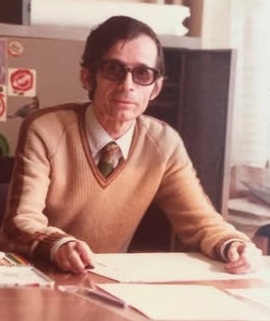
Özcan Eralp stands as a towering figure in the history of Turkish illustration and international comic art, representing a bridge between the vibrant Turkish art scene of the mid-twentieth century and the global comic industry.
Born on the 27th of November 1935, Eralp emerged during a golden era of Turkish graphic storytelling, developing a style characterized by a rigorous commitment to anatomical precision and a mastery of cinematic pacing. His early career in Turkey saw him contributing to prominent publications, such as Fratelli Spada in Italy, where he honed a versatile hand capable of shifting between historical dramas and contemporary adventures. This foundational period was defined by a relentless work ethic and an ability to imbue two-dimensional figures with a sense of weight and motion, qualities that eventually caught the attention of international publishers and led him to Sweden, where he would leave his most indelible mark.
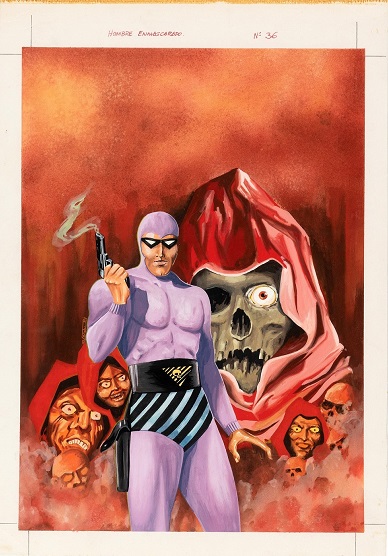
It was during his long tenure with the Swedish publisher Semic Press that Eralp became one of the most prolific and respected artists for the The Phantom (Fantomen) comic books. Tasked with visualizing the adventures of “The Ghost Who Walks”, Eralp brought a distinct European sensibility to the Lee Falk creation, assisting in the illustration of approximately 77 Fantomen comic strip stories. His rendition of the Phantom was noted for its athletic elegance and a certain gritty realism that departed from the more stylized American versions of the time. He excelled at rendering the dense, atmospheric jungles of Bangalla, using intricate line work to create a sense of depth and environmental danger. His ability to balance the iconic, almost mythical presence of the Phantom with the human vulnerability of Kit Walker made his stories deeply engaging for a generation of readers across Scandinavia and beyond.
Eralp’s contribution to the Phantom mythos was not merely aesthetic but also structural, as he played a vital role in the “Team Fantomen” creative stable. He was known for his exceptional skill in choreography, particularly in fight sequences and chase scenes, where his understanding of perspective ensured that the action remained clear despite its intensity. He had a unique talent for drawing the Phantom’s signature gadgets and the ancient ruins of the Skull Cave with a level of architectural detail that added a sense of history and permanence to the lore. Throughout the 1970s and 1980s, his work became a staple of the series, helping to maintain the character’s immense popularity in international markets where the Phantom often outsold traditional superheroes.

Eralp was also a prolific illustrator for various Turkish magazines and newspapers throughout the 1970s and 80s, even while he continued to ship Phantom pages back to Sweden. His versatility allowed him to move between editorial cartoons, commercial illustrations, and short-form comics. Interestingly, Eralp once won a prestigious short story competition in a magazine he was already working for; to avoid a conflict of interest, he submitted the work under his sister-in-law’s name. Whether he was crafting maps of fictional African nations—such as his famous, definitive map of the Phantom’s “Bengali”—or illustrating historical dramas for the Turkish press, Eralp remained a versatile craftsman whose influence extended far beyond a single masked hero.
While Özcan Eralp is most synonymous with his long-running work on the Phantom, his career spanned a variety of other popular characters and publishers, both in Scandinavia and his native Turkey. Upon arriving in Sweden and joining Semic Press in the late 1960s, Eralp did not immediately jump into the world of superheroes. One of his most significant early assignments was on the immensely popular Swedish humor strip Lilla Fridolf (Little Fridolf). Assisting the artist Torsten Bjarre, Eralp worked as an inker and studio artist, eventually becoming so proficient in the series’ specific comedic style that he ghost-wrote and illustrated entire episodes when Bjarre was unable to do so. This work displayed a lighter, more expressive side of his talent that contrasted sharply with the dramatic realism of his later adventure work.
In Turkey, Eralp held a respected position within the local industry, contributing to major publishers like Tay Yayınları. One of his most notable contributions to Turkish comic history occurred in 1983 when he was tasked with completing the final adventure of Tarkan, the legendary Hunnic warrior created by Sezgin Burak. Following Burak’s untimely death, Eralp stepped in to finish the story “Milano’ya Giden Yol” (The Road to Milan), a high-profile assignment that required him to mimic Burak’s iconic style while maintaining the historical epic’s momentum. This project solidified his reputation as a “closer”, a reliable and technically gifted artist capable of handling the most prestigious characters in the country.
Özcan Eralp would write and illustrate five Phantom comic strip stories for Tay Yayınları, published in Turkey, under the Phantoms local title of Kızılmaske.
Beyond his signature work on the Phantom, Eralp was a multifaceted creator who remained deeply connected to his Turkish roots while navigating the demands of the European market. His legacy is defined by his professionalism and his role as a mentor and inspiration for subsequent generations of Turkish illustrators who looked to his international success as a blueprint for their own careers.
Özcan Eralp passed away on the 12th of January 2019 at the age of 83. His funeral was held the following day at the Zühtü Paşa Mosque, Istanbul, Turkey. Throughout his career, he remained a highly respected figure in both the Turkish and Swedish comic book industries, leaving behind a legacy that continues to be celebrated by fans of the Phantom and graphic illustration.
 thephantom.fan