
Mario Pedrazzi, born in Turin, Italy in 1938, is an esteemed Italian comic artist. Known for his impeccable artistry and compelling storytelling, Pedrazzi carved a niche for himself through his work on the Phantom during the 1960s and 1970s, a time when this iconic character captured the imaginations of readers worldwide.
Growing up in post-World War II Italy, Pedrazzi discovered his passion for drawing at a young age. Immersing himself in the vibrant Italian comic book culture, he aspired to contribute to the burgeoning industry. By the late 1950s, Pedrazzi had begun his professional career, working with various publishers and gradually gaining recognition for his talent. His skillset, characterized by dynamic compositions and fine attention to detail, caught the attention of some of Italy’s most prominent publishing houses.
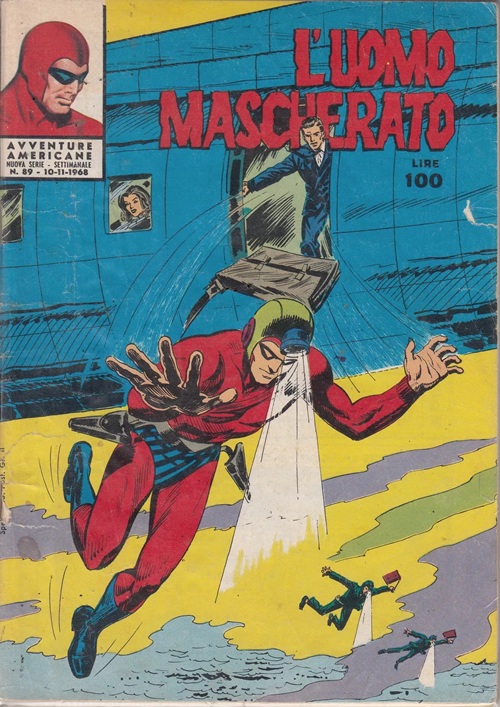
In the 1960s, Pedrazzi joined forces with Fratelli Spada, an Italian publishing house that was instrumental in bringing international comic characters like the Phantom to Italian audiences. The Phantom (or L’Uomo Mascherato as he’s known in Italy) was a creation of Lee Falk and had already gained immense popularity worldwide since its debut in 1936.
Pedrazzi’s work for Fratelli Spada focused on producing both cover art (a total of 47 comic covers) and internal comic strips (working on a total of 31 comic strip stories) for the Italian editions of the Phantom comics. These issues were adaptations of the original series but often included local creative input to cater to Italian readers. Pedrazzi’s art stood out for its dramatic use of shadow and light, a technique that perfectly suited the mysterious, crime-fighting jungle hero.
During his time with Fratelli Spada, Pedrazzi contributed to numerous covers for the Phantom comics. These covers were integral in shaping the visual identity of the series for Italian audiences. Some of his most iconic work includes:
- Dynamic Composition: Pedrazzi excelled in creating action-packed, visually arresting covers. His illustrations often depicted the Phantom in the heat of battle, whether fighting pirates, rescuing victims, or navigating the dense jungles of Bangalla.
- Vivid Detailing: The intricacies of Pedrazzi’s linework brought a sense of realism and intensity to the Phantom’s adventures. From the texture of the jungle foliage to the expressive faces of allies and adversaries, Pedrazzi’s art added depth to the stories.
- Signature Covers: Pedrazzi’s covers became a hallmark of the Italian the Phantom series, celebrated for their stunning imagery and are highly sought after by collectors.
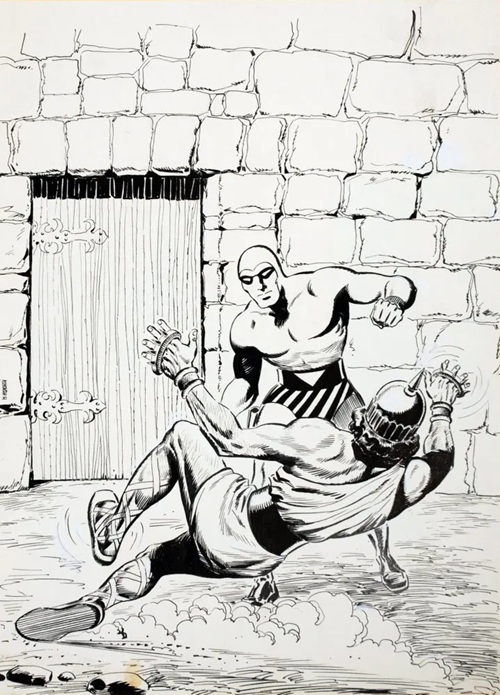
Pedrazzi’s style was a harmonious blend of realism and dramatic flair, making him an ideal artist for the Phantom, a character that thrives on mystique and action. He brought a cinematic quality to his work, with covers that often appeared as snapshots of larger-than-life moments. His use of shading techniques heightened the suspense and intrigue that surrounded the Phantom’s persona as “The Ghost Who Walks.”
Pedrazzi specialized in cover art, and his contributions were pivotal in attracting readers during a competitive era in comics. His renditions of the Phantom gave the character a heroic yet humanized presence, endearing him to Italian audiences who were discovering this global icon through localized adaptations. His work would later be published on an international stage, translated from Italian to local languages wherever the story was published.
In the 1970s, Pedrazzi joined the prestigious Giolitti Studios, an art agency led by the renowned Italian artist Alberto Giolitti. Through this association, Pedrazzi expanded his reach, collaborating on international projects and refining his artistic approach. His time at Giolitti Studios also provided him with opportunities to work on other characters, but the Phantom remained a defining aspect of his career.
Interestingly, Mario Pedrazzi wasn’t the only family member involved in the Phantom. His brother, Giorgio Pedrazzi, contributed as a writer for some of the the Phantom stories published by Fratelli Spada. This familial collaboration enriched the narratives and helped create a cohesive storytelling and artistic experience for readers.
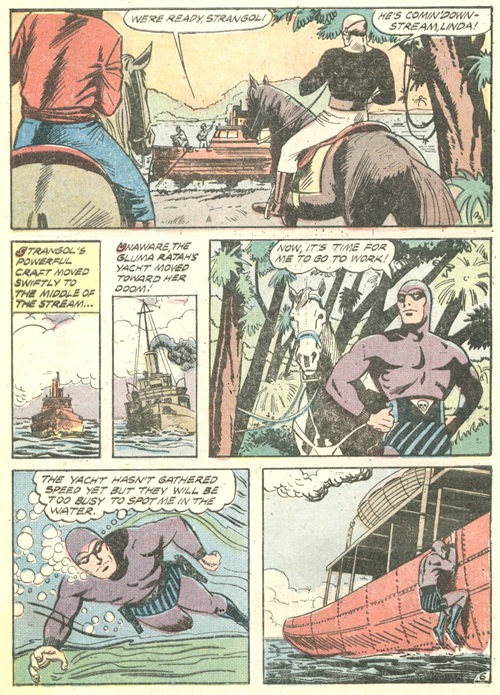
Charlton Comics published 3 of the comic strip stories he worked on illustrating, found in edition numbers 60, 62 and 63 published in the USA in the mid-1970s, translated from Italian to English.
Pedrazzi’s work on the Phantom has left a lasting legacy in the Italian comic book industry. His iconic covers and artistic style helped solidify the character’s place in Italian pop culture. Collectors and enthusiasts continue to celebrate his contributions, with original artworks fetching significant interest at auctions.
Mario Pedrazzi’s contributions to the Phantom stand as a testament to his skill and passion for comic art. Through his work with Fratelli Spada and the Giolitti Studios, he played a vital role in introducing Italian audiences to this legendary character while elevating the artistic standards of comic book storytelling. By capturing the spirit of the Phantom with his striking illustrations, Pedrazzi not only entertained readers but also inspired future generations of artists to continue the legacy of this timeless hero.
 thephantom.fan