
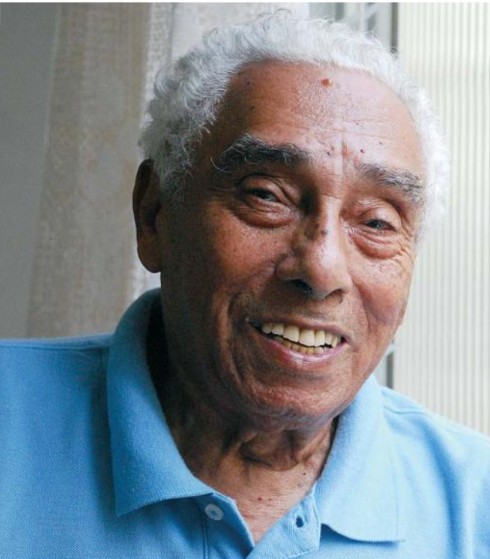
Gutemberg Monteiro, born on the 4th of December 1916, in Faria Lemos, Minas Gerais, Brazil, was a distinguished illustrator whose career spanned several decades and whose influence extended beyond his native country. His journey into the world of art began in the early 1940s when he was discovered by Adolfo Aizen, a prominent figure in Brazilian publishing. Notably, Monteiro was the son of Aizen’s chauffeur, a connection that serendipitously led to the unveiling of his artistic talents.
Monteiro’s initial foray into the comic book industry saw him contributing to the waning issues of ‘Suplemento Juvenil’, a publication that played a pivotal role in popularizing comics in Brazil. His distinctive style quickly garnered attention, leading him to become the principal cover artist for several of Rio Gráfica Editora’s (RGE) flagship publications, including Gibi Mensal, O Globo Juvenil Mensal, and the detective-themed magazines X-9 and Meia-Noite. Unlike many contemporaries who relied heavily on tracing existing artworks, Monteiro’s approach was characterized by originality and a unique flair that set his illustrations apart.
One of Monteiro’s significant contributions was his work on adaptations of classic literature into comic formats. A notable example is his illustration of ‘A Moreninha’ for the Edição Maravilhosa series, showcasing his ability to translate literary narratives into compelling visual stories. His versatility was further evident in his ventures into the horror genre with Editora Outubro and his adaptations of the ‘O Falcão Negro’ serial for Editora Garimar.
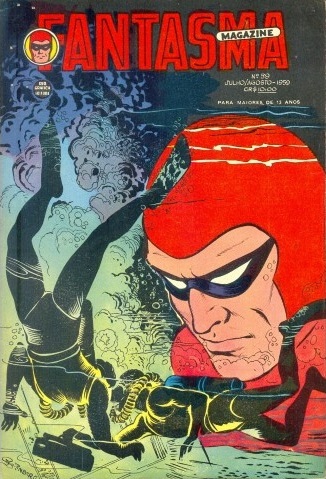
However, it was his association with the Phantom (published under the title of ‘O Fantasma’ in Brazil) that cemented Monteiro’s legacy in the comic book realm. RGE had secured the rights to publish the Phantom in Brazil, and the character quickly became one of their flagship titles. Monteiro’s involvement encompassed both cover illustrations and interior artwork, capturing the enigmatic essence of the masked hero and resonating with Brazilian audiences.
The demand for the Phantom stories in Brazil was substantial, leading RGE to produce original stories to supplement the imported content. Monteiro, alongside other talented artists such as Walmir Amaral and Júlio Shimamoto, was instrumental in creating these indigenous stories. His deep understanding of the character and his world allowed him to craft tales that seamlessly blended with the existing lore, enriching the Phantom universe and offering readers fresh adventures.
Monteiro’s covers for Fantasma Magazine are particularly noteworthy. For instance, issue number 39, published in July 1959, and issue number 44, released in May 1960, both featured his captivating cover art. These illustrations not only showcased his artistic prowess but also played a crucial role in attracting readers to the magazine, especially in the early years of the series.

In 1964, Monteiro’s talents caught the attention of the international comic community, leading to an invitation to work in the United States. Adopting the pen name ‘Goott’, he expanded his repertoire by contributing to various American publications. His work appeared in Warren Publishing’s ‘Eerie’ and ‘Creepy’ magazines, where his illustrations added a distinctive touch to the horror stories. Additionally, Monteiro took on the challenge of illustrating Sunday pages for ‘Tom & Jerry’, bringing the beloved cat and mouse duo to life with his unique style. His versatility shone through as he worked on titles like ‘Casper the Friendly Ghost’ and ‘Hot Stuff the Little Devil’, further showcasing his adaptability across different genres and audiences.
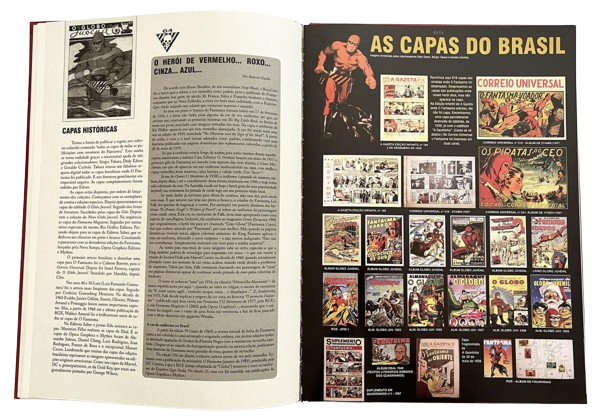
Despite his international success, Monteiro maintained strong ties to the Brazilian comic scene. His collaborations with local publishers such as EBAL and Continental further enriched the nation’s comic landscape. His dedication to his craft and his contributions to both Brazilian and international comics did not go unnoticed. In 2009, his work was highlighted in ‘Fantasma – A Biografia Oficial do Primeiro Herói Fantasiado dos Quadrinhos’, a comprehensive biography of the Phantom in Brazil. This publication underscored the significance of Monteiro’s role in shaping the character’s legacy within the country.

Gutemberg Monteiro’s life was a testament to the power of passion and perseverance. From his humble beginnings in Minas Gerais to his recognition on the international stage, he remained dedicated to his art, continually pushing boundaries and exploring new horizons. His work not only entertained but also inspired, leaving an indelible mark on the world of comics. Monteiro passed away on the 10th of December 2012 at the age of 96, due to cerebral ischemia.
 thephantom.fan