
The life of Frank Bolle, a name synonymous with the golden and silver ages of American comics, is a testament to the enduring power of a steady hand and a dedicated work ethic. A career spanning over seventy years saw him contribute to countless titles and features, leaving an indelible mark on both the comic book and syndicated newspaper strip worlds.
Born in Italy on the 23rd of June 1924, Bolle’s journey to becoming a respected figure in sequential art began with a transatlantic voyage at the age of five, when he traveled alone to join his mother in Brooklyn, New York, USA. This early life, marked by resilience and new beginnings, foreshadowed a career that would constantly adapt and thrive across different genres and formats. Bolle’s early artistic inclinations were nurtured in the vibrant cultural hub of New York City, where he attended the High School of Music & Art. His education was later refined at the prestigious Pratt Institute, a path that was briefly interrupted by his service in the United States Army Air Force during World War II. Returning from the war, he used the G.I. Bill to complete his studies, a pivotal moment that prepared him for the professional world he was about to enter.
Bolle’s professional career began in 1943, even before his military service, drawing backgrounds for Funnies Inc., one of the “packagers” that supplied content for the burgeoning comic book industry. His first credited work was for Timely Comics, the precursor to Marvel, where he penciled and inked two “Terry Vance” detective features. The immediate post-war years saw him establish a solid, if unspectacular, presence in the industry. He contributed to a wide array of titles for various publishers, a pattern that would become a hallmark of his career. He was a versatile artist, capable of shifting from Westerns to romance, and from detective stories to science fiction with apparent ease. His work in the 1950s for Magazine Enterprises on titles like Tim Holt and his co-creation of the Western heroine, the Black Phantom, demonstrated his ability to handle both action and character-driven narratives. This period also saw him working for DC Comics on the “Robotman” feature in Detective Comics, and for Atlas (later Marvel) and other publishers, cementing his reputation as a reliable and productive artist.
One of the most significant periods in Bolle’s career began in the late 1950s and early 1960s when he began a long and fruitful association with Western Publishing, working on comics for their Dell and Gold Key imprints. It was here that his clean, detailed, and dynamic style truly came into its own. He became a go-to artist for a wide variety of licensed properties and original features. His work for Gold Key on titles such as Doctor Solar, Man of the Atom, and The Twilight Zone showcased his skill with science fiction and supernatural stories, while his art for The Lone Ranger and Ripley’s Believe It or Not proved his versatility. This era was crucial for establishing his name among a new generation of comic readers, and his work became a defining characteristic of Gold Key’s distinctive house style. His ability to render a sense of realism and gravitas to fantastic subjects was a key factor in his success with these titles, and his meticulous attention to detail made his panels feel rich and immersive.
It was also during this period that Bolle would begin his long and storied work on syndicated newspaper strips, a medium that would define much of his later career. His first major foray into this world was with the McNaught Syndicate, where he worked on features like Debbie Deere and Alexander Gate. These strips, often focused on interpersonal drama and mystery, allowed Bolle to hone his skills as a storyteller in a different format. His art adapted seamlessly to the smaller, more regimented panels of the newspaper strip, yet he never lost the expressiveness and clarity that marked his comic book work. This adaptability was a key to his longevity and success. The transition from the monthly comic book to the daily and Sunday comic strip required a new kind of discipline, a commitment to consistent deadlines and a focus on character-driven narratives that could unfold over years. Bolle excelled at this, developing a reputation as one of the most reliable and prolific artists in the syndicate business.
This reputation led to some of the most enduring assignments of his career, notably his work on Winnie Winkle and The Heart of Juliet Jones. Taking over the art for the long-running Winnie Winkle in 1982, Bolle continued to draw the strip until its conclusion in 1996. During this time, he also took on the dual role of writer, demonstrating his creative depth beyond just the art. Concurrently, he took over the art duties on The Heart of Juliet Jones in 1989, a strip known for its realistic and emotional storytelling. Bolle followed in the footsteps of the strip’s creator, Stan Drake, a legendary artist in his own right, and successfully maintained the strip’s high standard until its end in 2000. Bolle’s work on these two strips showcased his mastery of figure drawing and his ability to convey complex emotions through subtle expressions and body language, earning him the respect of both his peers and a loyal readership.
Amidst his prolific work on these prominent strips, Bolle’s contributions to the Phantom also stand out. While not his most extensive work on a single character, his art on the comic book version of the Phantom for Charlton Comics left a lasting impression. Bolle’s style was particularly well-suited to the classic adventure and mystery of the Phantom. His clean lines and strong sense of composition brought the dense jungles of Bengali, the heroic figure of the Phantom, and the drama of his encounters with pirates and villains to life. Working primarily in the 1960s, Bolle’s pages for the Phantom comic books presented the character with a powerful, heroic posture and a sense of classic comic-strip dynamism. His renditions of the Phantom’s costume and Skull Cave were detailed and atmospheric, capturing the mythic quality of the character. For fans of the comic book versions of the character, Bolle’s art represents a peak of that era’s storytelling, a perfect blend of adventure and artistry that honored the traditions of the King Features Syndicate original strip while making the stories his own.

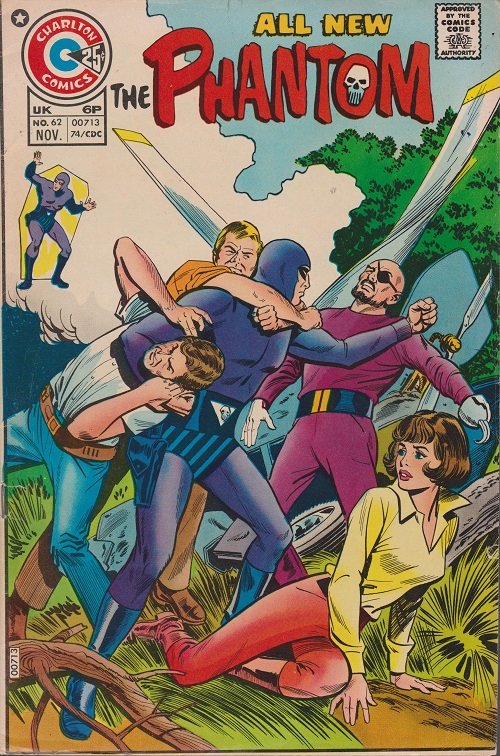
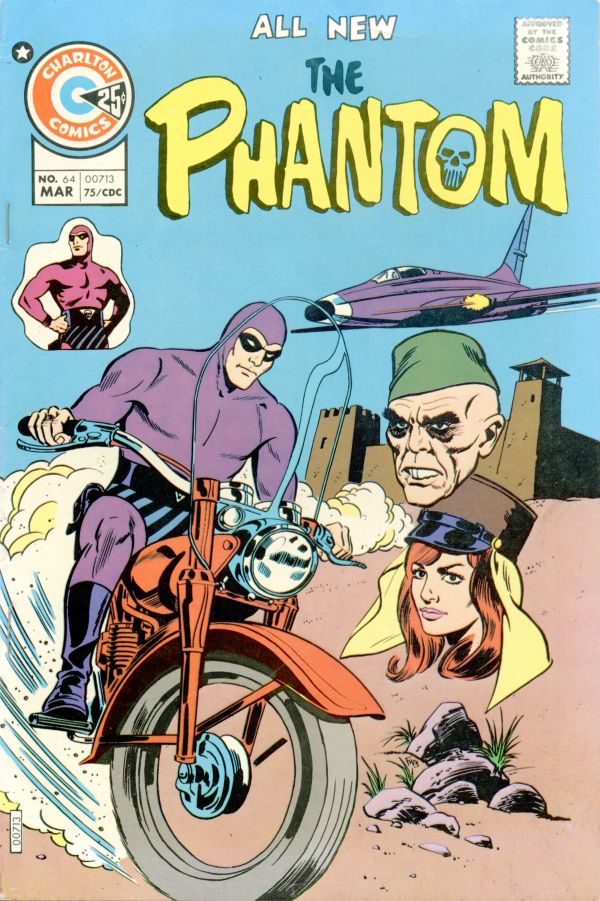
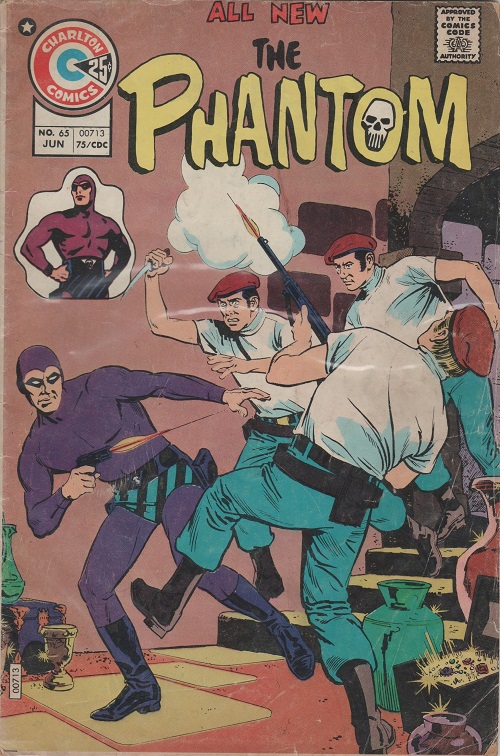
Bolle provided illustrations for two Phantom comic strips, titled ‘Duel With Death’ and ‘The Web Of Fear’, both of which were published in Charlton comic books numbered 64 and 65, respectively. Additionally, he illustrated five front covers within the same series, specifically for issues 62, 63, 64, 65, and 72, which can be seen below.


Bolle’s career was not confined to comic books and strips; he was a highly sought-after illustrator for magazines and books. For eighteen years, he was a regular contributor to Boys’ Life magazine, the official publication of the Boy Scouts of America. For this magazine, he illustrated a variety of strips and features, from historical tales to adaptations of classic science fiction novels, including John Christopher’s “The Tripods” and Robert A. Heinlein’s “Between Planets.” This work reached a different, but equally important, audience and demonstrated his ability to be both an entertainer and an educator through his art. His illustrations were clear and accessible, helping to bring complex stories to a younger readership. He also ghosted on several other strips, including Rip Kirby for John Prentice, and later on Prince Valiant for John Cullen Murphy, which he had admired since he was a child. The fact that he was trusted by these giants of the industry to assist on their most iconic work speaks volumes about the high regard in which he was held.
Even in his later years, Bolle remained active and engaged with his craft. In the 1990s and 2000s, he continued to work on a variety of projects, including ghosting for the long-running Gil Thorp and doing work on Apartment 3-G. Though the style of his art naturally evolved with age, his dedication never wavered. He received the Inkpot Award in 2003 for his career achievements, a fitting tribute to a man who had given so much to the world of comics. He continued to create, even taking on private commissions for pet portraits and watercolor paintings, showcasing a versatility that extended beyond the panels of comics.
Frank Bolle passed away on the 12th of May 2020, at the age of 95, leaving behind a monumental body of work that spans nearly eight decades. His legacy is not just in the sheer quantity of his output but in the quality and consistency of his art. He was an artist who could bring a sense of realism and emotional depth to any story, whether it was a high-stakes superhero adventure, a dramatic love story, or the timeless heroics of the Phantom. His life story is one of unwavering commitment, a quiet professional who consistently delivered art that captivated generations of readers, and a testament to the fact that hard work and a passion for storytelling can lead to an extraordinary and lasting career.
 thephantom.fan