

Enric Torres-Prat (also known as Enrique Torres), is known universally by his mononym Enric, stands as a titan of Spanish comic book art, a master of the macabre and the magnificent whose brushstrokes defined an era of horror and fantasy illustration. Born in Barcelona, Spain, around 1940, Enric’s distinctive style, characterized by its sensuality, atmospheric depth, and classical influences, would leave an indelible mark on the international comic scene, most notably through his iconic cover art.
Enric’s artistic journey began at Josep Toutain’s renowned Selecciones Ilustradas agency, a pivotal hub for Spanish artists seeking global opportunities. He joined the agency in his early twenties, around the early 1960s. It was here that his innate talent for both painting and photography blossomed, quickly establishing him as a force to be reckoned with. His work often transcended the typical comic book illustration, leaning into fine art with a meticulous eye for detail, dramatic composition, and a rich, evocative color palette. During this period, he also collaborated with Rafael López Espí, creating covers for various thriller and superhero publications for Ediciones Vértice.


The late 1960s and early 1970s saw Enric’s art gain significant traction, particularly with the Spanish publisher Buru Lan. For Buru Lan, he contributed numerous covers to their science fiction magazine Nueva Dimensión and, notably, the horror comic Drácula.
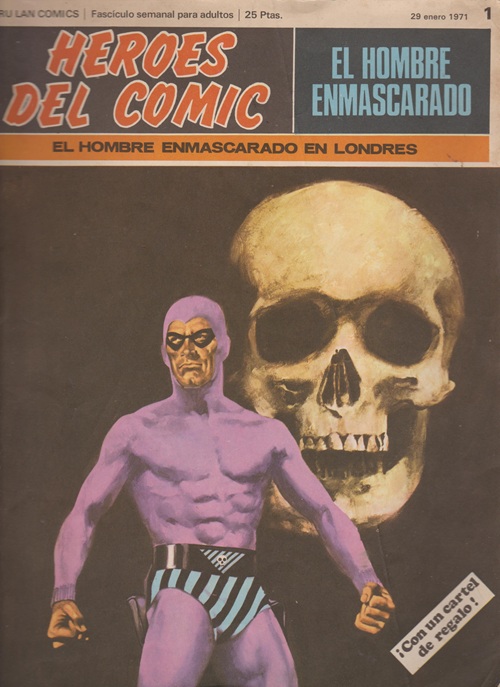
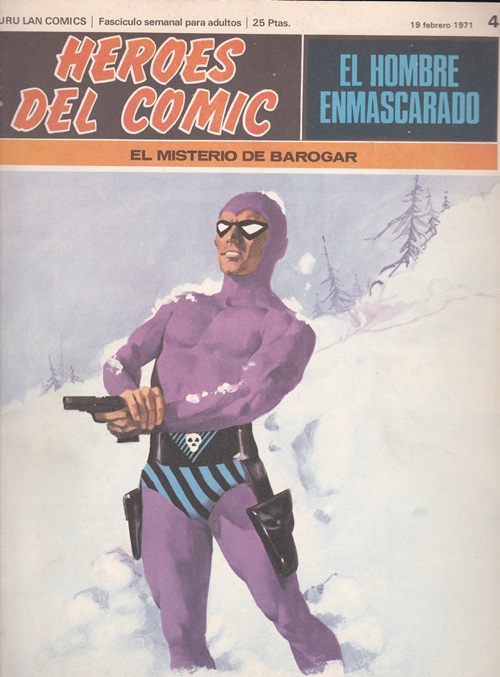
It was also during this period that Enric brought his powerful visual style to the iconic character of the Phantom (El Hombre Enmascarado). His interpretations of the Ghost Who Walks for Buru Lan offered a unique Spanish perspective on the Phantom, showcasing his broad artistic range.
His painted work can be seen on the covers of the Héroes del Cómic series by Buru Lan, under the title of El Hombre Enmascarado, the Phantoms Spanish name. The large format comic book series was released in January 1971 in Spain, with the first 20 covers in the series illustrated by Enric Torres-Prat. A sample of these covers can eb seen below.


However, it was his extensive collaboration with American publisher Warren Publishing that truly propelled Enric to international acclaim. Throughout the 1970s and early 1980s, Enric became a cornerstone of Warren’s horror and fantasy magazines. His contributions to Eerie, Creepy and Vampirella specifically. Enric’s covers for Vampirella are arguably his most famous and sought-after. He provided numerous striking and memorable images for the character, from the early to mid-1970s (e.g., Vampirella #17 in 1972, #36 in 1974, #40 and #41 in 1975, #54 in 1976, #68 in 1978, and #110 in 1982). These iconic pieces, often depicting the character with a blend of allure and danger, are highly valued by collectors and define a significant portion of the character’s visual history.
These collaborations established him as a master of the painted cover, capable of evoking dread, beauty, and the supernatural in equal measure. His work for Warren frequently featured the nude female form, rendered with a powerful, almost mythological quality, which became a hallmark of his style.
Beyond Warren, Enric’s prolific output found a home in various other ventures. He created cover art for a wide range of science fiction and fantasy novels, including those by Edgar Rice Burroughs, throughout the 1970s and 1980s (e.g., a Mendocino Menace novel cover in 1973, and Octavia E. Butler’s Dawn in 1987). He also lent his unique vision to the worlds of Star Trek novels, Red Sonja, and even some Marvel Comics characters like Hela and Valkyrie, demonstrating his adaptability across diverse genres and intellectual properties.
Enric Torres-Prat’s legacy is one of a true artistic luminary. His work, a captivating fusion of surrealism, symbolism, and romanticism, continues to inspire and captivate. Original pieces, particularly his Warren-era covers, frequently command significant prices at auction, a testament to his enduring appeal and his status as a master of illustration. Enric’s profound influence on the comic and illustration world is undeniable; he is remembered not just as an artist, but as a visionary who, through publishers like Selecciones Ilustradas, Buru Lan, and Warren, elevated the medium with his unparalleled skill and evocative imagination across decades of stunning work.
 thephantom.fan