
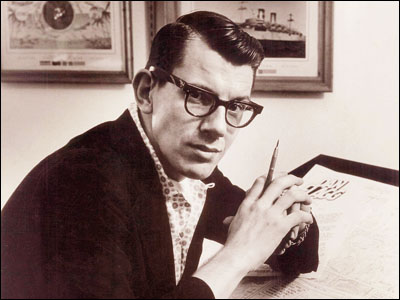
Don Sherwood (2nd September 1930 – 6th March 2010) was an American cartoonist and illustrator whose career spanned several decades, leaving a notable imprint on the comic book industry. Born in 1930, Sherwood developed a passion for art early in life, which he pursued through formal education and practical experience. His artistic journey led him to work on various comic strips and books, with one of his contributions being to the Phantom.
Sherwood’s career in the arts was marked by versatility and dedication. He worked on numerous projects, showcasing his ability to adapt to different styles and genres. His tenure in the comic industry included collaborations with various publishers, where he honed his skills and gained recognition for his distinctive artistic approach. Sherwood’s work is characterized by a clean, expressive line art style that effectively conveys action and emotion, making his illustrations both engaging and memorable.
His work spanned various media, including syndicated comic strips, comic books, and commercial illustrations, leaving a legacy that reflected his dedication and artistic talent.
Sherwood worked with major publishers such as DC Comics, Marvel Comics and Harvey Comics. At DC, he contributed illustrations to war comics, including G.I. Combat and Our Army at War, where his knack for capturing action and drama in military settings was evident. These stories required a strong sense of realism and emotional depth, which Sherwood delivered through his detailed line work and expressive character designs.
Sherwood also worked on superhero stories during his time at Marvel Comics, though his tenure there was relatively brief. He contributed to anthology titles such as Strange Tales and Tales of Suspense, bringing his dynamic and clean style to stories that often featured mystery and science fiction elements. His ability to convey atmosphere and tension made him a valuable contributor to these genres, where mood and visual storytelling were paramount.
One of Sherwood’s most celebrated achievements was creating and illustrating his own syndicated comic strip, Dan Flagg. Debuting in 1963, Dan Flagg was an action-adventure strip that followed the exploits of its titular character, a Marine Corps officer involved in military and espionage missions. The strip, which was distributed by Al Smith Feature Service, gained a devoted readership due to its gripping storylines and Sherwood’s meticulous artwork. Sherwood’s personal experience as a Marine in the Korean War informed his work on Dan Flagg, lending authenticity to the strip’s military settings and themes. The series ran until 1967 and remains a testament to Sherwood’s storytelling and artistic abilities.
Sherwood also lent his talents to Harvey Comics, where he worked on popular characters such as Casper the Friendly Ghost and Richie Rich. While these lighthearted stories were a departure from his usual fare of action and adventure, they demonstrated Sherwood’s versatility and ability to appeal to younger audiences. His clean and approachable art style was well-suited to the whimsical and family-friendly tone of Harvey Comics’ titles.
In addition to his work in comics, Sherwood contributed to various commercial art projects, including advertising illustrations and storyboards. His ability to create visually compelling narratives translated well into this field, where his skills were in high demand. He also produced illustrations for magazines and book covers, further expanding his artistic portfolio.
In the mid-1970s, Sherwood collaborated with Charlton Comics, a publisher known for producing a wide range of comic book titles. During this period, he contributed to the Phantom by illustrating one front cover and 2 comic strip stories for the Charlton Comics series released in the USA.
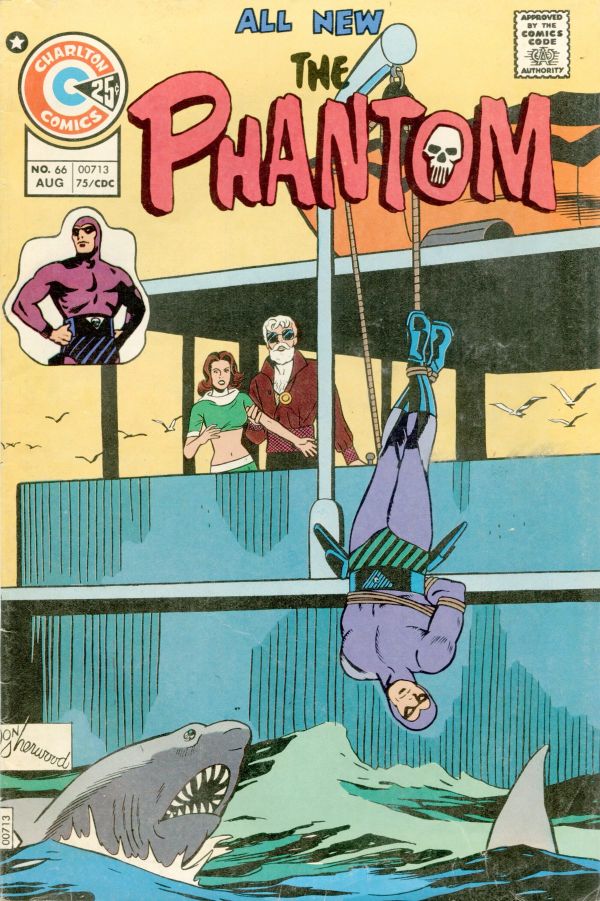
Goldbeard the Pirate, written by Joe Gill and illustrated by Don Sherwood, was published in Phantom edition number 66 in August 1975. In this story, the Phantom confronts Goldbeard, a modern-day pirate who has captured Diana Palmer, the Phantom’s fiancée, aboard his lavish yacht, the Golden Goose. Sherwood’s artwork vividly brings to life the high-seas adventure, with dynamic action sequences and detailed depictions of the characters and settings. His ability to convey tension and movement enhances the narrative, immersing readers in the perilous world of piracy and heroism. He also illustrated the front cover on this edition, as can be seen on the left.
Following this, Man in the Shadows, also written by Joe Gill and illustrated by Sherwood, appeared in Phantom edition number 72, published in August 1976. This story delves into a mysterious plot involving espionage and intrigue, with the Phantom uncovering a conspiracy that threatens global security. Sherwood’s illustrations effectively capture the noir atmosphere of the narrative, utilizing shadow and light to create a sense of suspense and danger. His attention to detail in the characters’ expressions and the intricate backgrounds contributes to the story’s immersive quality. A sample of internal pages can be seen below.


Sherwood’s contributions to the Phantom series are significant in that they reflect his adaptability and skill in bringing diverse story elements to life. His collaboration with writer Joe Gill resulted in stories that combined compelling narratives with striking visuals, enhancing the overall impact of the series during that era. Sherwood’s work on these stories is remembered for its clarity, dynamic composition, and the ability to convey complex emotions and actions succinctly.
Don Sherwood’s artistic career is distinguished by his versatility and significant contributions to the comic book industry. Although his work on the Phantom was limited to illustrating one cover and two comic strip stories, he was able to showcases his ability to bring dynamic narratives to life through compelling illustrations to the Phantom community. Sherwood’s legacy continues to be appreciated by comic enthusiasts and serves as an inspiration for aspiring artists in the field.
 thephantom.fan