
Carmine Infantino, born on the 24th of May 1925, in Brooklyn, New York City, USA was a seminal figure in the American comic book industry, celebrated for his innovative artistry and editorial vision that significantly shaped the Silver Age of Comic Books. He passed away on the 4th of April 2013, in Manhattan, New York City, USA.
Infantino’s father, Pasquale “Patrick” Infantino, was a musician proficient in playing the saxophone, clarinet, and violin, and had collaborated with composer Harry Warren. However, during the Great Depression, he transitioned to working as a licensed plumber. Infantino’s mother, Angela Rosa DellaBadia, emigrated from Calitri, Italy.
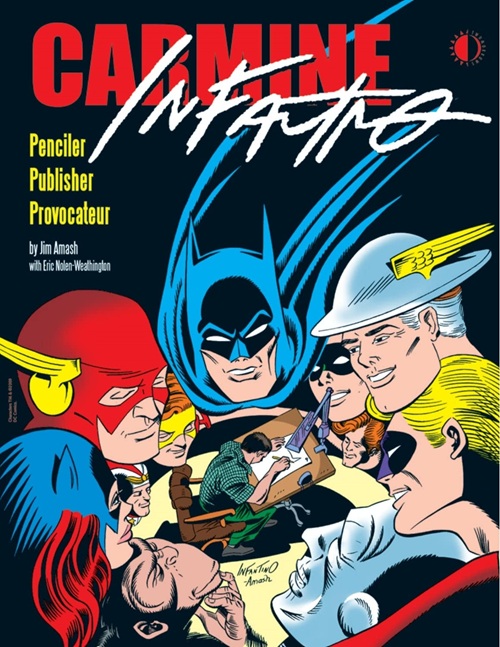
Infantino attended Public Schools 75 and 85 in Brooklyn before enrolling in the School of Industrial Art (later renamed the High School of Art and Design) in Manhattan. During his freshman year of high school, he began working for Harry “A” Chesler, whose studio was among the few comic-book “packagers” creating complete comics for publishers during the 1930s–1940s Golden Age of Comic Books.
Infantino’s early career saw him inking the feature ‘Jack Frost’ in USA Comics #3 (January 1942) for Timely Comics, the forerunner of Marvel Comics. He collaborated with Frank Giacoia on this project, with Giacoia penciling and Infantino inking. Throughout the 1940s, Infantino worked for various publishers, drawing characters such as the Human Torch and the Angel for Timely Comics, Airboy and the Heap for Hillman Periodicals, and contributing to Fawcett Comics through the Jack Binder studio. He also had a brief stint at Holyoke Publishing before securing a position at DC Comics.
His first published work for DC was ‘The Black Canary’, a six-page Johnny Thunder story in Flash Comics #86 (August 1947), which introduced the superheroine Black Canary. This marked the beginning of his long association with the Flash mythos, starting with ‘The Secret City’, a story in All-Flash #31 (October–November 1947). He also became a regular artist for the Golden Age Green Lantern and the Justice Society of America.
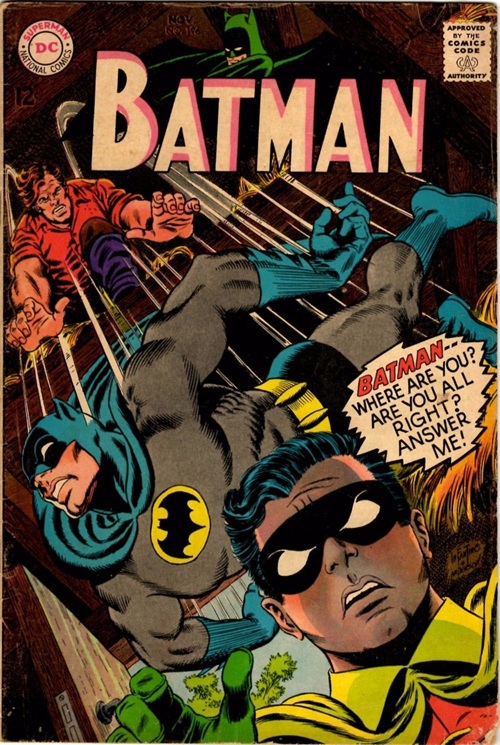
During the 1950s, as the popularity of superheroes waned, Infantino adapted by drawing Westerns, mysteries, and science fiction comics. He freelanced for Joe Simon and Jack Kirby’s company, Prize Comics, illustrating the series Charlie Chan, which showcased the influence of both Kirby’s and Milton Caniff’s artistic styles.
In 1956, DC editor Julius Schwartz assigned Infantino and writer Robert Kanigher the task of revamping the Flash character. This led to the creation of Barry Allen, the new Flash, who debuted in Showcase #4 (October 1956), an issue widely regarded as the beginning of the Silver Age of Comic Books. Infantino’s sleek and dynamic art style played a crucial role in the character’s success and the resurgence of the superhero genre.
Infantino’s contributions to the comic book industry extended beyond his work as an artist. In the late 1960s, he was promoted to art director and later became editorial director at DC Comics. In these roles, he was instrumental in bringing new talent to the company and revitalizing several key characters and titles.
Following the unexpected death of Wilson McCoy, the artist of the Phantom comic strip, in July 1961, there was an immediate need to continue the ongoing stories. Carmine Infantino, a prominent comic book artist, briefly stepped in to assist. It is believed that Infantino contributed to the Sunday strip titled ‘The Limper’, with his artwork appearing on the page dated the 24th of September 1961. However, his involvement was limited, as the majority of the story was completed by Bill Lignante, who took over the strip on the 1st of October 1961, and continued until May 1962.
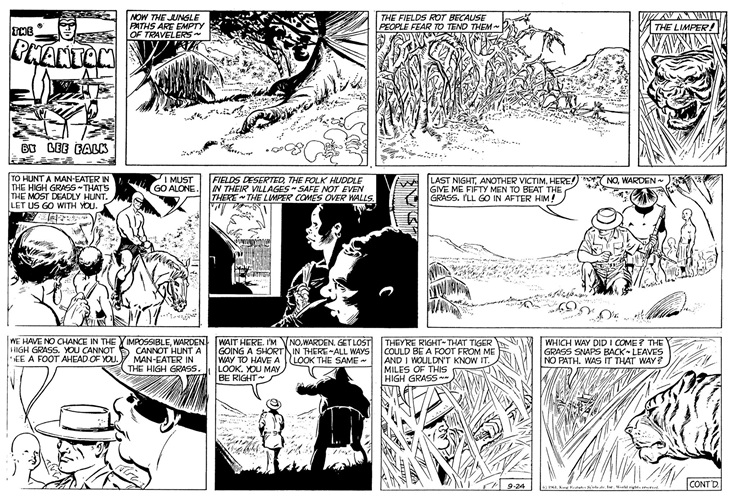
During this transitional period, several artists were considered to permanently succeed McCoy. While Infantino was among the candidates, the role ultimately went to Sy Barry. Barry began his tenure on The Phantom daily strip on the 21st of August 1961, and his first Sunday page was published on the 20th of May 1962. He brought a modern and realistic style to the strip, significantly enhancing its popularity. Barry continued as the principal artist for over three decades, retiring on the 3rd of September 1994, after producing approximately 11,000 strips.
Throughout his career, Infantino received numerous accolades, including the National Cartoonists Society Award and various Alley Awards. In 2000, he was inducted into the Will Eisner Award Hall of Fame, cementing his legacy as one of the industry’s most influential figures.
Carmine Infantino’s innovative artistry and visionary leadership left an indelible mark on the comic book industry, influencing countless artists and shaping the direction of superhero comics for decades.
 thephantom.fan