

William “Bill” Harris, born on the 25th of November 1933, in Scranton, Pennsylvania, USA was a prominent American comic book writer and editor whose career spanned several decades. He is best remembered for his significant contributions to the comic book adaptations of the Phantom, a character originally created by Lee Falk. Harris’s work in the 1960s, particularly with Gold Key and King Comics, played a pivotal role in bringing the Phantom to a broader audience and solidifying its place in comic book history.
Details about Harris’s early life and education are sparse. He spent most of his childhood in West Pittston, Pennsylvania, USA where his father ran a local grocery store. After moving to Long Island in his senior year of high school, he met and married Carole Schmidt. They had four children, Michael, Ellen, Scott and Matthew.
During the 1960’s Bill worked for ABC Radio before entering the comic book industry, he worked in promotions for Dell Publishing, though the exact duration of this tenure remains unclear. His role at Dell provided him with valuable experience in publishing and promotions, setting the stage for his future endeavors in the comic book world.
In the early 1960s, Harris transitioned to Western Publishing, a company renowned for producing comic books under the Gold Key imprint. Between 1962 and 1965, he served as an editor at Western, overseeing a diverse range of titles. His editorial portfolio included popular series such as Boris Karloff Tales of Mystery, Bullwinkle, Doctor Solar, I Spy, the Phantom, and Popeye. His versatility in managing both licensed properties and original content showcased his adaptability and editorial acumen.
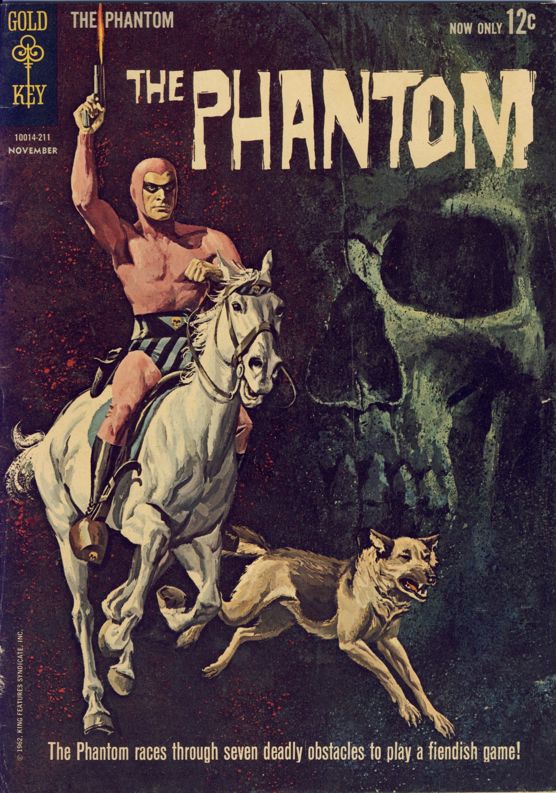
The Phantom had primarily been a newspaper comic strip before its adaptation into comic books. In 1962, Gold Key Comics began publishing the Phantom comic book series, aiming to introduce the character to a new generation of readers. Harris played a crucial role in this endeavor, serving as both editor and writer for the series.
Collaborating with artist Bill Lignante, Harris crafted new stories that expanded upon the established lore of the Phantom, writing 20 of the 26 stories published in the Gold Key Phantom comic book series. Their partnership resulted in a series of engaging stories that delved deeper into the character’s mythology, exploring his origins, adventures, and the rich tapestry of the world he inhabited. The synergy between Harris’s storytelling and Lignante’s dynamic artwork resonated with readers, leading to a successful run for the series.
In 1966, King Features Syndicate, the original distributor of the Phantom newspaper strip, ventured into comic book publishing with its own line of titles. Recognizing Harris’s expertise and previous work with the Phantom, they appointed him as the editor for their comic book line. Under his editorial guidance, King Comics published several titles, including Flash Gordon, Mandrake the Magician, he Phantom, Blondie, Beetle Bailey, and Popeye.
During his tenure at King Comics, Harris continued to write and edit the Phantom comic book series. His stories during this period further enriched the character’s narrative, introducing new villains, allies, and adventures that expanded the universe of the Phantom. Despite the high quality of the content, King Comics’ venture into comic book publishing was short-lived, lasting just over a year. Nevertheless, Harris’s contributions during this time left a lasting impact on the legacy of the Phantom.
Bill Harris’s work on the Phantom in the 1960s is often credited with revitalizing the character and introducing him to a broader audience. His storytelling, characterized by its depth and creativity, provided a fresh perspective on the classic hero, ensuring that the Phantom remained relevant in the evolving landscape of comic books.
Beyond his work on the Phantom, Harris’s career encompassed various roles in the publishing industry. After his stint in comic books, he transitioned to a 25-year career with the New York Times newspaper, serving as the assistant to the promotion manager.
With the assistance of his second wife, Pamela Chase, Harris authored over 100 history and travel-related books, showcasing his versatility as a writer and his passion for storytelling. These include titles such as One Thousand New York Buildings, The Plaza Hotel, The History of New York City, The First Ladies Fact Book and Hell Fighters of Harlem.
Harris’s foresight into the potential of comic book fandom was evident in his early recognition of the promotional value of comic book fanzines. He was among the first editors to engage with fanzines, providing insights and updates about forthcoming comics, thereby fostering a closer connection between creators and readers. This approach not only promoted his work but also contributed to the growing community of comic book enthusiasts.
He took great pleasure in staying informed about current events and had a profound appreciation for classical music and opera, in addition to the jazz legends of the 1950s, such as Frank Sinatra and Peggy Lee, among others. A dedicated reader, he frequently engaged with both books and the daily edition of the New York Times. In his earlier years, he traveled extensively and held a particular fondness for Venice, Italy. Harris passed away at the age of 84 on the 8th of January 2018, in Dallas, Texas, where he had resided since 2001.
William “Bill” Harris’s contributions to the world of comic books, particularly his work on the Phantom, have left an indelible mark on the industry. His dedication to storytelling, innovative editorial practices, and ability to adapt to the changing dynamics of publishing underscore his lasting legacy. Through his efforts, the Phantom transitioned from a newspaper strip to a beloved comic book hero, captivating readers across generations. Harris’s work continues to be celebrated by fans and serves as a testament to his significant role in the history of comic books.
 thephantom.fan