
Antonio Sciotti, born on the 25th of September 1924, in Rome, Italy, was a distinguished Italian comic artist whose career spanned from the post-World War II era until his untimely death on the 7th of July 1974. His artistic journey reflects the evolution of Italian comics during a period marked by innovation and international collaboration.
Sciotti began his artistic endeavors at a young age. Between 1947 and 1950, he contributed to Edizioni Fantera, illustrating western-themed stories like ‘Boy Lampo’ and detective stories such as ‘Dottor Holl’. These early works showcased his versatility and ability to engage readers across genres.
In the 1950s, Sciotti’s career gained momentum as he became associated with ‘Il Vittorioso’, a prominent Italian weekly comic magazine. For this publication, he illustrated series including ‘I Pirati’ and ‘Kit Ringo’, both penned by writer Mario Basari. His dynamic illustrations brought these adventurous tales to life, captivating a broad audience. During this period, he also worked on titles like ‘Capitan Walter’ and ‘Jolly’, further establishing his reputation in the Italian comic scene.
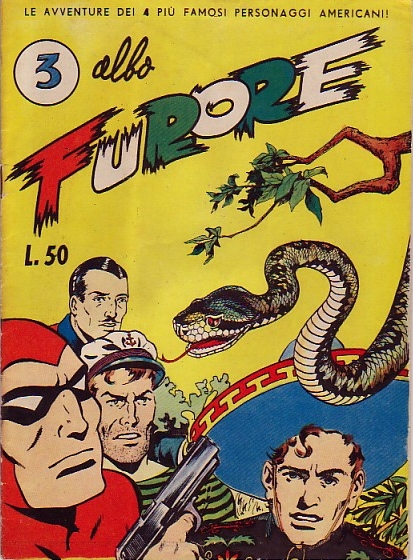
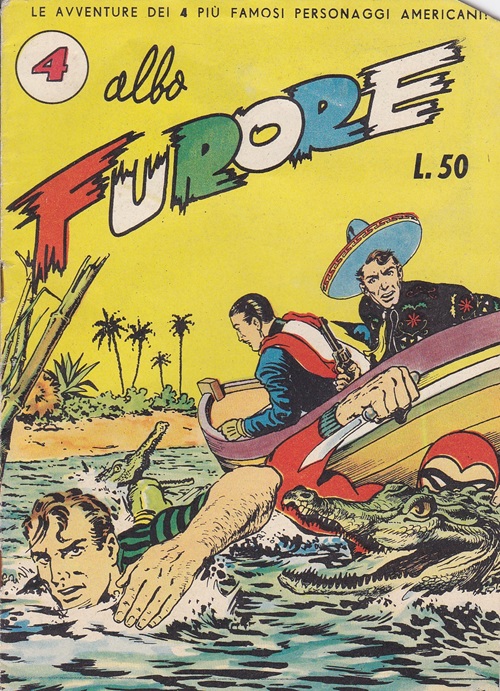
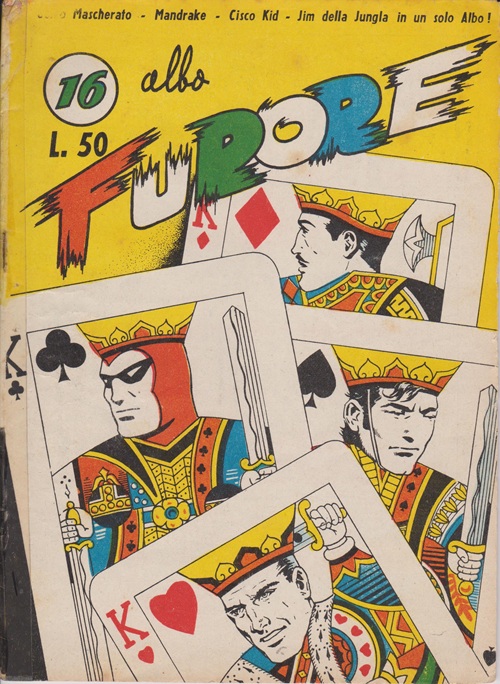
In 1953, Italian publisher Aurelia launched the comic book series ‘Albo Furore’, which featured a collection of popular American comic characters, including the Phantom (known in Italy as L’Uomo Mascherato). Antonio Sciotti contributed to this series by illustrating covers for the initial issues. The series commenced on the 18th of October 1953, and concluded with its 20th issue on 28th of February 1954. Sciotti’s cover art graced the first 17 issues, effectively capturing the essence of the characters and enticing readers.
Each issue of Albo Furore measured 17cm x 24cm and contained 32 pages, presenting stories of the Phantom alongside other characters like Mandrake the Magician, Cisco Kid, and Jungle Jim. Sciotti’s dynamic and engaging cover illustrations played a significant role in the series’ appeal, showcasing his artistic versatility and contributing to the popularity of these iconic characters in Italy during the early 1950s.

The 1960s marked a significant phase in Sciotti’s career as he joined the Giolitti Studios, a renowned comic art studio in Rome, Italy. This affiliation opened doors to various projects, both domestically and internationally. Notably, he illustrated the ‘Codename: Barracuda’ series for the ‘I Mio Romanzo’ series published by Meroni. His collaboration with writer Alfredo Castelli in 1969 led to a series of ‘Dracula’ stories for Sansoni Editore, blending horror elements with his distinctive artistic style.
Sciotti’s versatility extended to his work with ‘Il Giornalino’, a well-known Italian comic magazine. One of his notable contributions was the creation of ‘Dev Bardai’, a character developed in collaboration with writer Renata Geraldini. This series highlighted his ability to craft compelling characters and narratives that resonated with readers.
Among Sciotti’s diverse portfolio, his work on the Phantom stands out. In the 1960s, the Italian publisher Fratelli Spada acquired the rights to produce original Phantom stories, leading to a surge of new content tailored for the Italian audience. Sciotti became a key contributor to this initiative, illustrating several stories that expanded the Phantom universe and presented the character to a new generation of readers.
Sciotti illustrated 6 front covers and 10 comic strip stories for the ‘Avventure Americane Nuova Serie’ series published by Fratelli Spada, with his notable works including:
- L’educazione di Clarence Crucible (The Education of Clarence Crucible): This story delves into the backstory of Clarence Crucible, exploring themes of identity and transformation. Sciotti’s illustrations effectively capture the character’s journey and the narrative’s emotional depth.
- La regina dei maghi (The Queen of Magic): In this tale, the Phantom encounters a mysterious queen with magical powers. Sciotti’s artwork brings to life the enchanting and perilous world, enhancing the story’s mystical elements.
- La nave della droga (Drug Ship): This story follows the Phantom as he uncovers a drug smuggling operation aboard a ship. Sciotti’s dynamic illustrations depict the tension and action inherent in the plot.
- Testimone d’accusa (Witness for the Prosecution): In this story, the Phantom becomes entangled in a legal drama, protecting a key witness. Sciotti’s art captures the suspense and intricacies of the courtroom and the ensuing conflicts.
- Il giuramento di Esculapio (The Oath of Asclepius): This tale involves a medical mystery, with the Phantom investigating unethical practices. Sciotti’s illustrations convey the moral dilemmas and the gravity of the situations presented.
- Rapina per professionisti (Robbery for Professionals): In this story, the Phantom faces a group of professional thieves. Sciotti’s artwork effectively portrays the cunning and strategy employed by both the protagonists and antagonists.
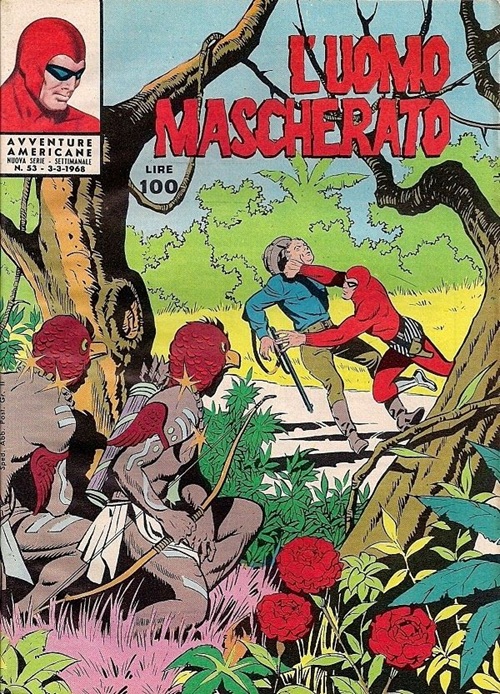
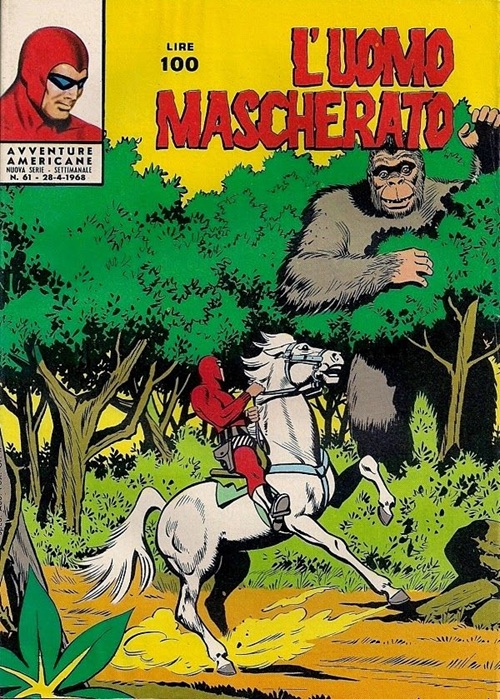
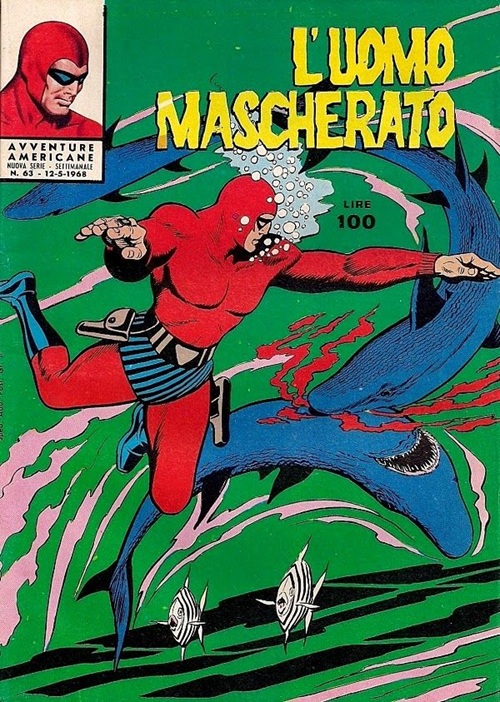
These stories were published during the late 1960s and early 1970s, a period when Fratelli Spada was actively producing original Phantom content. Sciotti’s contributions were instrumental in shaping the Italian interpretation of the character, blending traditional elements with culturally resonant themes.
Beyond his work on the Phantom, Sciotti’s artistic endeavors encompassed a range of characters and genres. His illustrations for the ‘Dracula’ series with Alfredo Castelli offered a unique take on the classic vampire lore, combining horror with a nuanced artistic approach. Additionally, his creation of ‘Dev Bardai’ showcased his talent in developing original characters that resonated with readers.
Sciotti’s collaborations with various publishers throughout his career underscore his adaptability and broad appeal. His work with Edizioni Fantera in the late 1940s laid the foundation for his artistic journey. His subsequent association with ‘Il Vittorioso’ in the 1950s allowed him to reach a wider audience, while his involvement with Giolitti Studios in the 1960s facilitated international projects. His partnership with Fratelli Spada on the Phantom series further solidified his status in the comic industry.
Tragically, Antonio Sciotti’s life and career were cut short when he passed away on the 7th of July 1974. Despite his relatively brief career, his contributions to the world of comics left a lasting impact. His ability to navigate various genres and characters, coupled with his distinctive artistic style, ensured his place in the annals of comic art history.
In retrospect, Sciotti’s work reflects a period of innovation and expansion in Italian comics. His illustrations not only entertained but also enriched the stories they accompanied, offering readers a visual experience that complemented and enhanced the storytelling. His legacy continues to be appreciated by comic enthusiasts and serves as an inspiration for future generations of artists.
Antonio Sciotti’s journey from a young artist in post-war Italy to a celebrated comic illustrator exemplifies the transformative power of art. His dedication to his craft and his ability to bring stories to life through his illustrations remain a testament to his talent and vision.
 thephantom.fan