
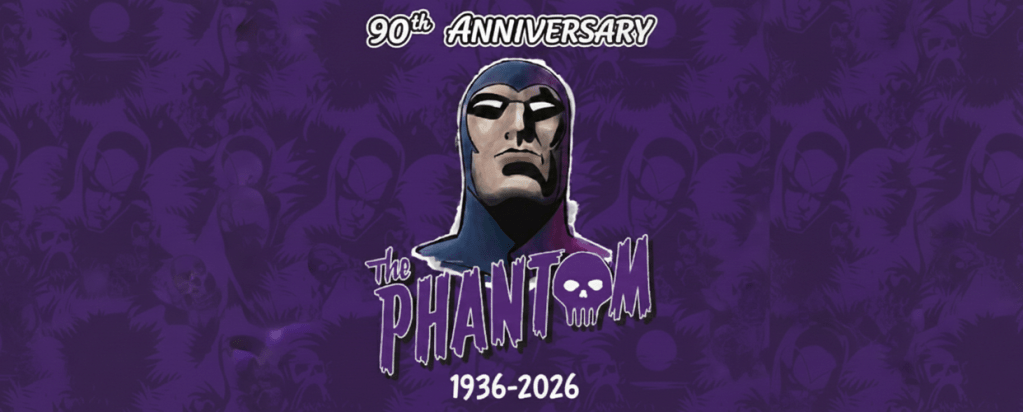
In February of 1936, a young writer named Lee Falk ushered into newspapers across America a new kind of adventure hero — one that would go on to inspire generations of readers, influence the very idea of what a costumed hero could be, and endure for 90 remarkable years. That hero was The Phantom, known to his contemporaries as “The Ghost Who Walks” and “The Man Who Cannot Die“, a mysterious masked crime-fighter whose legacy was almost mythical even from the outset.
Fast-forward to 2026, as the Phantom celebrates his 90th anniversary, it’s worth taking a thoughtful journey through the milestones, transformations, creators, cultural impact, and timeless spirit of the comic strip.
Origins: From Falk’s Imagination to a Jungle Legend
The story of the Phantom begins with Lee Falk’s creative ambition and imagination. Falk, already the creator of another popular adventure comic strip — Mandrake the Magician — was tasked by King Features Syndicate with developing a new character in the mid-1930s. After an early concept about King Arthur and his knights was rejected, Falk conceptualized a mysterious, masked crime-fighter operating in a jungle setting.
Falk’s creative influences were broad: myths and legends, pulp heroes like Tarzan and Zorro, and even literary giants such as Shakespeare and Rudyard Kipling. On his influences, Falk reflected that the Phantom “came out of my childhood interest in great myths and legends and my reading of books like Tarzan and Robin Hood”. This mythological bent would define the Phantom’s tone and enduring quality, situating him between pulp adventure and modern superhero storytelling, a bridge from the old myths to the new age of comics.
On the 17th of February 1936, the Phantom debuted as a daily newspaper strip with the story “The Singh Brotherhood”. Falk wrote the stories and is even believed to have of illustrated the initial two weeks to set the visual tone before turning the art duties over to Ray Moore, a talented artist who would help establish the iconic look of the early Phantom.
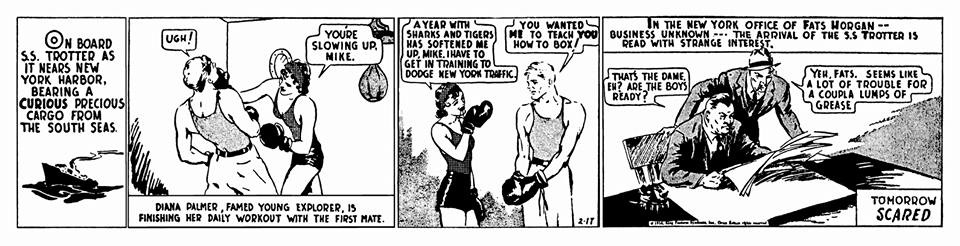
Within just a few years, the popularity of the character soared, and on the 28th of May 1939, a Sunday color version of the strip was added to newspapers with the story “The League Of Lost Men“, introducing a broader audience to the Phantom’s world in vivid hues.
What Made the Phantom Iconic? Early Innovations and Unique Traits
In the crowded pages of 1930s comics, the Phantom stood out for a few bold and innovative choices that resonated far beyond his jungle backdrop:
1. A Legacy Hero, Not Just a Solo Adventurer
Unlike many pulp heroes of the era, the Phantom was not a singular singularity — he was part of a lineage. From the beginning, the story established that the Phantom was the 21st in a long line of crime-fighters dating back to 1536. This invention of a generational legacy gave the Phantom an almost mythic presence in the comic strips world — a figure who could not die, who returned again and again, a ghost walking among mortals.
This framing device lent each story a sense of history and depth that transcended ordinary episodic adventure. Instead of simply fighting crime week after week, the Phantom was part of a continuum of justice — a concept daring for its time and one that influenced later comics and characters. Notably, the Phantom predates Superman by two years, making him among the earliest costumed heroes in comic history (read more HERE).

2. The Skintight Costume and Mask Without Pupils
Today, superheroes in tight costumes and mysterious masks are conventional. But in the 1930s, the Phantom’s skintight purple outfit and mask with no visible pupils were groundbreaking design elements. The costume established key visual language that would become commonplace in later comic heroes — including Batman and Superman — but it was the Phantom who first made them iconic.
Falk explained that he wanted a costume that felt timeless and symbolic, not just functional. He drew inspiration from legends like Robin Hood and classical sculpture, even thinking of Greek busts (with their pupil-less eyes) as shaping the Phantom’s eerie and commanding visual presence (read more HERE).
3. A Hero Without Traditional Superpowers
Unlike many superheroes who would follow, the Phantom had no innate superpowers. He relied on skill, intelligence, strength, determination, myth and psychological presence against his enemies. This grounded quality — a mortal man with extraordinary courage and reputation — gave the strip a realism and adventurous thrill uncommon at a time when pulp and superhero comics often relied on the fantastic.
4. Animal Companions
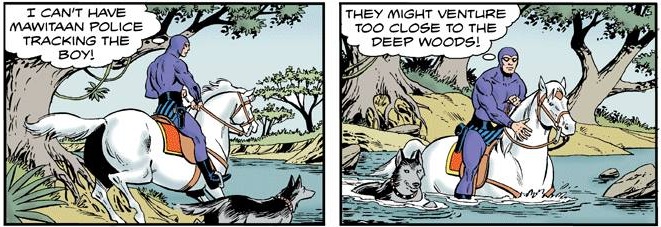
Additionally, the Phantom is accompanied by two loyal animal companions: Devil, his mountain wolf, and Hero, his powerful white stallion.
Devil is a fierce, highly intelligent predator who was found as a pup and raised by the Phantom; he acts as both a protector and a tracker, often displaying a near-telepathic bond with his master. Hero, the Phantom’s primary mode of transport through the dense jungles of Bangalla, is an equally courageous and dependable steed who remains calm in the face of danger. Together, these two animals form an essential extension of the Phantom’s legendary persona, aiding him in his crusade against piracy and injustice while embodying the spirit of the wild.
World War II and the Phantom’s Global Significance
As the world was thrust into World War II, the Phantom was more than just a comic strip. Lee Falk himself joined the Office of War Information, where he was chief of the radio foreign-language division. Meanwhile, Ray Moore also served in the war effort, and the strip was passed on to Wilson McCoy, who continued the strip throughout the war and afterward.
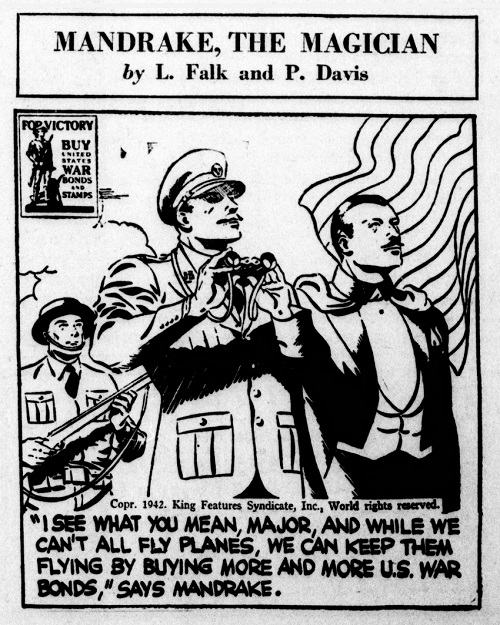
King Features Syndicate also aided in raising funds for the US government following the Japanese attack on Pearl Harbor on the 7th of December 1941, as did so may publishers at the time. The United States entered World War II, and the already established Defense Bonds were renamed War Bonds. More than 80 million Americans purchased War Bonds, channeling over $180 billion in revenue into the governments war efforts.
Published mainly through April and May in 1942, we find advertisements in various newspapers across the United States featuring both comic strip characters created by Lee Falk, the Phantom and Mandrake the Magician. These advertisements directly sent a message to readers to assist in the war efforts by purchasing War Bonds (read more HERE).
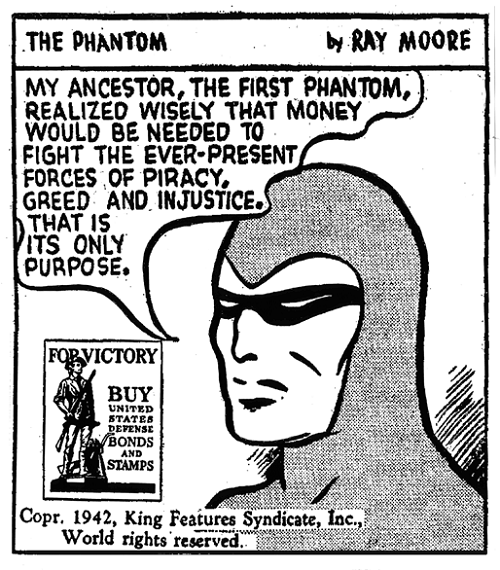
According to anecdotal accounts, the Phantom became more than entertainment, the comic strip became a symbol of morale and resistance. Stories suggest that the Phantom strip was even smuggled into Nazi-occupied Norway, where it was translated and used as a resistance password and symbol of defiance against oppression. The idea that a comic strip could serve as a secret sign of hope amid global conflict is a testament to its worldwide impact during that era.
Evolving Art, New Voices, and Lasting Legacy
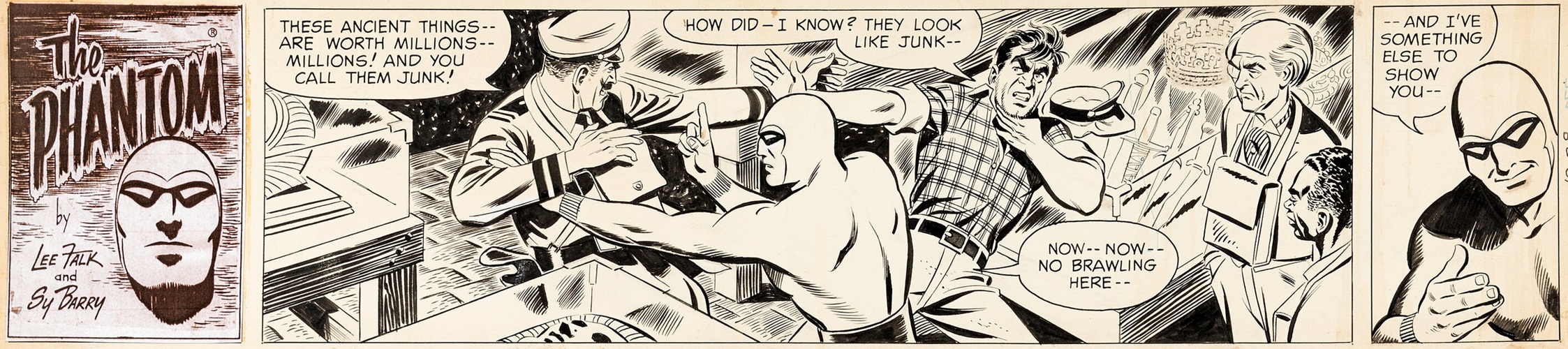
After the war, the Phantom continued to evolve through the contributions of different artists and writers. When Wilson McCoy passed away unexpectedly in 1961, a transitional period saw several artists fill in, including Carmine Infantino and Bill Lignante, until Sy Barry became the influential artist in the 1960s. Under Barry’s tenure, the strip gained a more modern look and increased international reach. Additionally, a generation of Phantom comic strip readers grew up solely seeing the art of Sy Barry in their daily newspapers.
Barry’s impact was huge — spanning over three decades — and he and Falk worked together to modernize the storylines and settings without losing the mythic core of the character. After Barry’s retirement in 1994, other artists like George Olesen, Keith Williams, Fred Fredericks, and others carried forward the visual storytelling.
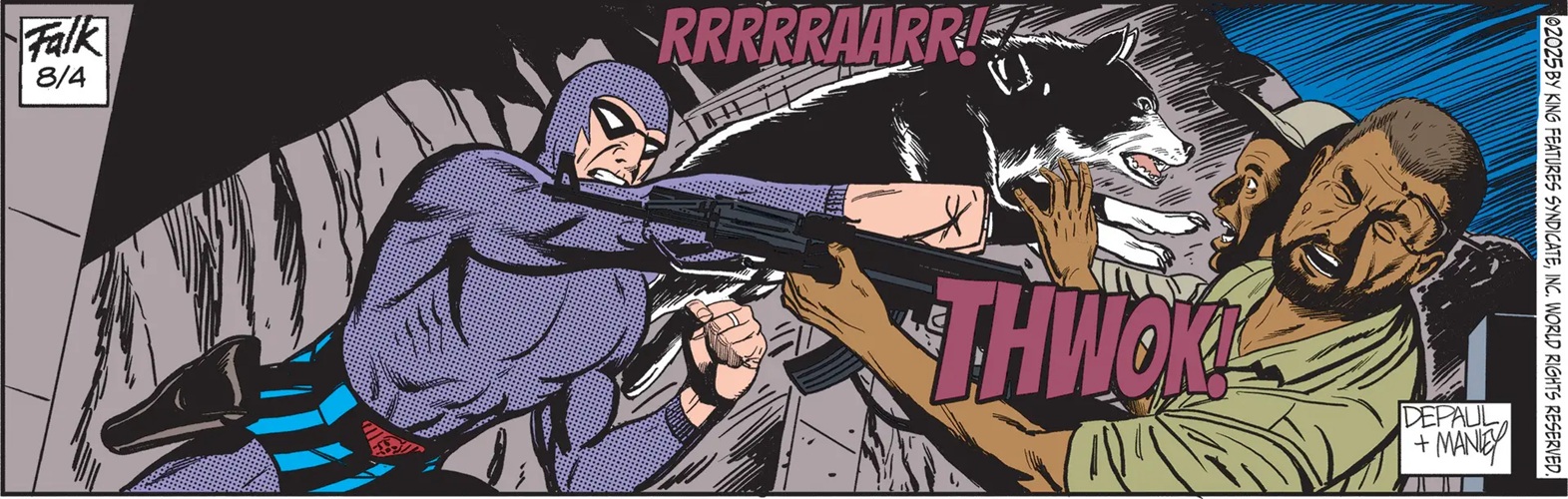
Even after Falk’s death in 1999, the Phantom continued, with writers like Tony DePaul and artists such as Mike Manley (daily strips) and Jeff Weigel (Sunday editions) ensuring the strip’s ongoing presence in newspapers and online platforms. Both the daily and Sunday Phantom comic strips can be read daily on the Comics Kingdom website, the digital comic strip site owned by King Features Syndicate, with the Phantom page found HERE
Lee Falk: The Man Behind the Phantom
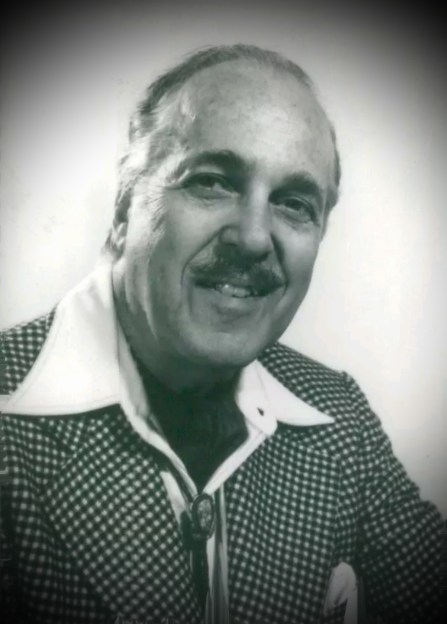
Lee Falk’s longevity as a storyteller is itself an extraordinary chapter in the Phantom’s history. Falk wrote the strip from its debut in 1936 until his final days in 1999 — a span of over 60 years writing The Phantom and Mandrake the Magician, another of his iconic creations (read more HERE).
Falk was keenly aware of what made storytelling in comics unique, once remarking, “I think the art of writing a comic strip is closer to the theatre and to film technique than any other writing I know”. His understanding of pacing, visual drama and myth-making helped the Phantom resonate with readers across generations and cultures.
On the values embodied by his hero, Falk said: “The Phantom is a marvelous role model because he wins against evil. Evil does not triumph against the Phantom… He hates dictatorship and is in favour of democracy. He is also opposed to any violation of human rights”. This moral framing underpinned many stories and helped the strip connect with readers far beyond simple jungle adventure stories.
Falk’s imaginative perspective also highlighted the global appeal of the Phantom: “People in India or Europe or South America all have their own myths and heroes and can identify with ‘The Phantom’ because it’s so similar to those myths”. And it’s true, from Scandinavia to Australia, from Europe to the Americas, the Phantom became a beloved and enduring figure in international comic culture.
Cultural Milestones and Celebrations
Across its 90-year span, the Phantom has marked countless milestones. From the earliest newspaper syndication to Sunday strips, overseas translations, merchandise, comic books, television cartoons, and even feature films, the character’s footprint is vast.
In places like Australia, publications of the Phantom comics reached decades of continuous runs, with publishers like Frew Publications producing special anniversary editions celebrating 75 years of continuous publication locally — a testament to how deeply the Phantom’s stories have woven themselves into local comic culture outside the US as well (read more HERE).
This year, as the Phantom enters its 90th anniversary year in 2026, celebrations will include special hardcover editions of Phantom comics, anniversary themed releases, and renewed attention across comics, merchandise, and online platforms. Limited editions, variant covers, and international publishers commemorating this milestone reflect the global community that has formed around the character over decades.
Furthermore, animation projects such as Phantom 2040: A New Shadow signal not only reverence for the original strip’s legacy but also investment in forward-looking storytelling as fans old and new engage with the character in new formats leading into this anniversary (read more HERE).
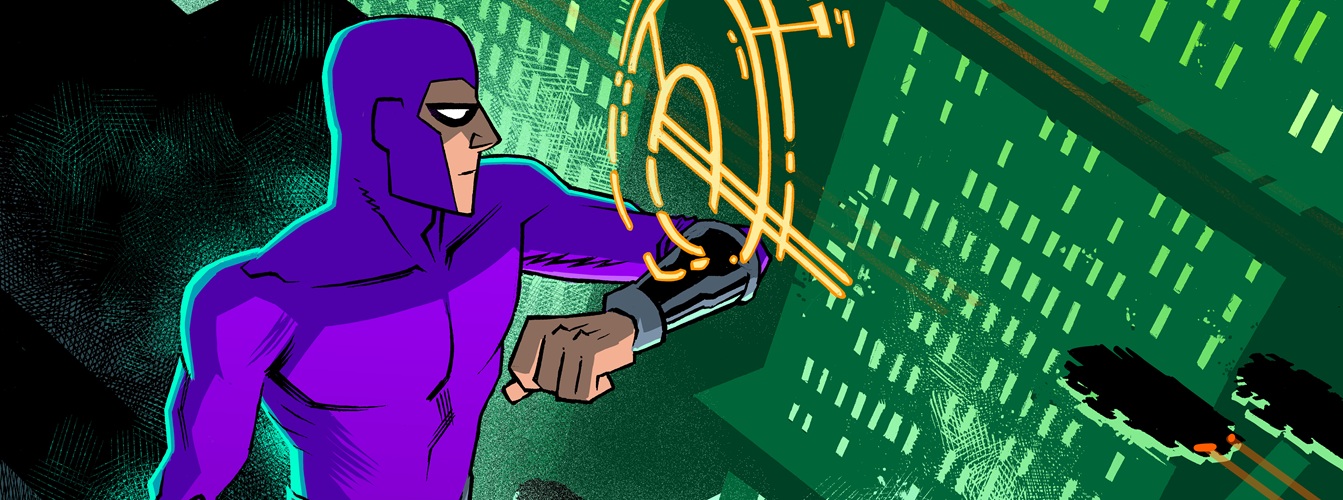
The Phantom’s Influence on Superhero Culture
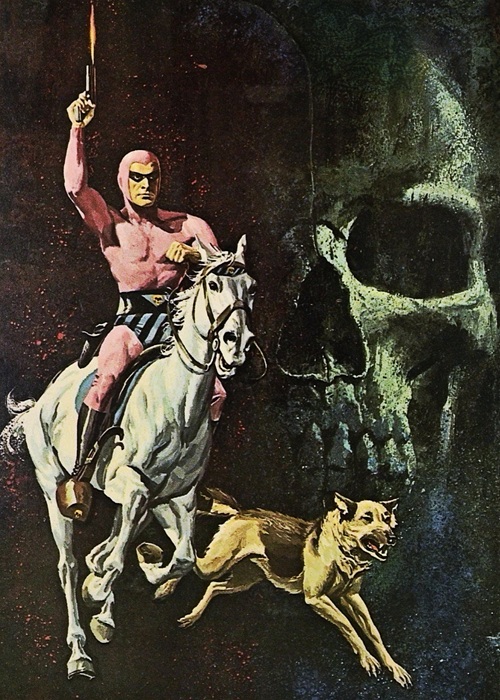
Though superheroes like Superman and Batman are household names, the Phantom holds a unique place in comic history. He predates many of those characters and arguably helped shape the visual and storyline conventions of the genre. His mask without pupils, skintight costume, and legacy of justice became touchstones in superhero design long before many iconic figures entered the scene.
He also brought a richer mythological sensibility to comics — a blend of modern crime fighting with centuries of legacy, folklore, and symbolic imagery. This blending of pulp adventure with archetypal storytelling expanded what comics could achieve and helped elevate the medium beyond mere gag strips into something with cultural and storytelling depth.
Why the Phantom Still Matters at 90
What explains the Phantom’s remarkable longevity? Why does the strip still run — still produce new stories — almost a century after its debut?
Part of the answer lies in the timeless values its stories explore: justice versus evil, courage in the face of adversity, the power of reputation and legacy, and the idea that a single determined individual can make a difference. Part lies in the strip’s adaptability — its ability to introduce new writers, artists, and formats while maintaining an unmistakable core identity.
And part of it lies in Falk’s original story genius: a hero who is rooted in myth but operates in a world we recognize. Although one may argue that inconsistences exist within Falk’s storylines in respect to dates or historical events, these inconsistences open a window of opportunity for creators to add their own versions of events, adding to the greater story of the Phantom and his mythos.
As Falk himself observed about his signature creation: “I hope that it will go on”. In 2026, nine decades after that first Phantom strip appeared in print, it has indeed gone on — inspiring loyalty from long-time fans and curiosity from new readers, carrying forward lessons from yesterday into tomorrow’s storytelling, as exemplified by Mad Cave Studios in the US.
In the United States on the 17th of February 1936 in the newspaper The New York Evening Journal, the first to publish the Phantom comic strip, a new kind of hero emerged from imagination; from the fertile storytelling mind of Lee Falk and the artistic ink of Ray Moore. Ninety years later, the Phantom has endured as a testament to the power of compelling storytelling, iconic design, and moral clarity. Through changing cultural landscapes, technological shifts in media, and evolving reader tastes, this purple-clad guardian of justice persists — a ghost still walking, inspiring and triumphant.
In an era where comic characters come and go with dizzying speed, the Phantom’s 90th Anniversary reminds us that certain characters resonate across generations because they speak to something universal: a hope that justice can prevail, courage can endure, and stories worth telling will never truly die.
Here’s to 90 extraordinary years of the Phantom and to many more adventures yet to be told!!!
Discover more from
Subscribe to get the latest posts sent to your email.
 thephantom.fan