

Few fictional characters have transcended cultural boundaries with the lasting impact of the Phantom, the Ghost Who Walks. While this masked hero originated in the United States under the creative vision of Lee Falk in 1936, he quickly became a global icon. Among the countries where the Phantom has left an indelible mark, India stands out as a nation where his stories not only entertained but also became deeply ingrained in popular culture. From his first appearance in Indian comics to the present day, the Phantom’s bond with Indian audiences is nothing short of legendary.

The Phantom made his Indian debut in the 1960s through Indrajal Comics, a publishing initiative of Bennett, Coleman & Co., the same organization behind The Times of India. Indrajal Comics introduced the enigmatic character to Indian readers under the name “Vetaal” in Hindi and other Indian languages. These comics quickly captured the imagination of millions, as children and adults alike were drawn to the adventures of this mysterious hero clad in purple. With his impenetrable aura of immortality, unwavering sense of justice, and the exotic jungle setting of Bangalla, the Phantom felt simultaneously foreign and relatable to Indian audiences.
One of the key reasons for the Phantom’s success in India was the effort Indrajal Comics made to adapt his stories for the local audience. Published in multiple languages, including Hindi, Bengali, Tamil, and Marathi, the Phantom’s adventures became accessible to readers across the country. This multilingual approach significantly broadened his appeal, allowing him to become a household name in urban and rural areas alike. By tailoring the character’s dialogue and cultural references, Indrajal ensured that the Phantom resonated with Indian sensibilities without losing the essence of his original stories.
At the heart of the Phantom’s appeal in India is his moral code, which aligns closely with the values cherished in Indian culture. The Phantom is not a traditional superhero with supernatural abilities; he relies on his strength, intelligence, and an unyielding commitment to justice. His deep respect for tradition, loyalty to his friends, and dedication to protecting the innocent mirror qualities that are highly esteemed in Indian society. Furthermore, his battles against corruption, greed, and tyranny struck a chord with readers who saw these themes reflected in their own struggles.
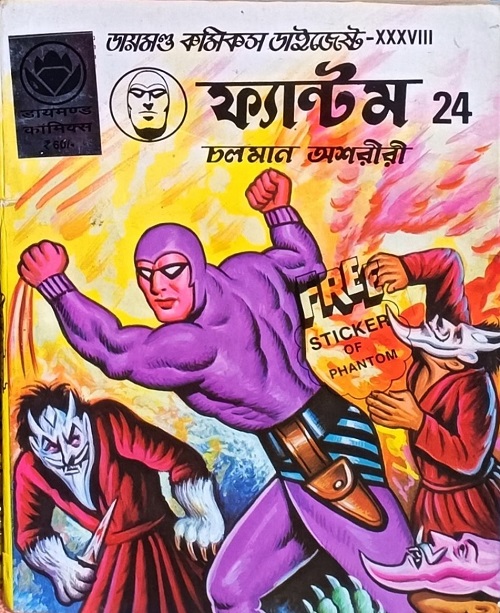
Another factor contributing to the Phantom’s success in India was the unique publication model of Indrajal Comics. Unlike the episodic releases in Western markets, Indrajal often presented the Phantom’s stories as standalone issues or condensed arcs. This format ensured that readers could pick up any issue and enjoy a complete story, making it easier for new fans to join the Phantom’s world without needing prior context. Additionally, Indrajal paired the Phantom’s adventures with vibrant illustrations that captured the lush jungles, perilous cliffs, and ancient ruins of Bangalla, creating a visual experience that captivated Indian readers.
Over the years, the Phantom became a cultural phenomenon in India, inspiring a dedicated fanbase that continues to thrive even today. Fan clubs sprang up across the country, where enthusiasts gathered to discuss their favorite stories, exchange collectibles, and celebrate their shared love for the character. Some fans became avid collectors, cherishing vintage Indrajal Comics editions as prized possessions. The bond between the Phantom and his Indian audience was further strengthened by the sense of community that these fan activities fostered.
Interestingly, the Phantom’s adventures also inspired elements of Indian pop culture, including movies and television shows. Although unofficial adaptations of his stories appeared in the form of loosely inspired characters and plots, they paid homage to the enduring allure of the Ghost Who Walks. Additionally, the character’s influence can be seen in the creation of Indian superheroes, many of whom share The Phantom’s focus on morality, justice, and protecting the downtrodden.
An example can be seen below, produced in India in 2017 by Dreamcity Artists Productions.
Even after Indrajal Comics ceased publication in 1990, the Phantom’s legacy in India endured. Reprints, special editions, and online platforms ensured that his stories continued to reach new generations of readers. Digital comics and fan-translated versions have further extended his reach, demonstrating the timelessness of his adventures. Today, Indian fans remain as passionate as ever, keeping the Phantom alive through forums, social media groups, and collaborative fan projects.
The Phantom’s connection with India also reflects a broader narrative of global storytelling. His ability to resonate with audiences from diverse cultural backgrounds underscores the universal appeal of well-crafted heroes. In India, the Phantom is more than just a comic book character; he represents ideals that transcend borders—courage in the face of adversity, a commitment to justice, and a belief in the power of tradition and legacy.

For Indian readers, the Phantom is not merely the 21st Phantom in a centuries-old lineage; he is a part of their lives and memories. Many fans recall growing up with his stories, eagerly awaiting the release of the next Indrajal Comics issue and immersing themselves in the jungles of Bangalla. The nostalgia associated with the Phantom is palpable, as he continues to evoke a sense of wonder and adventure among those who grew up reading his tales.
The Phantom’s bond with India is a testament to the power of storytelling that transcends geographical and cultural barriers. As a hero, he embodies principles that are universally admired, while his setting and adventures offer a sense of escapism that appeals to readers of all ages. The Phantom’s legacy in India is not just a chapter in his global journey; it is a vivid tapestry woven into the hearts and minds of Indian fans who continue to cherish his stories and pass them on to future generations.
Even as the world of entertainment evolves and new superheroes emerge, the Phantom’s place in Indian pop culture remains secure. His tales of bravery, honor, and perseverance remind readers of the enduring values that connect humanity across time and space. For India, the Phantom is not just the Ghost Who Walks—he is the hero who stayed, becoming an integral part of the country’s rich storytelling tradition.
Discover more from
Subscribe to get the latest posts sent to your email.
 thephantom.fan