

The Phantom, often referred to as ‘The Ghost Who Walks’, stands as one of the most influential and enduring figures in the history of comics. Created by Lee Falk in 1936, the Phantom is widely recognized as the first costumed superhero, predating Superman, Batman, and many other iconic characters. His debut in the syndicated newspaper comic strip marked the beginning of a new era in storytelling, where larger-than-life characters would take center stage in their fight against evil. The Phantom’s creation was a pivotal moment, laying the groundwork for the superhero genre and shaping its conventions for decades to come.
The Phantom’s origins are deeply rooted in Falk’s fascination with mythology, folklore, and classic adventure tales. Unlike the later superheroes who would draw their powers from science fiction or alien origins, the Phantom was born from a rich blend of historical and mythical influences. Falk envisioned a character who would be part mystery, part legend—someone whose reputation would inspire fear in wrongdoers and hope in the oppressed. The Phantom’s mystique was further enhanced by the idea that he was a seemingly immortal figure, passing his mantle from one generation to the next, creating the illusion of an unbroken legacy.
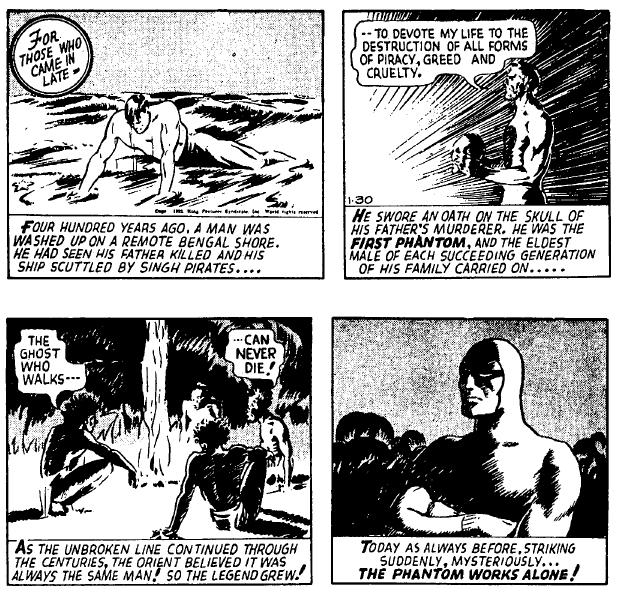
This sense of legacy became one of the Phantom’s defining traits. The character of Kit Walker, the 21st Phantom, inherits the mantle from his father and upholds the traditions established by his forebears. The concept of an unending lineage of heroes was revolutionary at the time, introducing readers to a world where duty and honor were passed down through generations. This gave the Phantom a depth and continuity that set him apart from other adventurers of the era. It also allowed for a unique exploration of themes such as responsibility, heritage, and sacrifice, which would later become hallmarks of the superhero genre.
Visually, the Phantom introduced another groundbreaking innovation: the costume. His iconic skintight purple suit, striped trunks, mask, and skull motif were unprecedented in 1936. This design established the template for the superhero costume, emphasizing anonymity and a sense of otherworldliness. The mask, which concealed his pupils, gave him an ethereal and intimidating presence, while the skull insignia reinforced his identity as a relentless avenger of wrongs. The use of a ring, known as the Skull Ring, added another layer of symbolism, allowing the Phantom to mark his enemies with a permanent reminder of their misdeeds.
Beyond his costume, the Phantom’s character was defined by his code of ethics and unshakable commitment to justice. Unlike many pulp heroes of the time, the Phantom operated with a strong moral compass. He didn’t rely on superpowers or extraordinary gadgets; instead, he used his intelligence, physical prowess, and unwavering determination to combat injustice. This emphasis on human qualities made him relatable to readers, while his larger-than-life persona inspired admiration and awe. His battles against pirates, smugglers, and corrupt rulers resonated with audiences who were seeking escapism during the turbulent 1930s.
The setting of the Phantom’s adventures further distinguished him from other heroes. Based in the fictional African nation of Bangalla, the Phantom’s jungle domain became a rich and vibrant backdrop for his stories. The Deep Woods, where he resides in the Skull Cave, serves as both a sanctuary and a symbol of his connection to nature. This setting allowed for a diverse array of narratives, ranging from treasure hunts to battles against colonial exploitation. The exotic locales and culturally rich environments captured readers’ imaginations, immersing them in a world of adventure and intrigue.
Falk’s writing also introduced a progressive and inclusive approach to storytelling. The Phantom worked closely with the Bandar tribe, a community of pygmies who served as his allies and confidants lead by Guran. While the portrayal of the Bandar has evolved over time to address changing social attitudes, their inclusion highlighted the Phantom’s respect for local cultures and his reliance on partnership rather than domination. This collaborative dynamic set a precedent for later heroes, emphasizing teamwork and mutual respect as essential components of heroism.
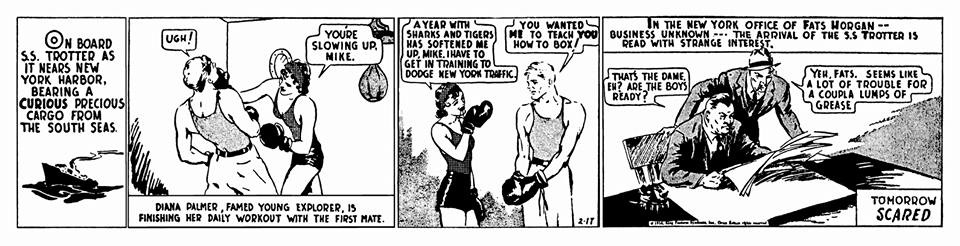
Another groundbreaking aspect of the Phantom was the portrayal of his personal life. Unlike many heroes of the time who were defined solely by their alter egos, the Phantom had a fully developed identity as Kit Walker. His relationship with Diana Palmer, a strong and independent character in her own right, added emotional depth to the stories. Their partnership demonstrated that heroism was not just about physical battles but also about personal connections and shared values. This nuanced portrayal of relationships paved the way for more complex and relatable characters in the superhero genre.
The Phantom’s impact on the world of comics and pop culture cannot be overstated. As the first costumed superhero, he established many of the tropes and conventions that would become staples of the genre. His influence can be seen in characters like Batman, who shares the Phantom’s emphasis on justice, anonymity, and a strong moral code. The concept of a hidden lair, a trusted group of allies, and a dual identity owes much to The Phantom’s pioneering example.
Moreover, the Phantom’s global reach solidified his status as a cultural icon. The character achieved immense popularity in countries/regions like India, Australia, and Scandinavia, where his stories were translated and adapted to suit local audiences. This international appeal demonstrated the universal resonance of the Phantom’s themes, from the fight against oppression to the importance of legacy and duty. His ability to transcend cultural boundaries ensured that he remained a beloved figure for generations of readers.
While the Phantom’s popularity has ebbed and flowed over the years, his legacy endures as a testament to the timeless appeal of heroism. He represents a bridge between the pulp adventurers of the early 20th century and the superheroes who would dominate popular culture in the decades that followed. By blending elements of myth, history, and morality, the Phantom laid the foundation for an entire genre, proving that stories about courage and justice are as enduring as the heroes who embody them.
In many ways, the Phantom is a reflection of the ideals that define heroism itself. His unwavering dedication to justice, his respect for tradition, and his ability to inspire hope in the face of adversity make him a figure of enduring relevance. As the Ghost Who Walks continues to captivate audiences around the world, his legacy serves as a reminder of the transformative power of storytelling and the enduring appeal of heroes who fight not for fame or glory, but for the simple yet profound ideals of truth and justice.
Through his innovative design, rich narrative, and timeless themes, the Phantom remains a pioneer in the history of superheroes. His birth marked the beginning of a new era, one that continues to thrive and evolve, thanks to the trail he blazed nearly a century ago. In the pantheon of comic book legends, the Phantom stands tall as a symbol of courage, ingenuity, and the unbreakable spirit of the hero.
Discover more from
Subscribe to get the latest posts sent to your email.
 thephantom.fan