
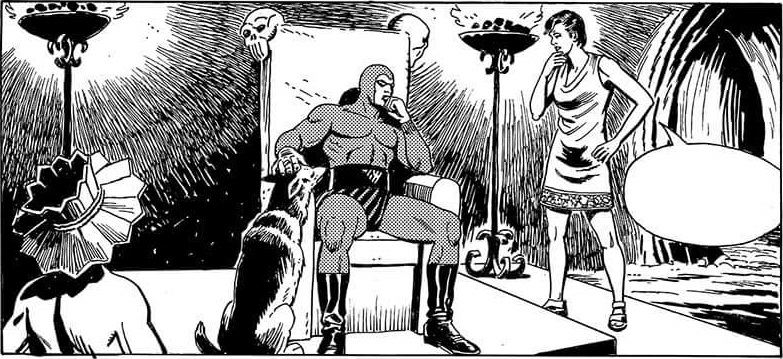
Found on the Comics Kingdom website, we find a series of posts explaining the various techniques and terminology utilized by cartoonist in the creation of comic strips.
Comics Kingdom was launched in November 2008 as a digital platform for reading syndicated comic strips under license to King Features Syndicate. Both daily and Sunday comic strips are available to read free of charge on the website for generally around 30 days, before a subscription is required to read anything past this period.
The Comics Kingdom website grew over the years to not only feature comic strips, but to also include an online shop and news section.
The Phantom comic strip can be read on the Comics Kingdom website daily, in color (click HERE). These same comic strips seen on the website are released in conjunction with printed comic strips in our newspapers.
Titled ‘Do You Speak Comics?‘, the series of posts first appeared on the Comics Kingdom website, in their blog section, commencing on the 7th of July 2024, written by Tea Fougner. To date, 3 separate parts have been posted featuring an array of information, with each post focusing on different subject matter.
Do You Speak Comics? Part 1: The Basics focuses on the basic structure of how a comic strip is presented. The topics covered include panels, boarders, gutters, tiers, captions and word/thought balloons. The full post can be found HERE
Do You Speak Comics? Part 2: Balloons and Bubbles focuses on how word balloons are used in comic strips. The various ways cartoonists use word balloons are covered in this post, with information provided on the use of speech bubbles, anchors, tangents, thought bubbles, tails and the shapes utilized for different purposes. The full post can be found HERE
Do You Speak Comics? Part 3: Black Ink, White Paper focuses on presenting comic strips for the purpose of black and white print. How cartoonist illustrate comic strips to give them dimension are covered in this post, with information provided on line weight, spot black, shading, screen tones and white ink. The full post can be found HERE
Although alot of us have been reading comic books for a large part of our lives, and constantly still do so, it’s interesting to read the various techniques utilized by cartoonists to present a comic strip story to us readers with maximum effect. Some of these techniques may not be evident initially, but when looking at our comic book content with a second glance and with a different eye, a heighted understanding of the creation process can be appreciated.
Discover more from
Subscribe to get the latest posts sent to your email.
 thephantom.fan